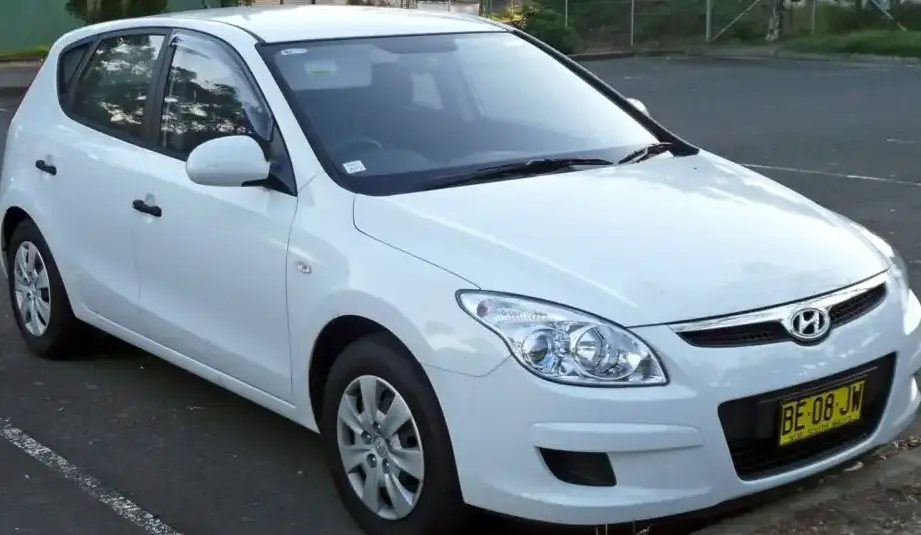
The Hyundai i30 III CW (facelift 2020) 1.0 T-GDi 120 hp with a dual-clutch transmission (DCT) represents a key variant within the third generation of Hyundai’s globally successful i30 compact family. Introduced in May 2020 and continuing through June 2024, this model catered to European buyers seeking a fuel-efficient and practical station wagon (estate) with a balance of performance and affordability. It occupied a mid-range position in the i30 lineup, offering a step up from the base engine options while remaining more accessible than the higher-powered variants. The “CW” designation signifies the wagon body style, distinguishing it from the five-door hatchback version.
Technical Specifications
| Brand | Hyundai |
| Model | i30 |
| Generation | i30 III CW (facelift 2020) |
| Type (Engine) | 1.0 T-GDi (120 Hp) DCT |
| Start of production | May, 2020 |
| End of production | June, 2024 |
| Powertrain Architecture | Internal Combustion engine |
| Body type | Station wagon (estate) |
| Seats | 5 |
| Doors | 5 |
| Fuel Type | Petrol (Gasoline) |
| Acceleration 0 – 100 km/h | 11.2 sec |
| Acceleration 0 – 62 mph | 11.2 sec |
| Acceleration 0 – 60 mph | 10.6 sec |
| Maximum speed | 196 km/h (121.79 mph) |
| Emission standard | EURO 6d |
| Weight-to-power ratio | 10.5 kg/Hp, 95.3 Hp/tonne |
| Weight-to-torque ratio | 7.3 kg/Nm, 136.6 Nm/tonne |
| Power | 120 Hp @ 6000 rpm |
| Power per litre | 120.2 Hp/l |
| Torque | 172 Nm @ 1500-4000 rpm (126.86 lb.-ft. @ 1500-4000 rpm) |
| Engine layout | Front, Transverse |
| Engine Model/Code | Kappa II / G3LC |
| Engine displacement | 998 cm3 (60.9 cu. in.) |
| Number of cylinders | 3 |
| Engine configuration | Inline |
| Number of valves per cylinder | 4 |
| Fuel injection system | Direct injection |
| Engine aspiration | Turbocharger, Intercooler |
| Engine oil capacity | 3.6 l (3.8 US qt | 3.17 UK qt) |
| Coolant | 5.9 l (6.23 US qt | 5.19 UK qt) |
| Kerb Weight | 1259 kg (2775.62 lbs) |
| Max. weight | 1850 kg (4078.55 lbs) |
| Max load | 591 kg (1302.93 lbs) |
| Trunk (boot) space – minimum | 602 l (21.26 cu. ft.) |
| Trunk (boot) space – maximum | 1650 l (58.27 cu. ft.) |
| Max. roof load | 80 kg (176.37 lbs) |
| Permitted trailer load with brakes (12%) | 700 kg (1543.24 lbs) |
| Permitted trailer load without brakes | 300 kg (661.39 lbs) |
| Length | 4585 mm (180.51 in) |
| Width | 1795 mm (70.67 in) |
| Height | 1465-1475 mm (57.68 – 58.07 in) |
| Wheelbase | 2650 mm (104.33 in) |
| Drivetrain Architecture | The Internal combustion engine (ICE) drives the front wheels of the vehicle. |
| Drive wheel | Front wheel drive |
| Number of gears and type of gearbox | 7 gears, automatic transmission DCT |
| Front suspension | Independent, type McPherson with coil spring and anti-roll bar |
| Rear suspension | Independent multi-link suspension |
| Assisting systems | ABS (Anti-lock braking system) |
| Steering type | Steering rack and pinion |
INTRODUCTION
The i30 III CW facelift, launched in 2020, represented a significant refresh of Hyundai’s popular C-segment offering. Building upon the success of the previous generation, the facelift brought updated styling, enhanced technology, and refined powertrains. The 1.0 T-GDi 120 hp DCT variant was positioned as an efficient and practical choice for buyers prioritizing fuel economy and everyday usability. It was a key model in Hyundai’s strategy to appeal to a broader European audience, offering a compelling alternative to established rivals like the Volkswagen Golf Estate, Ford Focus Estate, and Skoda Octavia Combi.
Powertrain & Engine Architecture
At the heart of this i30 variant lies Hyundai’s Kappa II 1.0 T-GDi (Turbocharged Gasoline Direct Injection) engine, specifically the G3LC code. This is a three-cylinder, 998cc engine featuring direct fuel injection and a single scroll turbocharger with an intercooler. The engine is notable for its relatively high compression ratio and sophisticated thermal management system, contributing to its efficiency. The direct injection system allows for precise fuel delivery, optimizing combustion and reducing emissions. The DCT (Dual Clutch Transmission) is a seven-speed unit, offering quick and smooth gear changes. This transmission was chosen for its efficiency and responsiveness compared to a traditional automatic transmission. The engine produces 120 horsepower at 6000 rpm and 172 Nm (126.86 lb-ft) of torque between 1500 and 4000 rpm.
Driving Characteristics
The 1.0 T-GDi 120 hp DCT i30 CW delivers a comfortable and refined driving experience. While not overtly sporty, the engine provides adequate power for everyday driving situations. Acceleration from 0-60 mph takes around 10.6 seconds, and the top speed is 196 km/h (121.79 mph). The DCT transmission contributes to a responsive feel, with quick shifts and minimal torque interruption. Compared to the more powerful 1.6 T-GDi variants, this engine offers less outright performance, but it excels in fuel efficiency. The gear ratios are tuned for economy, with taller gearing in higher gears to reduce engine speed at cruising speeds. The three-cylinder engine can be slightly noticeable at idle, but it becomes refined at higher speeds. The suspension setup prioritizes comfort, providing a smooth ride over most road surfaces.
Equipment & Trim Levels
The 1.0 T-GDi 120 hp DCT i30 CW typically came equipped with a generous level of standard features. These included air conditioning, a touchscreen infotainment system with Apple CarPlay and Android Auto compatibility, Bluetooth connectivity, and a suite of safety features such as ABS, ESC (Electronic Stability Control), and multiple airbags. Higher trim levels offered additional features like automatic climate control, a larger touchscreen display, navigation system, rear parking sensors, and a reversing camera. Interior upholstery was typically cloth, with options for leather upgrades on higher trims. The dashboard layout was modern and functional, with a focus on ergonomics. Optional extras included a panoramic sunroof, premium audio system, and advanced driver-assistance systems like lane keeping assist and adaptive cruise control.
Chassis & Braking
The i30 CW utilizes a front-wheel-drive platform with independent suspension on all four wheels. The front suspension employs a McPherson strut setup with coil springs and an anti-roll bar, while the rear features a multi-link suspension system. This configuration provides a good balance of ride comfort and handling. Braking duties are handled by disc brakes on the front wheels and typically drum brakes on the rear wheels, although some higher trim levels may have been equipped with rear discs. The ABS (Anti-lock Braking System) is standard, ensuring safe and controlled braking in emergency situations. Steering is rack and pinion, providing precise and responsive steering feel.
Market Reception & Comparison
The Hyundai i30 III CW 1.0 T-GDi 120 hp DCT was generally well-received by automotive critics. It was praised for its fuel efficiency, comfortable ride, and well-equipped interior. However, some reviewers noted that the engine could feel strained when fully loaded or driving uphill. Compared to the 1.6 T-GDi variants, this engine offered lower performance but significantly better fuel economy. The 1.6 diesel options provided more torque but were less refined and faced increasing scrutiny due to emissions regulations. The i30 CW offered a compelling value proposition, often undercutting the prices of its key rivals while offering a comparable level of equipment and features.
Legacy
The Kappa II 1.0 T-GDi engine has proven to be a reliable and durable powertrain. While some early examples experienced minor issues with the turbocharger, these were largely addressed through software updates and revised components. The DCT transmission has also demonstrated good reliability, provided it is serviced according to Hyundai’s recommended maintenance schedule. In the used car market, the i30 CW 1.0 T-GDi 120 hp DCT remains a popular choice for buyers seeking a practical, fuel-efficient, and affordable station wagon. Its combination of comfort, features, and running costs makes it a compelling option in the competitive C-segment market.