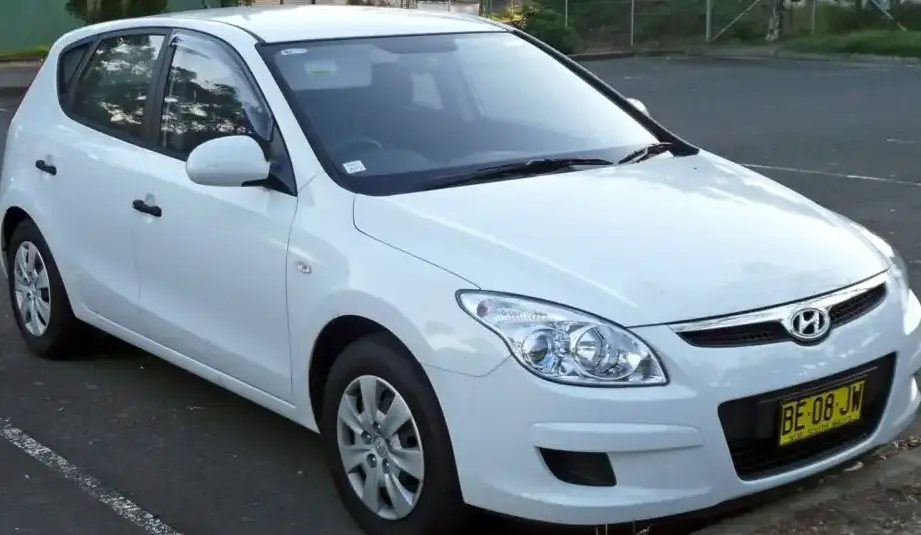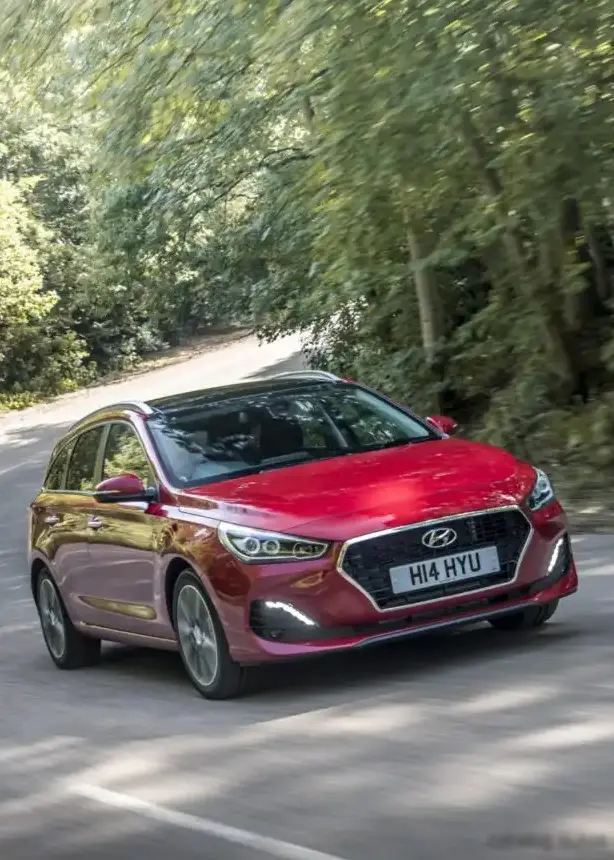
The Hyundai i30 III CW (facelift 2019) 1.4 T-GDI, producing 140 horsepower, represents a key variant within the third generation of Hyundai’s globally successful i30 compact family. Introduced as part of the 2019 facelift, this station wagon (estate) body style aimed to provide a practical and efficient option for European buyers, blending family-friendly space with a relatively economical turbocharged engine. Production of this specific configuration ran from 2019 to 2020, positioning it as a mid-range offering within the i30 lineup, bridging the gap between the base engine options and the more performance-oriented trims.
Technical Specifications
| Brand | Hyundai |
| Model | i30 |
| Generation | i30 III CW (facelift 2019) |
| Type (Engine) | 1.4 T-GDI (140 Hp) |
| Start of production | 2019 |
| End of production | 2020 |
| Powertrain Architecture | Internal Combustion engine |
| Body type | Station wagon (estate) |
| Seats | 5 |
| Doors | 5 |
| Fuel consumption (urban) | 7.2 l/100 km (32.7 US mpg) |
| Fuel consumption (extra urban) | 5.1 l/100 km (46.1 US mpg) |
| Fuel consumption (combined) | 5.9 l/100 km (39.9 US mpg) |
| CO2 emissions | 134 g/km |
| Fuel Type | Petrol (Gasoline) |
| Acceleration 0 – 100 km/h | 9.1 sec |
| Acceleration 0 – 62 mph | 9.1 sec |
| Acceleration 0 – 60 mph | 8.6 sec |
| Maximum speed | 208 km/h (129.25 mph) |
| Emission standard | Euro 6d – TEMP |
| Weight-to-power ratio | 9 kg/Hp |
| Weight-to-torque ratio | 5.2 kg/Nm |
| Power | 140 Hp @ 6000 rpm |
| Torque | 242 Nm @ 1500 rpm (178.49 lb.-ft. @ 1500 rpm) |
| Engine layout | Front, Transverse |
| Engine Model/Code | Kappa II / G4LD |
| Engine displacement | 1353 cm3 (82.57 cu. in.) |
| Number of cylinders | 4 |
| Engine configuration | Inline |
| Cylinder Bore | 71.6 mm (2.82 in.) |
| Piston Stroke | 84 mm (3.31 in.) |
| Number of valves per cylinder | 4 |
| Fuel injection system | Direct injection |
| Engine aspiration | Turbocharger, Intercooler |
| Engine oil capacity | 4.2 l (4.44 US qt | 3.7 UK qt) |
| Coolant | 6.1 l (6.45 US qt | 5.37 UK qt) |
| Kerb Weight | 1262-1417 kg (2782.23 – 3123.95 lbs.) |
| Max. weight | 1850 kg (4078.55 lbs.) |
| Max load | 433-588 kg (954.6 – 1296.32 lbs.) |
| Trunk (boot) space – minimum | 602 l (21.26 cu. ft.) |
| Trunk (boot) space – maximum | 1650 l (58.27 cu. ft.) |
| Fuel tank capacity | 50 l (13.21 US gal | 11 UK gal) |
| Max. roof load | 80 kg (176.37 lbs.) |
| Permitted trailer load with brakes (12%) | 1410 kg (3108.52 lbs.) |
| Permitted trailer load without brakes | 600 kg (1322.77 lbs.) |
| Permitted towbar download | 80 kg (176.37 lbs.) |
| Length | 4585 mm (180.51 in.) |
| Width | 1795 mm (70.67 in.) |
| Height | 1475 mm (58.07 in.) |
| Wheelbase | 2650 mm (104.33 in.) |
| Front track | 1559-1565 mm (61.38 – 61.61 in.) |
| Rear (Back) track | 1567-1573 mm (61.69 – 61.93 in.) |
| Front overhang | 905 mm (35.63 in.) |
| Rear overhang | 1030 mm (40.55 in.) |
| Ride height (ground clearance) | 140 mm (5.51 in.) |
| Drivetrain Architecture | Front wheel drive |
| Drive wheel | Front wheel drive |
| Number of gears and type of gearbox | 6 gears, manual transmission |
| Front brakes | Ventilated discs |
| Rear brakes | Disc |
| Assisting systems | ABS (Anti-lock braking system) |
| Steering type | Steering rack and pinion |
| Power steering | Electric Steering |
INTRODUCTION
The i30 III CW 1.4 T-GDI, launched during the facelift of the third-generation i30, builds upon the success of its predecessors. The “CW” designation signifies the station wagon body style, offering increased cargo capacity compared to the five-door hatchback. This variant was specifically tailored for the European market, where estate cars remain popular due to their practicality. The 1.4 T-GDI engine, part of Hyundai’s Kappa engine family, was chosen for its balance of performance and fuel efficiency. This model aimed to appeal to families and individuals needing a versatile vehicle for both daily commutes and longer journeys.
Powertrain & Engine Architecture
At the heart of the i30 CW 1.4 T-GDI lies the Kappa II 1.4-liter turbocharged gasoline engine, internally designated G4LD. This engine utilizes direct fuel injection (GDI) and a twin-scroll turbocharger to deliver a respectable 140 horsepower at 6000 rpm and 242 Nm (178 lb-ft) of torque from as low as 1500 rpm. The engine’s architecture features an aluminum cylinder block and head, contributing to its relatively lightweight design. The turbocharger and intercooler work in tandem to increase air density, improving combustion efficiency and power output. The engine is paired with a six-speed manual transmission, providing drivers with precise control over gear selection. While an automatic transmission was available on other i30 variants, the 1.4 T-GDI was primarily offered with the manual gearbox in many European markets.
Driving Characteristics
The 1.4 T-GDI engine provides a noticeable step up in performance compared to the naturally aspirated engines available in lower i30 trims. Acceleration from 0 to 100 km/h (0-62 mph) takes approximately 9.1 seconds, making it adequately quick for everyday driving. The turbocharger delivers a surge of torque at lower engine speeds, providing good responsiveness for overtaking and merging onto highways. However, it doesn’t offer the same level of outright performance as the more powerful 1.6 T-GDI engine found in higher-spec i30 models. The six-speed manual transmission is well-matched to the engine’s characteristics, offering smooth gear changes and a satisfying driving experience. The i30 CW’s suspension is tuned for comfort, providing a relatively compliant ride quality, although it may exhibit some body roll during spirited cornering.
Equipment & Trim Levels
The i30 CW 1.4 T-GDI typically came equipped with a solid range of standard features. These generally included air conditioning, a touchscreen infotainment system with Apple CarPlay and Android Auto compatibility, Bluetooth connectivity, and a suite of safety features such as ABS, ESC (Electronic Stability Control), and multiple airbags. Higher trim levels added features like automatic climate control, a larger touchscreen display, a reversing camera, parking sensors, and alloy wheels. Interior upholstery was typically cloth, with options for leather upgrades on higher trims. The dashboard layout was functional and user-friendly, with a focus on ergonomics and ease of use.
Chassis & Braking
The i30 CW utilizes a front-wheel-drive platform with a MacPherson strut front suspension and a multi-link rear suspension. This setup provides a good balance of ride comfort and handling. The braking system consists of ventilated front discs and solid rear discs, providing adequate stopping power for most driving situations. ABS (Anti-lock Braking System) is standard, enhancing braking performance and stability. The i30 CW’s chassis is relatively lightweight, contributing to its overall agility and fuel efficiency.
Market Reception & Comparison
The i30 CW 1.4 T-GDI was generally well-received by automotive critics, who praised its practicality, fuel efficiency, and comfortable ride. It was often compared to rivals such as the Volkswagen Golf Estate, Ford Focus Estate, and Skoda Octavia Estate. While the i30 CW didn’t offer the same level of driving excitement as some of its competitors, it provided a compelling value proposition with its generous standard equipment and competitive pricing. Fuel economy was a strong point, with combined fuel consumption figures averaging around 39.9 US mpg. Reliability was also generally good, although some owners reported minor issues with the infotainment system.
Legacy
The Hyundai i30 CW 1.4 T-GDI has proven to be a reliable and practical used car option. The Kappa II engine, while not without its quirks, has generally demonstrated good long-term durability. The availability of affordable spare parts and a growing network of Hyundai service centers contribute to its continued appeal in the used car market. Today, these models represent a cost-effective choice for buyers seeking a spacious and efficient station wagon with a reasonable level of equipment. The 1.4 T-GDI engine, while not the most powerful in the i30 lineup, offers a good balance of performance and fuel economy, making it a suitable option for a wide range of drivers.