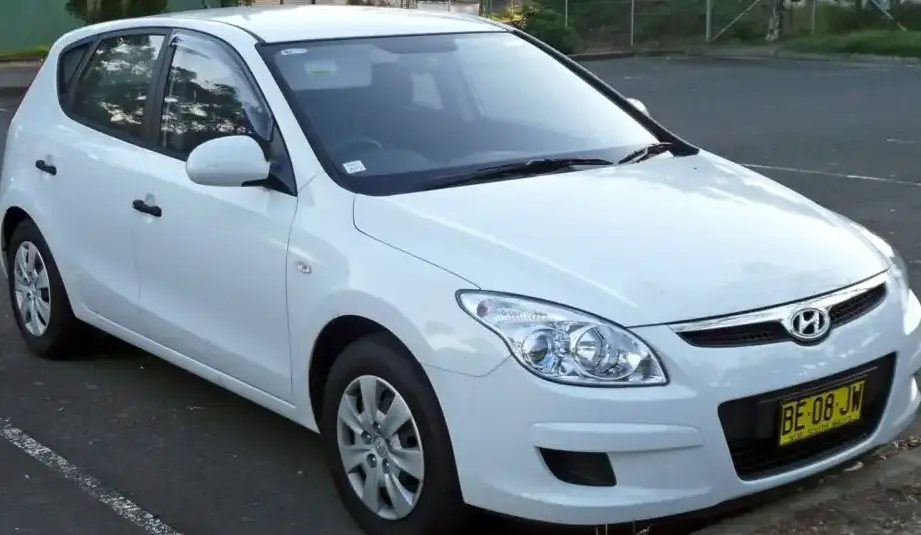
The Hyundai i30 III CW (facelift 2020) 1.5 DPi (110 hp) represents a specific configuration within the third generation of Hyundai’s globally successful i30 compact family. Introduced in May 2020 and remaining in production until May 2022, this variant combined a naturally aspirated 1.5-liter gasoline engine with a six-speed manual transmission, packaged in the practical station wagon (estate) body style. Positioned as an entry-level to mid-range offering, it aimed to provide a balance of fuel efficiency, affordability, and usability for European buyers, where the station wagon body style remains popular. This model is part of the PD generation (i30 III), which received a significant facelift in 2020, updating the exterior styling and interior technology.
Technical Specifications
| Brand | Hyundai |
| Model | i30 |
| Generation | i30 III CW (facelift 2020) |
| Type (Engine) | 1.5 DPi (110 Hp) |
| Start of production | May, 2020 |
| End of production | May, 2022 |
| Powertrain Architecture | Internal Combustion engine |
| Body type | Station wagon (estate) |
| Seats | 5 |
| Doors | 5 |
| Fuel Type | Petrol (Gasoline) |
| Acceleration 0 – 100 km/h | 12.3 sec |
| Acceleration 0 – 62 mph | 12.3 sec |
| Acceleration 0 – 60 mph | 11.7 sec |
| Maximum speed | 187 km/h (116.2 mph) |
| Emission standard | EURO 6d |
| Weight-to-power ratio | 11 kg/Hp, 91.2 Hp/tonne |
| Weight-to-torque ratio | 8.4 kg/Nm, 119.4 Nm/tonne |
| Power | 110 Hp @ 6000 rpm |
| Power per litre | 73.4 Hp/l |
| Torque | 144 Nm @ 3500 rpm (106.21 lb.-ft. @ 3500 rpm) |
| Engine layout | Front, Transverse |
| Engine Model/Code | G4LG |
| Engine displacement | 1498 cm3 (91.41 cu. in.) |
| Number of cylinders | 4 |
| Engine configuration | Inline |
| Number of valves per cylinder | 4 |
| Fuel injection system | Indirect injection with two injectors on each intake port |
| Engine aspiration | Naturally aspirated engine |
| Engine oil capacity | 3.4 l (3.59 US qt | 2.99 UK qt) |
| Coolant | 5.8 l (6.13 US qt | 5.1 UK qt) |
| Kerb Weight | 1206 kg (2658.77 lbs) |
| Max. weight | 1800 kg (3968.32 lbs) |
| Max load | 594 kg (1309.55 lbs) |
| Trunk (boot) space – minimum | 602 l (21.26 cu. ft) |
| Trunk (boot) space – maximum | 1650 l (58.27 cu. ft) |
| Max. roof load | 80 kg (176.37 lbs) |
| Permitted trailer load with brakes (12%) | 1200 kg (2645.55 lbs) |
| Permitted trailer load without brakes | 600 kg (1322.77 lbs) |
| Length | 4585 mm (180.51 in) |
| Width | 1795 mm (70.67 in) |
| Height | 1465-1475 mm (57.68 – 58.07 in) |
| Wheelbase | 2650 mm (104.33 in) |
| Drivetrain Architecture | The Internal combustion engine (ICE) drives the front wheels of the vehicle. |
| Drive wheel | Front wheel drive |
| Number of gears and type of gearbox | 6 gears, manual transmission |
| Front suspension | Independent, type McPherson with coil spring and anti-roll bar |
| Rear suspension | Independent multi-link suspension |
| Assisting systems | ABS (Anti-lock braking system) |
| Steering type | Steering rack and pinion |
Powertrain & Engine Architecture
The heart of the i30 CW 1.5 DPi is the Hyundai-Kia G4LG engine, a 1.5-liter inline-four cylinder gasoline engine. This engine utilizes a naturally aspirated configuration, meaning it doesn’t employ turbocharging or supercharging. It features multi-point fuel injection, with two injectors per cylinder, designed to improve fuel atomization and combustion efficiency. The engine’s valvetrain incorporates four valves per cylinder (DOHC – Dual Overhead Camshafts), contributing to improved breathing and power output. The 110 hp output is achieved at 6000 rpm, while peak torque of 144 Nm (106 lb-ft) arrives at 3500 rpm. This engine is known for its relative simplicity and reliability. The six-speed manual transmission provides a direct connection between the engine and the front wheels. Gear ratios are tuned for a balance of fuel economy and acceptable acceleration, though it’s not geared for particularly sporty performance.
Driving Characteristics
The i30 CW 1.5 DPi offers a predictable and comfortable driving experience. Acceleration is adequate for everyday driving, with a 0-60 mph time of around 11.7 seconds. However, it’s noticeably slower than versions equipped with more powerful engines, such as the 1.6 T-GDI turbo petrol. The manual transmission provides a good level of driver engagement, but the engine’s modest torque output means frequent downshifts are often required when overtaking or climbing hills. The suspension setup prioritizes comfort, absorbing bumps and imperfections in the road well. Steering is light and precise, making it easy to maneuver in urban environments. Overall, this variant is geared towards drivers who prioritize fuel efficiency and a relaxed driving experience over outright performance.
Equipment & Trim Levels
The 1.5 DPi trim typically came with a respectable level of standard equipment, though it was less lavishly equipped than higher-spec models. Standard features generally included air conditioning, a touchscreen infotainment system with Apple CarPlay and Android Auto compatibility, Bluetooth connectivity, and a suite of safety features such as ABS, ESC (Electronic Stability Control), and multiple airbags. Interior upholstery was typically cloth, and the dashboard featured a functional, if somewhat understated, design. Optional extras could include features like a sunroof, upgraded audio system, parking sensors, and automatic climate control. Trim levels varied slightly depending on the specific market, but the 1.5 DPi generally represented a solid value proposition.
Chassis & Braking
The i30 CW utilizes a front-wheel-drive platform with an independent McPherson strut suspension at the front and an independent multi-link suspension at the rear. This suspension setup provides a good balance of ride comfort and handling. Braking duties are handled by disc brakes on the front wheels and drum brakes on the rear wheels, a cost-saving measure common in this segment. ABS (Anti-lock Braking System) is standard, enhancing braking performance and stability. The chassis is designed to provide a stable and predictable driving experience, with a focus on safety and comfort rather than outright sportiness. Stabilizer bars are fitted to both the front and rear axles to reduce body roll during cornering.
Market Reception & Comparison
The i30 CW 1.5 DPi was generally well-received by automotive critics as a practical and affordable family car. It was praised for its fuel efficiency, spacious interior, and comfortable ride. However, some reviewers noted that the engine lacked the punch of more powerful alternatives. Compared to the 1.6 T-GDI turbo petrol version, the 1.5 DPi offered significantly lower performance but better fuel economy. Against diesel-powered i30 models, such as the 1.6 CRDi, it offered a simpler and potentially more reliable powertrain, but with less torque and slightly higher running costs. The 1.5 DPi appealed to buyers who prioritized value for money and practicality over performance.
Legacy
The G4LG 1.5-liter engine has proven to be a relatively reliable unit, with few widespread issues reported. The i30 CW 1.5 DPi remains a popular choice in the used car market, particularly for buyers seeking an affordable and practical family vehicle. Its simple engine design and readily available parts contribute to relatively low maintenance costs. While not a performance standout, the i30 CW 1.5 DPi offers a dependable and economical transportation solution, and continues to represent a sensible option for budget-conscious buyers.