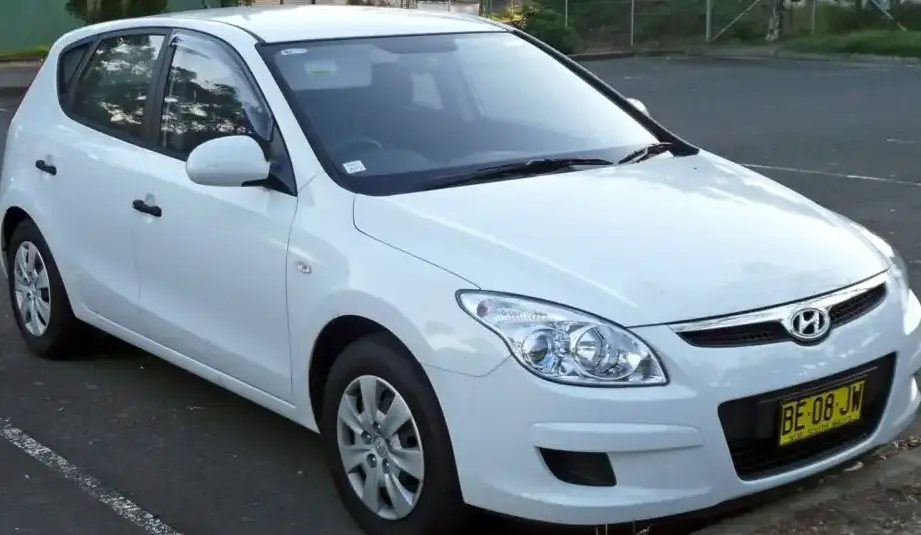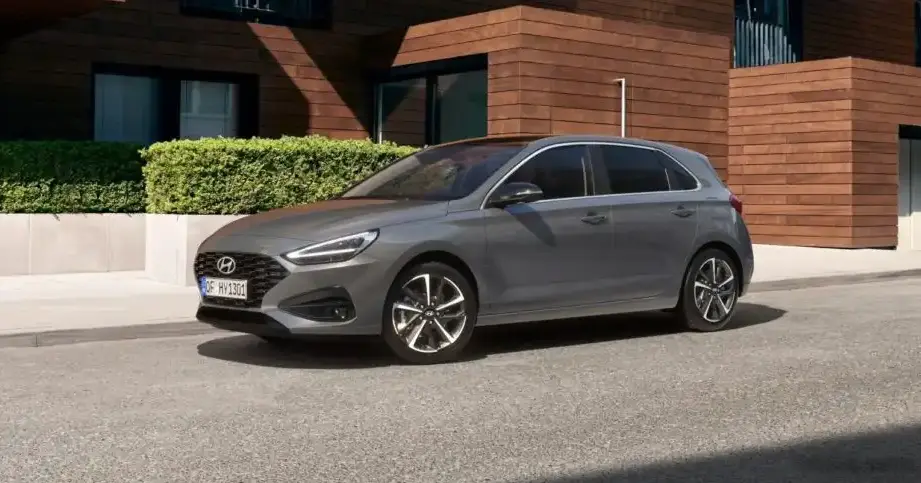
The Hyundai i30 III (facelift, introduced in June 2024) 1.0 T-GDI represents an entry point into the third generation of Hyundai’s globally successful compact hatchback. Positioned as a fuel-efficient and accessible option, this variant utilizes a turbocharged three-cylinder engine paired with a six-speed manual transmission. It builds upon the foundation of the PD (i30 III) platform, offering a blend of practicality, modern features, and Hyundai’s renowned warranty. This specific configuration is primarily aimed at the European market, where fuel economy and lower purchase prices are significant consumer priorities. The facelift brought styling updates and revised technology, further refining the i30’s appeal.
Technical Specifications
| Brand | Hyundai |
| Model | i30 |
| Generation | i30 III (facelift 2024) |
| Type (Engine) | 1.0 T-GDI (100 Hp) |
| Start of production | June, 2024 |
| Powertrain Architecture | Internal Combustion engine |
| Body type | Hatchback |
| Seats | 5 |
| Doors | 5 |
| Combined fuel consumption (WLTP) | 5.7 l/100 km (41.3 US mpg, 49.6 UK mpg, 17.5 km/l) |
| CO2 emissions (WLTP) | 130 g/km |
| Fuel Type | Petrol (Gasoline) |
| Acceleration 0 – 100 km/h | 13.1 sec |
| Acceleration 0 – 62 mph | 13.1 sec |
| Acceleration 0 – 60 mph | 12.4 sec |
| Maximum speed | 178 km/h (110.6 mph) |
| Emission standard | Euro 6e |
| Weight-to-power ratio | 12.2 kg/Hp, 82.2 Hp/tonne |
| Weight-to-torque ratio | 7.1 kg/Nm, 141.4 Nm/tonne |
| Power | 100 Hp @ 6000 rpm |
| Power per litre | 100.2 Hp/l |
| Torque | 172 Nm @ 1500-3500 rpm (126.86 lb.-ft. @ 1500-3500 rpm) |
| Engine layout | Front, Transverse |
| Engine Model/Code | G3LE |
| Engine displacement | 998 cm3 (60.9 cu. in.) |
| Number of cylinders | 3 |
| Engine configuration | Inline |
| Cylinder Bore | 71 mm (2.8 in.) |
| Piston Stroke | 84 mm (3.31 in.) |
| Number of valves per cylinder | 4 |
| Fuel injection system | Direct injection |
| Engine aspiration | Turbocharger, Intercooler |
| Engine oil capacity | 3.6 l (3.8 US qt | 3.17 UK qt) |
| Coolant | 5.9 l (6.23 US qt | 5.19 UK qt) |
| Kerb Weight | 1216-1365 kg (2680.82 – 3009.31 lbs.) |
| Max. weight | 1800 kg (3968.32 lbs.) |
| Max load | 435-584 kg (959.01 – 1287.5 lbs.) |
| Trunk (boot) space – minimum | 395 l (13.95 cu. ft.) |
| Trunk (boot) space – maximum | 1301 l (45.94 cu. ft.) |
| Fuel tank capacity | 50 l (13.21 US gal | 11 UK gal) |
| Max. roof load | 80 kg (176.37 lbs.) |
| Permitted trailer load with brakes (12%) | 1010 kg (2226.67 lbs.) |
| Permitted trailer load without brakes | 510 kg (1124.36 lbs.) |
| Permitted towbar download | 80 kg (176.37 lbs.) |
| Length | 4340 mm (170.87 in.) |
| Width | 1795 mm (70.67 in.) |
| Height | 1455 mm (57.28 in.) |
| Wheelbase | 2650 mm (104.33 in.) |
| Front track | 1559 mm (61.38 in.) |
| Rear (Back) track | 1567 mm (61.69 in.) |
| Front overhang | 905 mm (35.63 in.) |
| Rear overhang | 785 mm (30.91 in.) |
| Ride height (ground clearance) | 140 mm (5.51 in.) |
| Drivetrain Architecture | The Internal combustion engine (ICE) drives the front wheels of the vehicle. |
| Drive wheel | Front wheel drive |
| Number of gears and type of gearbox | 6 gears, manual transmission |
| Front suspension | Independent type McPherson |
| Rear suspension | Independent multi-link suspension |
| Front brakes | Disc |
| Rear brakes | Disc |
| Assisting systems | ABS (Anti-lock braking system) |
| Steering type | Steering rack and pinion |
| Power steering | Electric Steering |
| Tires size | 225/45 R17 |
| Wheel rims size | 7.0J x 17 |
INTRODUCTION
The 1.0 T-GDI variant of the Hyundai i30 III (facelift) represents a key offering in Hyundai’s compact hatchback range. Introduced in June 2024, this model is built on the PD platform, which also underpins other Hyundai and Kia models. The facelift brought subtle but noticeable changes to the exterior styling, including a revised front grille, headlights, and rear bumper. Inside, the focus was on enhancing the infotainment system and improving material quality. This particular engine and transmission combination is designed to appeal to buyers prioritizing fuel efficiency and affordability, making it a popular choice in Europe where smaller displacement engines are favored due to tax incentives and running costs.
Powertrain & Engine Architecture
At the heart of the i30 1.0 T-GDI lies the Hyundai-Kia G3LE engine, a 998cc turbocharged three-cylinder petrol engine. This engine utilizes direct injection technology, delivering fuel directly into the combustion chamber for improved efficiency and performance. The G3LE engine features a single scroll turbocharger with an intercooler, which helps to cool the intake air, increasing its density and boosting power output. The engine’s valvetrain employs four valves per cylinder, contributing to its responsive nature. The six-speed manual transmission is chosen for its efficiency and driver engagement. The gear ratios are tuned to maximize fuel economy while still providing adequate acceleration. The transmission is a conventional setup with synchromesh gears on all forward ratios and reverse.
Driving Characteristics
The 100 hp output of the 1.0 T-GDI engine translates to a respectable, though not exhilarating, driving experience. Acceleration from 0-60 mph takes approximately 12.4 seconds, and the car has a top speed of 110.6 mph. The turbocharger provides a noticeable boost in power from around 1500 rpm, offering decent mid-range acceleration for overtaking and merging onto highways. However, the engine can feel strained at higher speeds or when fully loaded. The six-speed manual transmission allows for precise gear selection, and the gear ratios are well-matched to the engine’s powerband. Compared to higher-output versions of the i30, such as those with the 1.6L engine, this variant offers less outright performance but significantly better fuel economy.
Equipment & Trim Levels
The i30 1.0 T-GDI typically comes equipped with a solid base level of features. Standard equipment often includes air conditioning, a touchscreen infotainment system with Apple CarPlay and Android Auto compatibility, Bluetooth connectivity, and a suite of safety features such as ABS, ESC (Electronic Stability Control), and multiple airbags. Interior upholstery is typically cloth, and the dashboard features a modern design with a focus on ergonomics. Optional extras can include features like a larger touchscreen display, navigation system, rear parking sensors, a reversing camera, and automatic climate control. Higher trim levels may also offer features like leather upholstery, heated seats, and a premium sound system.
Chassis & Braking
The i30 III utilizes an independent suspension setup, with a McPherson strut configuration at the front and a multi-link suspension at the rear. This setup provides a good balance between ride comfort and handling. The chassis is relatively lightweight, contributing to the car’s agility. Braking is handled by disc brakes on all four wheels, providing adequate stopping power. ABS (Anti-lock Braking System) is standard, enhancing safety during emergency braking situations. The steering is electrically assisted, offering a light and precise feel.
Market Reception & Comparison
The Hyundai i30 1.0 T-GDI has been generally well-received by automotive critics, particularly for its fuel efficiency and affordability. It’s often praised for its comfortable ride, spacious interior, and comprehensive standard equipment. Compared to other trims in the i30 lineup, the 1.0 T-GDI offers the best fuel economy, making it an attractive option for drivers who prioritize running costs. However, it lacks the performance of higher-output versions. Competitors in this segment include the Volkswagen Golf, Ford Focus, and Opel Astra, all of which offer similar engine and trim level options. The i30 often stands out due to its generous warranty and competitive pricing.
Legacy
The Hyundai G3LE engine has proven to be a relatively reliable unit, with few widespread issues reported. The i30 III, in general, has a good reputation for build quality and durability. On the used car market, the 1.0 T-GDI variant is likely to hold its value reasonably well, particularly if it has been well-maintained. Its fuel efficiency and low running costs make it an appealing option for budget-conscious buyers. As Hyundai continues to develop and refine its engine technology, the G3LE engine will likely be superseded by more advanced powertrains, but it remains a significant part of the i30’s success story.