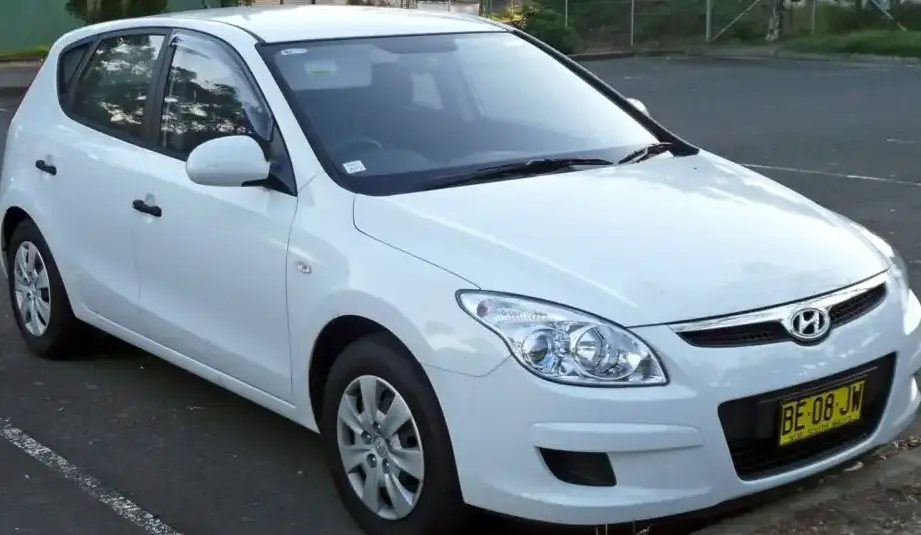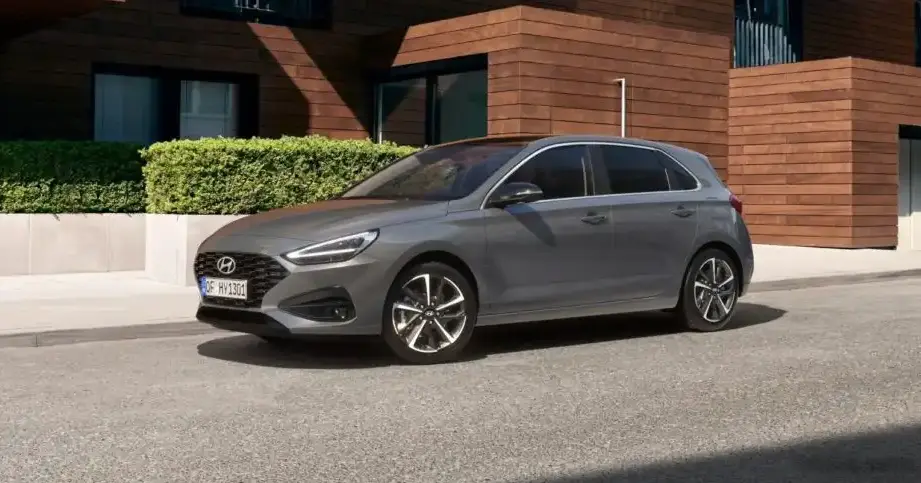
The Hyundai i30 III (facelift, introduced in June 2024) 1.5 T-GDI 140 hp Mild Hybrid represents a key offering within Hyundai’s popular C-segment hatchback lineup. Positioned as a mid-range option, this variant balances fuel efficiency with respectable performance, appealing to buyers seeking a practical and modern daily driver. It builds upon the foundation of the third-generation i30 (PD), incorporating styling updates and enhanced technology while maintaining the core characteristics that have made the i30 a competitive choice in the European and global markets. This model is primarily targeted towards the European market, where compact hatchbacks remain a dominant vehicle segment.
Technical Specifications
| Brand | Hyundai |
| Model | i30 |
| Generation | i30 III (facelift 2024) |
| Type (Engine) | 1.5 T-GDI (140 Hp) Mild Hybrid |
| Start of production | June, 2024 |
| Powertrain Architecture | MHEV (Mild Hybrid Electric Vehicle) |
| Body type | Hatchback |
| Seats | 5 |
| Doors | 5 |
| Combined fuel consumption (WLTP) | 5.9-6.7 l/100 km (39.9 – 35.1 US mpg, 47.9 – 42.2 UK mpg, 16.9 – 14.9 km/l) |
| CO2 emissions (WLTP) | 134-152 g/km |
| Fuel Type | Petrol (Gasoline) |
| Acceleration 0 – 100 km/h | 9.6 sec |
| Acceleration 0 – 62 mph | 9.6 sec |
| Acceleration 0 – 60 mph | 9.1 sec |
| Maximum speed | 197 km/h (122.41 mph) |
| Emission standard | Euro 6e |
| Weight-to-power ratio | 9.1 kg/Hp, 109.4 Hp/tonne |
| Weight-to-torque ratio | 5.1 kg/Nm, 197.7 Nm/tonne |
| Battery voltage | 48 V |
| Power | 140 Hp @ 5500 rpm |
| Power per litre | 94.5 Hp/l |
| Torque | 253 Nm @ 1500-3000 rpm (186.6 lb.-ft. @ 1500-3000 rpm) |
| Engine layout | Front, Transverse |
| Engine Model/Code | G4LK |
| Engine displacement | 1482 cm3 (90.44 cu. in.) |
| Number of cylinders | 4 |
| Engine configuration | Inline |
| Cylinder Bore | 71.5 mm (2.81 in.) |
| Piston Stroke | 92 mm (3.62 in.) |
| Number of valves per cylinder | 4 |
| Fuel injection system | Direct injection |
| Engine aspiration | Turbocharger, Intercooler |
| Engine oil capacity | 4.2 l (4.44 US qt | 3.7 UK qt) |
| Coolant | 6.6 l (6.97 US qt | 5.81 UK qt) |
| Kerb Weight | 1280-1413 kg (2821.92 – 3115.13 lbs.) |
| Max. weight | 1840 kg (4056.51 lbs.) |
| Max load | 427-560 kg (941.37 – 1234.59 lbs.) |
| Trunk (boot) space – minimum | 395 l (13.95 cu. ft.) |
| Trunk (boot) space – maximum | 1301 l (45.94 cu. ft.) |
| Fuel tank capacity | 50 l (13.21 US gal | 11 UK gal) |
| Max. roof load | 80 kg (176.37 lbs.) |
| Permitted trailer load with brakes (12%) | 1210 kg (2667.59 lbs.) |
| Permitted trailer load without brakes | 610 kg (1344.82 lbs.) |
| Permitted towbar download | 80 kg (176.37 lbs.) |
| Length | 4340 mm (170.87 in.) |
| Width | 1795 mm (70.67 in.) |
| Height | 1455 mm (57.28 in.) |
| Wheelbase | 2650 mm (104.33 in.) |
| Front track | 1555-1559 mm (61.22 – 61.38 in.) |
| Rear (Back) track | 1563-1567 mm (61.54 – 61.69 in.) |
| Front overhang | 905 mm (35.63 in.) |
| Rear overhang | 785 mm (30.91 in.) |
| Ride height (ground clearance) | 140 mm (5.51 in.) |
| Drivetrain Architecture | ICE and electric motor drive the front wheels in mixed mode. |
| Drive wheel | Front wheel drive |
| Number of gears and type of gearbox | 6 gears, manual transmission |
| Front suspension | Independent type McPherson |
| Rear suspension | Independent multi-link suspension |
| Front brakes | Disc |
| Rear brakes | Disc |
| Assisting systems | ABS (Anti-lock braking system) |
| Steering type | Steering rack and pinion |
| Power steering | Electric Steering |
| Tires size | 225/45 R17; 225/40 R18 |
| Wheel rims size | 7.0J x 17; 7.5J x 18 |
Powertrain & Engine Architecture
At the heart of the i30 1.5 T-GDI Mild Hybrid lies the Hyundai-Kia G4LK engine, a 1.482-liter turbocharged inline-four cylinder gasoline engine. This engine utilizes direct fuel injection and a single scroll turbocharger with an intercooler to optimize performance and efficiency. The ‘Mild Hybrid’ designation indicates the inclusion of a 48V electrical system and a belt-driven starter generator (BSG). This BSG assists the engine during acceleration, allowing for regenerative braking to recoup energy and improve fuel economy. The engine produces 140 horsepower at 5,500 rpm and 253 Nm (186.6 lb-ft) of torque between 1,500 and 3,000 rpm. The engine is paired with a 6-speed manual transmission, delivering power to the front wheels. The G4LK engine is known for its relatively smooth operation and responsiveness, benefiting from the turbocharger’s ability to provide increased torque at lower engine speeds.
Driving Characteristics
The 1.5 T-GDI Mild Hybrid i30 offers a balanced driving experience. While not overtly sporty, the 140 hp engine provides adequate power for everyday driving situations, including highway merging and overtaking. The 0-60 mph acceleration time of around 9.1 seconds is respectable for this class of vehicle. The mild hybrid system contributes to a smoother start-stop experience and a slight boost in acceleration. The 6-speed manual transmission is well-matched to the engine’s characteristics, offering precise shifts and a reasonable gear spread. Compared to higher-output i30 variants (like those with more powerful gasoline engines), this version prioritizes fuel efficiency over outright performance. It also offers a more engaging driving experience than the diesel options, which often prioritize torque over responsiveness.
Equipment & Trim Levels
The i30 1.5 T-GDI Mild Hybrid typically comes equipped with a solid array of standard features. These generally include air conditioning, a touchscreen infotainment system with Apple CarPlay and Android Auto compatibility, Bluetooth connectivity, and a suite of safety features such as lane keeping assist, forward collision avoidance assist, and automatic emergency braking. Higher trim levels add features like a larger touchscreen display, navigation system, heated seats, a panoramic sunroof, and upgraded interior materials. Interior upholstery is typically cloth on base models, with leather options available on higher trims. The dashboard layout is modern and driver-focused, with intuitive controls and a clear instrument cluster.
Chassis & Braking
The i30 utilizes a front independent McPherson strut suspension and a rear independent multi-link suspension. This setup provides a good balance between ride comfort and handling. The suspension is tuned to prioritize comfort for everyday driving, but it also offers reasonable body control during cornering. The braking system consists of disc brakes on all four wheels, providing adequate stopping power. ABS (Anti-lock Braking System) is standard, along with electronic stability control and traction control. The i30’s chassis is relatively lightweight, contributing to its agility and fuel efficiency.
Market Reception & Comparison
The Hyundai i30 1.5 T-GDI Mild Hybrid has been generally well-received by automotive critics. It’s praised for its fuel efficiency, comfortable ride, and well-equipped interior. Compared to other C-segment hatchbacks, such as the Volkswagen Golf, Ford Focus, and Peugeot 308, the i30 offers a competitive value proposition, often providing more features for the price. Fuel economy is a strong point, with the mild hybrid system helping to achieve real-world figures close to the WLTP ratings. Reliability has also been a positive aspect, with Hyundai consistently ranking well in reliability surveys.
Legacy
The G4LK engine, in its various iterations, has proven to be a reliable and durable powertrain. The mild hybrid system adds a layer of complexity, but early reports suggest it has also been relatively trouble-free. As the i30 III (facelift) ages, the 1.5 T-GDI Mild Hybrid variant is expected to remain a popular choice in the used car market, appealing to buyers seeking a fuel-efficient, well-equipped, and reliable compact hatchback. Its combination of practicality, technology, and affordability positions it as a strong contender in the competitive C-segment.