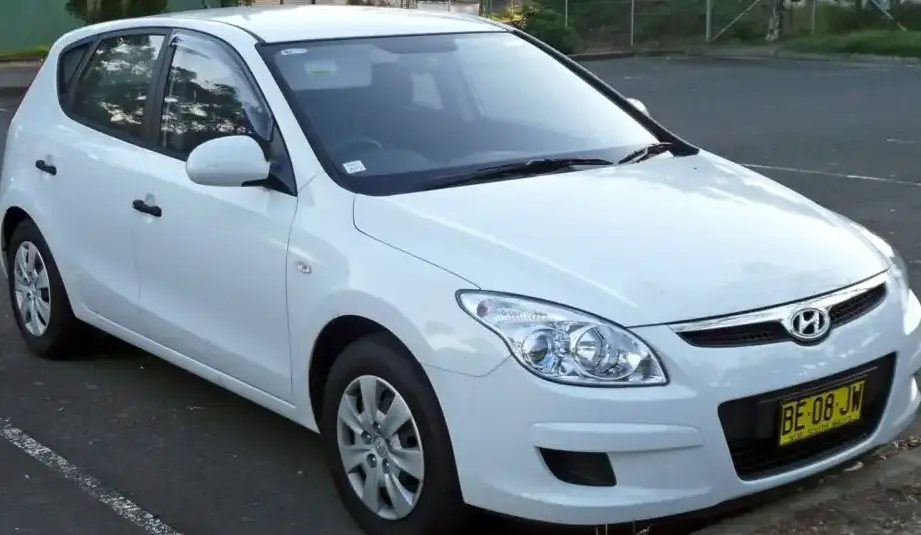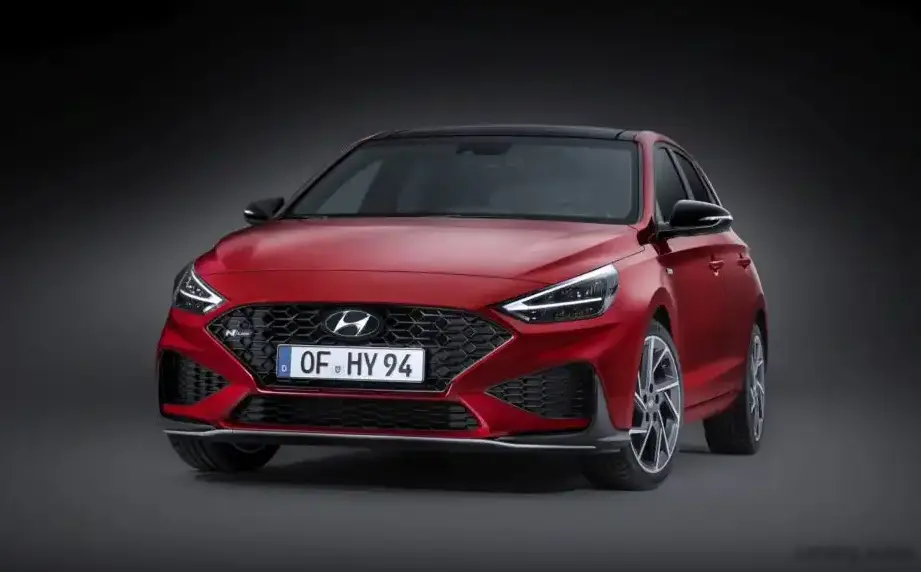
The Hyundai i30 III (facelift, introduced in May 2020 and produced through June 2024) represents a mid-cycle refresh of the third-generation i30, Hyundai’s globally-focused compact hatchback. This variant, the 1.5 T-GDi (160 hp) Mild Hybrid, occupied a significant position in the i30 lineup, offering a balance between fuel efficiency, performance, and modern technology. It was aimed at buyers seeking a practical, well-equipped, and relatively economical hatchback in the competitive European and increasingly North American market. The facelift brought styling updates, enhanced safety features, and powertrain refinements, including the introduction of 48V mild-hybrid technology to improve fuel economy and reduce emissions.
Technical Specifications
| Brand | Hyundai |
| Model | i30 |
| Generation | i30 III (facelift 2020) |
| Type (Engine) | 1.5 T-GDi (160 Hp) Mild Hybrid |
| Start of production | May, 2020 |
| End of production | June, 2024 |
| Powertrain Architecture | MHEV (Mild Hybrid Electric Vehicle) |
| Body type | Hatchback |
| Seats | 5 |
| Doors | 5 |
| Fuel Type | Petrol (Gasoline) |
| Acceleration 0 – 100 km/h | 8.4 sec |
| Acceleration 0 – 62 mph | 8.4 sec |
| Acceleration 0 – 60 mph | 8 sec |
| Maximum speed | 210 km/h (130.49 mph) |
| Emission standard | EURO 6d |
| Weight-to-power ratio | 7.8 kg/Hp, 128 Hp/tonne |
| Weight-to-torque ratio | 4.9 kg/Nm, 202.4 Nm/tonne |
| Power | 160 Hp @ 5500 rpm |
| Power per litre | 108 Hp/l |
| Torque | 253 Nm @ 1500-3500 rpm (186.6 lb.-ft. @ 1500-3500 rpm) |
| Engine layout | Front, Transverse |
| Engine Model/Code | G4LH |
| Engine displacement | 1482 cm3 (90.44 cu. in.) |
| Number of cylinders | 4 |
| Engine configuration | Inline |
| Number of valves per cylinder | 4 |
| Fuel injection system | Direct injection |
| Engine aspiration | Turbocharger, Intercooler |
| Engine oil capacity | 4.2 l (4.44 US qt | 3.7 UK qt) |
| Coolant capacity | 6.6 l (6.97 US qt | 5.81 UK qt) |
| Kerb Weight | 1250 kg (2755.78 lbs.) |
| Max. weight | 1830 kg (4034.46 lbs.) |
| Max load | 580 kg (1278.68 lbs.) |
| Trunk (boot) space – minimum | 395 l (13.95 cu. ft.) |
| Trunk (boot) space – maximum | 1301 l (45.94 cu. ft.) |
| Max. roof load | 80 kg (176.37 lbs.) |
| Permitted trailer load with brakes (12%) | 1200 kg (2645.55 lbs.) |
| Permitted trailer load without brakes | 600 kg (1322.77 lbs.) |
| Length | 4340 mm (170.87 in.) |
| Width | 1795 mm (70.67 in.) |
| Height | 1455 mm (57.28 in.) |
| Wheelbase | 2650 mm (104.33 in.) |
| Drivetrain Architecture | ICE and electric motor drive front wheels, mixed mode operation |
| Drive wheel | Front wheel drive |
| Number of gears | 6 |
| Gearbox type | Manual transmission |
| Front suspension | Independent, McPherson with coil spring and anti-roll bar |
| Rear suspension | Independent multi-link suspension |
| Assisting systems | ABS (Anti-lock braking system) |
| Steering type | Steering rack and pinion |
Powertrain & Engine Architecture
At the heart of the i30 1.5 T-GDi Mild Hybrid lies the G4LH engine, a 1.482-liter turbocharged inline-four cylinder gasoline engine. This engine utilizes direct fuel injection, a technology that improves combustion efficiency and power output. The turbocharger, coupled with an intercooler, provides increased air intake, boosting horsepower and torque. The ‘T-GDi’ designation signifies Hyundai’s Turbocharged Gasoline Direct Injection technology. The mild-hybrid system incorporates a 48V battery and a belt-driven starter generator (BSG). The BSG assists the engine during acceleration, recaptures energy during braking (regenerative braking), and enables an auto start-stop function for improved fuel economy. The engine produces 160 horsepower at 5500 rpm and 253 Nm (186.6 lb-ft) of torque between 1500 and 3500 rpm. This power is delivered through a six-speed manual transmission, providing drivers with a direct connection to the engine.
Driving Characteristics
The 1.5 T-GDi Mild Hybrid i30 offers a responsive and engaging driving experience. The turbocharger provides a noticeable boost in power, making overtaking and merging onto highways relatively effortless. While not a performance-oriented variant, the 8.4-second 0-62 mph acceleration time is respectable for a compact hatchback. The mild-hybrid system contributes to smoother acceleration, particularly from a standstill, and helps to reduce turbo lag. The six-speed manual transmission is well-matched to the engine’s powerband, offering precise shifts and a satisfying driving feel. Compared to higher-output i30 variants, such as those with larger engines, this version prioritizes fuel efficiency over outright speed. It also offers a more refined driving experience than the base engine options.
Equipment & Trim Levels
The 1.5 T-GDi Mild Hybrid trim typically included a generous array of standard features. These commonly included air conditioning, a touchscreen infotainment system with Apple CarPlay and Android Auto compatibility, Bluetooth connectivity, and a suite of safety features such as lane keeping assist, forward collision avoidance assist, and automatic emergency braking. Higher trim levels offered upgrades such as a larger touchscreen display, navigation system, premium audio system, leather upholstery, heated front seats, and a panoramic sunroof. Exterior features often included alloy wheels, LED headlights, and fog lights. The specific equipment levels varied depending on the market and optional packages selected.
Chassis & Braking
The i30 III utilizes a McPherson strut front suspension and a multi-link rear suspension, providing a comfortable and controlled ride. The suspension is tuned to balance handling and comfort, making it suitable for both city driving and longer journeys. The steering is precise and well-weighted, offering good feedback to the driver. Braking duties are handled by disc brakes on all four wheels, providing ample stopping power. ABS (Anti-lock Braking System) is standard, enhancing safety during emergency braking situations. Stabilizer bars are fitted to both the front and rear axles to reduce body roll during cornering.
Market Reception & Comparison
The Hyundai i30 1.5 T-GDi Mild Hybrid was generally well-received by automotive critics. It was praised for its fuel efficiency, comfortable ride, and well-equipped interior. The mild-hybrid system was seen as a positive step towards reducing emissions and improving fuel economy. Compared to other trims in the i30 lineup, this variant offered a compelling balance between performance and efficiency. It was often positioned as a sweet spot for buyers who wanted a more engaging driving experience than the base engine options but didn’t require the higher performance of the more powerful engines. Competitors in this segment included the Volkswagen Golf, Ford Focus, and Opel Astra.
Legacy
The G4LH engine, while not without its minor reported issues (primarily related to turbocharger longevity in some cases), has proven to be a relatively reliable powertrain when properly maintained. The mild-hybrid system has also demonstrated good long-term durability. On the used car market, the i30 1.5 T-GDi Mild Hybrid remains a popular choice, offering a good value proposition for buyers seeking a practical, fuel-efficient, and well-equipped compact hatchback. Its combination of modern technology, comfortable ride, and reasonable running costs ensures its continued appeal in the years to come.