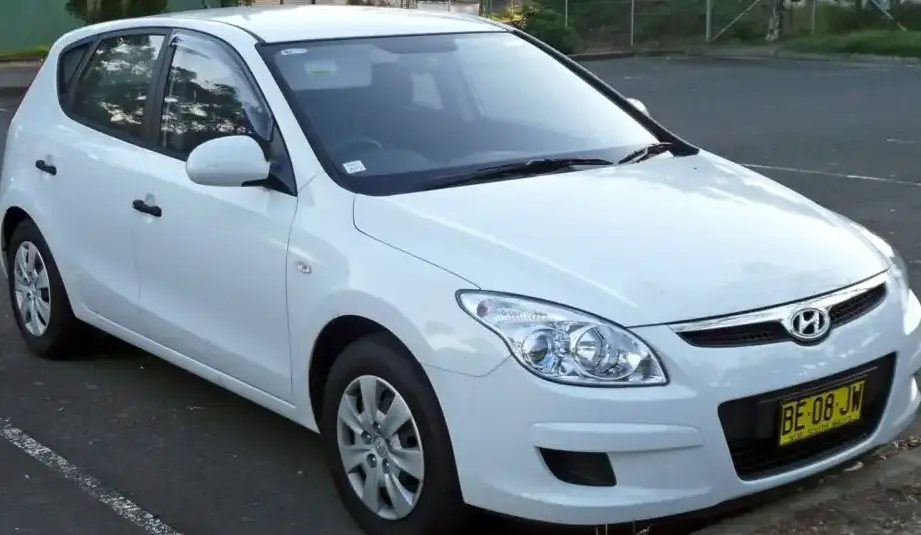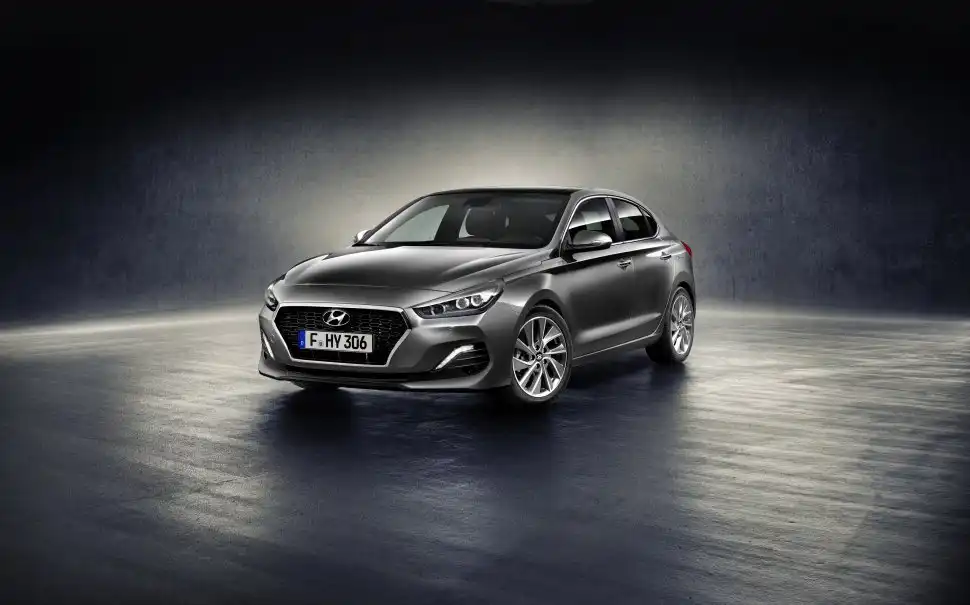
The Hyundai i30 III Fastback 1.4 T-GDI (140 hp) DCT represents a specific configuration within the third generation of Hyundai’s globally successful i30 compact car. Introduced for the 2017 and 2018 model years, this variant combined a turbocharged gasoline engine with a dual-clutch transmission (DCT) and the more stylish Fastback body style. It was positioned as a mid-range offering, appealing to buyers seeking a balance between performance, fuel efficiency, and modern features. The i30 III, built on the PD platform, aimed to elevate Hyundai’s presence in the competitive European C-segment, and the Fastback body style offered a more coupe-like alternative to the traditional hatchback.
Technical Specifications
| Brand | Hyundai |
| Model | i30 |
| Generation | i30 III Fastback |
| Type (Engine) | 1.4 T-GDI (140 Hp) DCT |
| Start of production | 2017 |
| End of production | 2018 |
| Powertrain Architecture | Internal Combustion engine |
| Body type | Fastback |
| Seats | 5 |
| Doors | 5 |
| Fuel consumption (urban) | 6.3 l/100 km (37.3 US mpg, 44.8 UK mpg, 15.9 km/l) |
| Fuel consumption (extra urban) | 4.9 l/100 km (48 US mpg, 57.6 UK mpg, 20.4 km/l) |
| Fuel consumption (combined) | 5.4 l/100 km (43.6 US mpg, 52.3 UK mpg, 18.5 km/l) |
| CO2 emissions | 125 g/km |
| Fuel Type | Petrol (Gasoline) |
| Acceleration 0 – 100 km/h | 9.5 sec |
| Acceleration 0 – 62 mph | 9.5 sec |
| Acceleration 0 – 60 mph | 9 sec |
| Maximum speed | 203 km/h (126.14 mph) |
| Emission standard | Euro 6 |
| Weight-to-power ratio | 9.2 kg/Hp, 108.8 Hp/tonne |
| Weight-to-torque ratio | 5.3 kg/Nm, 188 Nm/tonne |
| Power | 140 Hp @ 6000 rpm |
| Power per litre | 103.5 Hp/l |
| Torque | 242 Nm @ 1500 rpm (178.49 lb.-ft. @ 1500 rpm) |
| Engine layout | Front, Transverse |
| Engine Model/Code | Kappa II / G4LD |
| Engine displacement | 1353 cm3 (82.57 cu. in.) |
| Number of cylinders | 4 |
| Engine configuration | Inline |
| Cylinder Bore | 71.6 mm (2.82 in.) |
| Piston Stroke | 84 mm (3.31 in.) |
| Compression ratio | 10:1 |
| Number of valves per cylinder | 4 |
| Fuel injection system | Direct injection |
| Engine aspiration | Turbocharger, Intercooler |
| Valvetrain | DOHC |
| Engine oil capacity | 4.2 l (4.44 US qt | 3.7 UK qt) |
| Coolant | 6.1 l (6.45 US qt | 5.37 UK qt) |
| Kerb Weight | 1287-1439 kg (2837.35 – 3172.45 lbs.) |
| Max. weight | 1860 kg (4100.6 lbs.) |
| Max load | 421-573 kg (928.15 – 1263.25 lbs.) |
| Trunk (boot) space – minimum | 450 l (15.89 cu. ft.) |
| Trunk (boot) space – maximum | 1351 l (47.71 cu. ft.) |
| Fuel tank capacity | 50 l (13.21 US gal | 11 UK gal) |
| Length | 4455 mm (175.39 in.) |
| Width | 1795 mm (70.67 in.) |
| Height | 1425 mm (56.1 in.) |
| Wheelbase | 2650 mm (104.33 in.) |
| Front overhang | 905 mm (35.63 in.) |
| Rear overhang | 900 mm (35.43 in.) |
| Ride height (ground clearance) | 135 mm (5.31 in.) |
| Minimum turning circle | 10.6 m (34.78 ft.) |
| Drivetrain Architecture | ICE to Front Wheels |
| Drive wheel | Front wheel drive |
| Number of gears | 7 |
| Gearbox type | automatic transmission DCT |
| Front suspension | Independent type McPherson |
| Rear suspension | Independent multi-link suspension |
| Front brakes | Ventilated discs |
| Rear brakes | Disc |
| Assisting systems | ABS (Anti-lock braking system) |
| Steering type | Steering rack and pinion |
| Power steering | Electric Steering |
| Tires size | 225/45 R17; 225/40 ZR18 |
| Wheel rims size | 7.0J x 17; 7.5J x 18 |
Powertrain & Engine Architecture
The heart of the i30 Fastback 1.4 T-GDI is Hyundai’s Kappa II engine, specifically the G4LD code. This 1.353-liter, inline-four cylinder engine utilizes direct fuel injection and a single scroll turbocharger with an intercooler. The direct injection system allows for precise fuel delivery, improving efficiency and reducing emissions. The turbocharger boosts power output, providing 140 horsepower at 6000 rpm and 242 Nm (178 lb-ft) of torque from a low 1500 rpm. This torque curve contributes to good everyday drivability. The engine features a dual overhead camshaft (DOHC) valvetrain with four valves per cylinder, optimizing airflow for enhanced performance. The engine is transversely mounted in the front of the vehicle.
Paired with the engine is a seven-speed dual-clutch transmission (DCT). This DCT offers quicker and smoother gear changes compared to a traditional automatic transmission, contributing to a more engaging driving experience. The DCT’s programming prioritizes fuel efficiency, but also allows for manual gear selection via steering wheel-mounted paddles or the gear selector.
Driving Characteristics
The 1.4 T-GDI DCT powertrain delivers a respectable driving experience. Acceleration from 0 to 60 mph takes approximately 9 seconds, and the car reaches a top speed of 126 mph. While not a performance-oriented variant, the turbocharger provides sufficient power for confident overtaking and merging onto highways. The DCT contributes to responsive acceleration, and the engine’s torque availability at low rpm makes it easy to drive in urban environments. Compared to the base 1.0 T-GDI engine, the 1.4 T-GDI offers a noticeable increase in power and torque. However, it doesn’t match the performance of the more powerful 1.6 T-GDI models. The automatic transmission, while convenient, can sometimes feel less engaging than the available six-speed manual transmission.
Equipment & Trim Levels
The i30 III Fastback 1.4 T-GDI DCT typically came equipped with a good level of standard features. These included air conditioning, a touchscreen infotainment system with Apple CarPlay and Android Auto compatibility, Bluetooth connectivity, and a suite of safety features such as ABS, ESC, and multiple airbags. Higher trim levels added features like a larger touchscreen display, navigation system, rear parking sensors, a reversing camera, and automatic climate control. Interior upholstery was typically cloth, with options for leather upgrades. Exterior features included alloy wheels, body-colored door handles and mirrors, and projector headlights.
Chassis & Braking
The i30 Fastback utilizes an independent McPherson strut suspension at the front and an independent multi-link suspension at the rear. This setup provides a good balance between ride comfort and handling. The steering is electrically assisted, offering a light and precise feel. Braking duties are handled by ventilated discs at the front and solid discs at the rear. ABS (Anti-lock Braking System) is standard, enhancing braking performance and stability. The suspension tuning is geared towards comfort, but the car remains relatively stable and predictable in corners.
Market Reception & Comparison
The i30 III Fastback 1.4 T-GDI DCT was generally well-received by automotive critics. It was praised for its stylish design, comfortable ride, and efficient powertrain. Fuel economy figures of around 43.6 US mpg combined were considered competitive for its class. Compared to other C-segment rivals like the Volkswagen Golf, Ford Focus, and Opel Astra, the i30 offered a strong value proposition with a generous level of standard equipment. However, some critics noted that the interior materials weren’t quite as premium as those found in some competitors. Reliability reports have been generally positive, with few major issues reported with the 1.4 T-GDI engine and DCT transmission.
Legacy
The Hyundai i30 III Fastback 1.4 T-GDI DCT has proven to be a reliable and practical used car option. The Kappa II engine, while not without its quirks, has generally demonstrated good durability. The DCT transmission, if properly maintained (regular fluid changes are crucial), is also relatively reliable. The Fastback body style continues to appeal to buyers seeking a more stylish alternative to the traditional hatchback. As a result, well-maintained examples of this variant hold their value reasonably well in the used car market, making it a sensible choice for budget-conscious buyers looking for a modern and efficient compact car.