Technical Specifications
| Brand | Hyundai |
| Model | i30 |
| Generation | i30 III Fastback (facelift 2020) |
| Type (Engine) | 1.0 T-GDi (120 Hp) DCT |
| Start of production | May, 2020 |
| End of production | June, 2024 |
| Powertrain Architecture | Internal Combustion engine |
| Body type | Fastback |
| Seats | 5 |
| Doors | 5 |
| Fuel Type | Petrol (Gasoline) |
| Acceleration 0 – 100 km/h | 11.2 sec |
| Acceleration 0 – 62 mph | 11.2 sec |
| Acceleration 0 – 60 mph | 10.6 sec |
| Maximum speed | 196 km/h (121.79 mph) |
| Emission standard | Euro 6d |
| Weight-to-power ratio | 10.6 kg/Hp, 94.5 Hp/tonne |
| Weight-to-torque ratio | 7.4 kg/Nm, 135.4 Nm/tonne |
| Power | 120 Hp @ 6000 rpm |
| Power per litre | 120.2 Hp/l |
| Torque | 172 Nm @ 1500-4000 rpm (126.86 lb.-ft. @ 1500-4000 rpm) |
| Engine layout | Front, Transverse |
| Engine Model/Code | Kappa II / G3LC |
| Engine displacement | 998 cm3 (60.9 cu. in.) |
| Number of cylinders | 3 |
| Engine configuration | Inline |
| Number of valves per cylinder | 4 |
| Fuel injection system | Direct injection |
| Engine aspiration | Turbocharger, Intercooler |
| Engine oil capacity | 3.6 l (3.8 US qt | 3.17 UK qt) |
| Coolant | 5.9 l (6.23 US qt | 5.19 UK qt) |
| Kerb Weight | 1270 kg (2799.87 lbs) |
| Max. weight | 1850 kg (4078.55 lbs) |
| Max load | 580 kg (1278.68 lbs) |
| Trunk (boot) space – minimum | 450 l (15.89 cu. ft) |
| Trunk (boot) space – maximum | 1351 l (47.71 cu. ft) |
| Max. roof load | 80 kg (176.37 lbs) |
| Permitted trailer load with brakes (12%) | 700 kg (1543.24 lbs) |
| Permitted trailer load without brakes | 300 kg (661.39 lbs) |
| Length | 4455 mm (175.39 in) |
| Width | 1795 mm (70.67 in) |
| Height | 1425 mm (56.1 in) |
| Wheelbase | 2650 mm (104.33 in) |
| Drivetrain Architecture | The Internal combustion engine (ICE) drives the front wheels of the vehicle. |
| Drive wheel | Front wheel drive |
| Number of gears and type of gearbox | 7 gears, automatic transmission DCT |
| Front suspension | Independent, type McPherson with coil spring and anti-roll bar |
| Rear suspension | Independent multi-link suspension |
| Assisting systems | ABS (Anti-lock braking system) |
| Steering type | Steering rack and pinion |
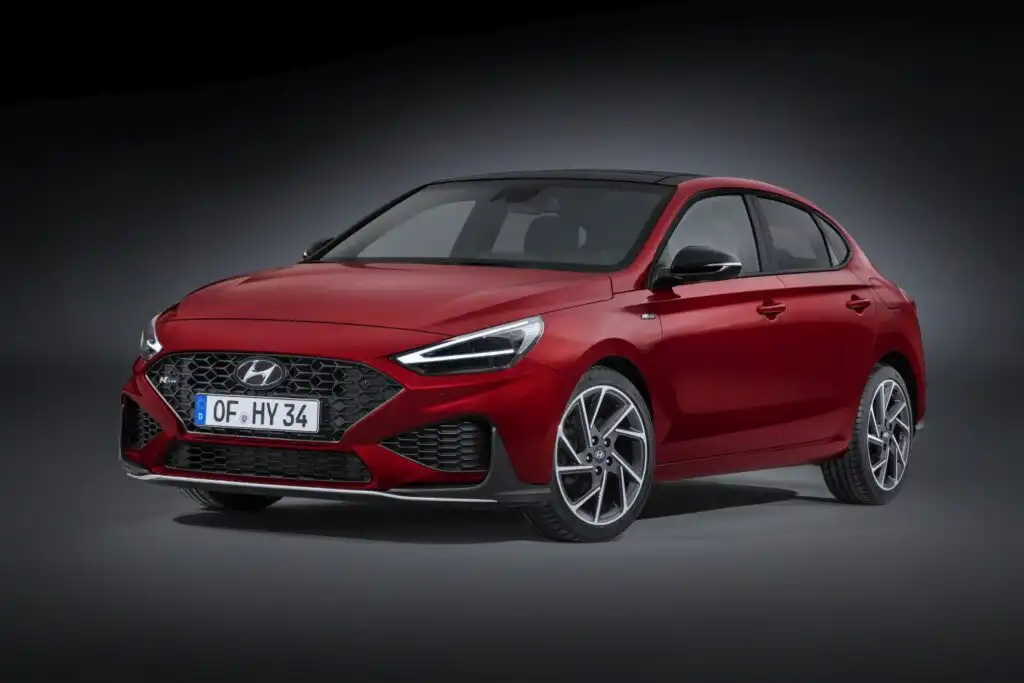
The Hyundai i30 III Fastback, specifically the 1.0 T-GDi (120 horsepower) variant with a dual-clutch transmission (DCT), was a significant offering in Hyundai’s European lineup from May 2020 until June 2024. This model blended practicality, efficiency, and contemporary styling within the competitive compact car segment. Positioned as an entry-to-mid-range trim, it targeted buyers seeking a fuel-efficient and well-equipped vehicle without the expense of more powerful engine options. The Fastback body style, a coupe-like four-door, differentiated it from the standard i30 hatchback, offering a more dynamic aesthetic. This variant played a crucial role in Hyundai’s efforts to increase its market share in Europe, building on the i30’s established reputation for value and reliability.
Powertrain & Engine Architecture
The powertrain of this i30 variant centers around the Hyundai Kappa II 1.0 T-GDi engine, internally designated with the code G3LC. This is a three-cylinder, inline gasoline engine equipped with direct fuel injection and a single turbocharger coupled with an intercooler. The direct injection system optimizes fuel delivery, contributing to improved efficiency and power output. The engine generates 120 horsepower at 6000 rpm and 172 Nm (126.86 lb-ft) of torque between 1500 and 4000 rpm. This broad torque curve provides a relatively responsive driving experience. Notably, the engine utilizes a timing chain, reducing the need for periodic replacement compared to timing belts. The engine is paired with a 7-speed dual-clutch transmission (DCT). This DCT facilitates quick and smooth gear changes, enhancing both performance and fuel economy. The DCT offers both fully automatic and manual shifting modes, allowing drivers to select their preferred driving style.
Driving Characteristics
The 1.0 T-GDi with the DCT delivers a balanced driving experience. While not exceptionally quick – achieving 0-60 mph in approximately 10.6 seconds – it provides sufficient power for everyday driving. The DCT contributes to brisk acceleration, particularly during overtaking. Compared to the more powerful 1.6L gasoline or diesel options available in the i30 range, this variant prioritizes fuel efficiency. The 7-speed DCT’s gear ratios are tuned to maximize fuel economy while maintaining adequate acceleration. The engine can feel somewhat strained at higher speeds or when carrying a full load, but generally provides a smooth and refined experience. The steering is light and precise, making it easy to maneuver in urban environments.
Equipment & Trim Levels
The 1.0 T-GDi DCT Fastback typically included a solid set of standard features. These generally encompassed air conditioning, a touchscreen infotainment system with Apple CarPlay and Android Auto compatibility, Bluetooth connectivity, and a suite of safety technologies like ABS, ESC (Electronic Stability Control), and multiple airbags. Higher trim levels added features such as a larger touchscreen display, navigation, automatic climate control, heated seats, and parking sensors. Interior upholstery was typically cloth, with leather upgrades available on higher trims. The dashboard layout was modern and functional, prioritizing ease of use. Optional extras included a panoramic sunroof, a premium audio system, and various styling enhancements.
Chassis & Braking
The i30 Fastback employs a front-wheel-drive layout with independent suspension on all four wheels. The front suspension utilizes a McPherson strut design with coil springs and an anti-roll bar, while the rear features a multi-link setup. This suspension configuration provides a comfortable ride and good handling. Braking systems varied by trim level, with lower trims often equipped with front disc brakes and rear drum brakes. Higher trims typically featured disc brakes on all four wheels. ABS (Anti-lock Braking System) was standard across all variants, improving braking performance and safety. Stabilizer bars were fitted to both axles to minimize body roll during cornering.
Market Reception & Comparison
The Hyundai i30 1.0 T-GDi DCT Fastback received generally positive reviews from automotive critics. It was praised for its fuel efficiency, comfortable ride, and well-equipped interior. Some reviewers noted the engine could feel underpowered at times, especially when fully loaded or driving uphill. Compared to other trims in the i30 lineup, this variant offered a compelling balance of price and features. The 1.6L gasoline engine provided more power but at a higher cost, while the diesel options offered superior fuel economy but with a higher initial purchase price. Regarding reliability, the Kappa engine family has proven generally robust with proper maintenance, although some owners have reported minor issues with the turbocharger and DCT.
Legacy
The 1.0 T-GDi engine has become a core component of Hyundai’s powertrain offerings, demonstrating good long-term reliability when properly maintained. The DCT transmission, while generally reliable, benefits from regular servicing to ensure optimal performance. On the used car market, the i30 1.0 T-GDi Fastback represents a good value, offering a practical and efficient vehicle at an affordable price. Its combination of modern styling, fuel economy, and available features makes it an attractive option for compact car buyers. The Fastback body style, in particular, has gained popularity for its more dynamic appearance compared to the standard hatchback.