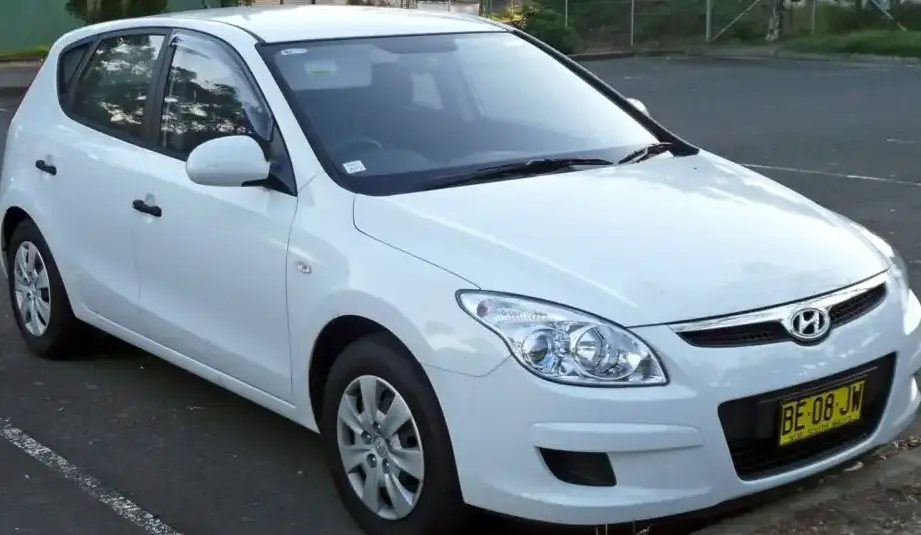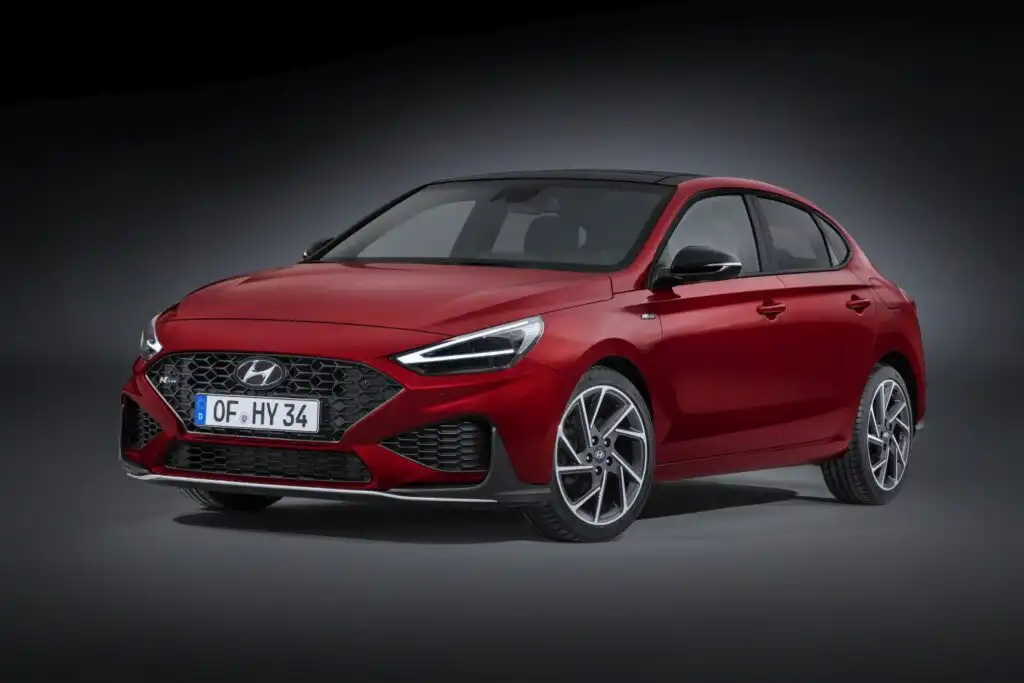
The Hyundai i30 III Fastback, specifically the 1.0 T-GDi (120 hp) Mild Hybrid DCT variant, was produced from May 2020 to June 2024. This model represents a key offering within the third generation of the i30, positioned as an efficient and technologically advanced compact car aimed at the European and global markets. The Fastback body style, a coupe-like four-door, distinguishes it from the standard hatchback version, offering a more streamlined and sporty aesthetic. This particular trim level served as an entry point into the i30 Fastback range, balancing affordability with modern features and Hyundai’s growing hybrid technology.
Technical Specifications
| Brand | Hyundai |
| Model | i30 |
| Generation | i30 III Fastback (facelift 2020) |
| Type (Engine) | 1.0 T-GDi (120 Hp) Mild Hybrid DCT |
| Start of production | May, 2020 |
| End of production | June, 2024 |
| Powertrain Architecture | MHEV (Mild Hybrid Electric Vehicle) |
| Body type | Fastback |
| Seats | 5 |
| Doors | 5 |
| Fuel Type | Petrol (Gasoline) |
| Acceleration 0 – 100 km/h | 11.2 sec |
| Acceleration 0 – 62 mph | 11.2 sec |
| Acceleration 0 – 60 mph | 10.6 sec |
| Maximum speed | 196 km/h (121.79 mph) |
| Emission standard | Euro 6d |
| Weight-to-power ratio | 10.7 kg/Hp |
| Weight-to-torque ratio | 7.5 kg/Nm |
| Power | 120 Hp @ 6000 rpm |
| Torque | 172 Nm @ 1500-4000 rpm (126.86 lb.-ft. @ 1500-4000 rpm) |
| Engine layout | Front, Transverse |
| Engine Model/Code | Kappa II / G3LC |
| Engine displacement | 998 cm3 (60.9 cu. in.) |
| Number of cylinders | 3 |
| Engine configuration | Inline |
| Number of valves per cylinder | 4 |
| Fuel injection system | Direct injection |
| Engine aspiration | Turbocharger, Intercooler |
| Engine oil capacity | 3.6 l (3.8 US qt | 3.17 UK qt) |
| Coolant capacity | 6 l (6.34 US qt | 5.28 UK qt) |
| Kerb Weight | 1282 kg (2826.33 lbs.) |
| Max. weight | 1850 kg (4078.55 lbs.) |
| Max load | 568 kg (1252.23 lbs.) |
| Trunk (boot) space – minimum | 450 l (15.89 cu. ft.) |
| Trunk (boot) space – maximum | 1351 l (47.71 cu. ft.) |
| Max. roof load | 80 kg (176.37 lbs.) |
| Permitted trailer load with brakes (12%) | 700 kg (1543.24 lbs.) |
| Permitted trailer load without brakes | 300 kg (661.39 lbs.) |
| Length | 4455 mm (175.39 in.) |
| Width | 1795 mm (70.67 in.) |
| Height | 1425 mm (56.1 in.) |
| Wheelbase | 2650 mm (104.33 in.) |
| Number of gears and type of gearbox | 7 gears, automatic transmission DCT |
Powertrain & Engine Architecture
The heart of the i30 Fastback 1.0 T-GDi MHEV is Hyundai’s Kappa II engine, specifically the G3LC code. This is a 1.0-liter, three-cylinder turbocharged gasoline engine. The engine utilizes direct fuel injection, optimizing combustion efficiency and power delivery. The turbocharger, coupled with an intercooler, helps to mitigate turbo lag and maintain consistent boost across the rev range. The mild hybrid system incorporates a 48V battery and a belt-driven starter generator (BSG). This system allows for features like extended start-stop operation, regenerative braking (recapturing energy during deceleration), and a slight power assist during acceleration. The engine’s 120 horsepower and 172 Nm (126.86 lb-ft) of torque are delivered between 1500 and 4000 rpm. The transmission is a 7-speed dual-clutch transmission (DCT), known for its quick and smooth gear changes.
Driving Characteristics
The 1.0 T-GDi engine, paired with the DCT, provides adequate performance for everyday driving. Acceleration from 0-60 mph takes approximately 10.6 seconds, and the top speed is 196 km/h (121.79 mph). While not a performance-oriented trim, the turbocharger provides a noticeable boost in power when needed, making overtaking maneuvers manageable. Compared to the more powerful 1.6 T-GDi variants, this engine prioritizes fuel efficiency over outright speed. The DCT transmission contributes to a more engaging driving experience than a traditional automatic, offering quicker shifts and a more direct connection to the engine. The mild hybrid system is largely transparent to the driver, providing subtle assistance and contributing to improved fuel economy.
Equipment & Trim Levels
The 1.0 T-GDi MHEV trim typically included standard features such as air conditioning, a touchscreen infotainment system with Apple CarPlay and Android Auto compatibility, Bluetooth connectivity, and a suite of safety features including lane keeping assist, forward collision avoidance assist, and automatic emergency braking. Interior upholstery was generally cloth, with options for upgraded materials available. Higher trim levels offered features like a larger touchscreen display, navigation system, heated seats, and a premium sound system. The Fastback body style itself added a degree of visual flair, often including features like a rear spoiler and unique alloy wheel designs.
Chassis & Braking
The i30 Fastback utilizes a McPherson strut front suspension and an independent multi-link rear suspension. This setup provides a good balance between ride comfort and handling. The suspension is tuned to prioritize comfort, making it well-suited for daily commuting and long journeys. The braking system typically consists of disc brakes on the front wheels and drum brakes on the rear wheels, although some higher trim levels may have disc brakes all around. Anti-lock Braking System (ABS) is standard, ensuring safe and controlled braking in emergency situations. The steering is a rack and pinion system, providing precise and responsive steering feel.
Market Reception & Comparison
The Hyundai i30 Fastback 1.0 T-GDi MHEV was generally well-received by automotive critics. It was praised for its fuel efficiency, comfortable ride, and modern features. The mild hybrid system was seen as a positive step towards reducing emissions and improving fuel economy. Compared to other trims in the i30 lineup, this variant offered a more affordable entry point while still providing a good level of equipment and technology. It competed with other compact cars in the European market, such as the Volkswagen Golf, Ford Focus, and Opel Astra, offering a compelling alternative with a strong warranty and competitive pricing.
Legacy
The Kappa II engine family, including the G3LC, has proven to be relatively reliable. The mild hybrid system, while relatively new at the time of its introduction, has also demonstrated good long-term durability. In the used car market, the i30 Fastback 1.0 T-GDi MHEV represents a good value proposition, offering a fuel-efficient and well-equipped compact car at an affordable price. Regular maintenance, including oil changes and adherence to the manufacturer’s recommended service intervals, is crucial for ensuring the longevity of this powertrain. The combination of a turbocharged engine, DCT transmission, and mild hybrid technology makes this variant a noteworthy example of Hyundai’s commitment to innovation and efficiency.