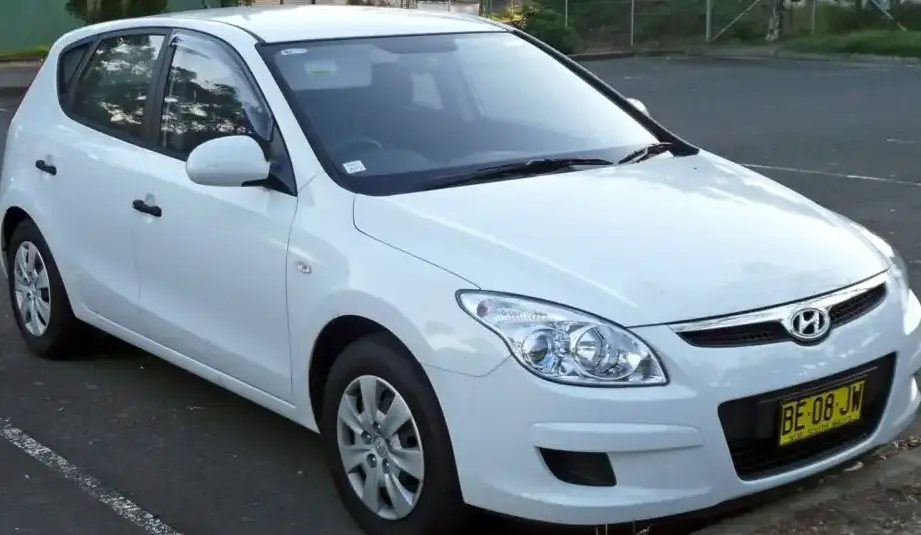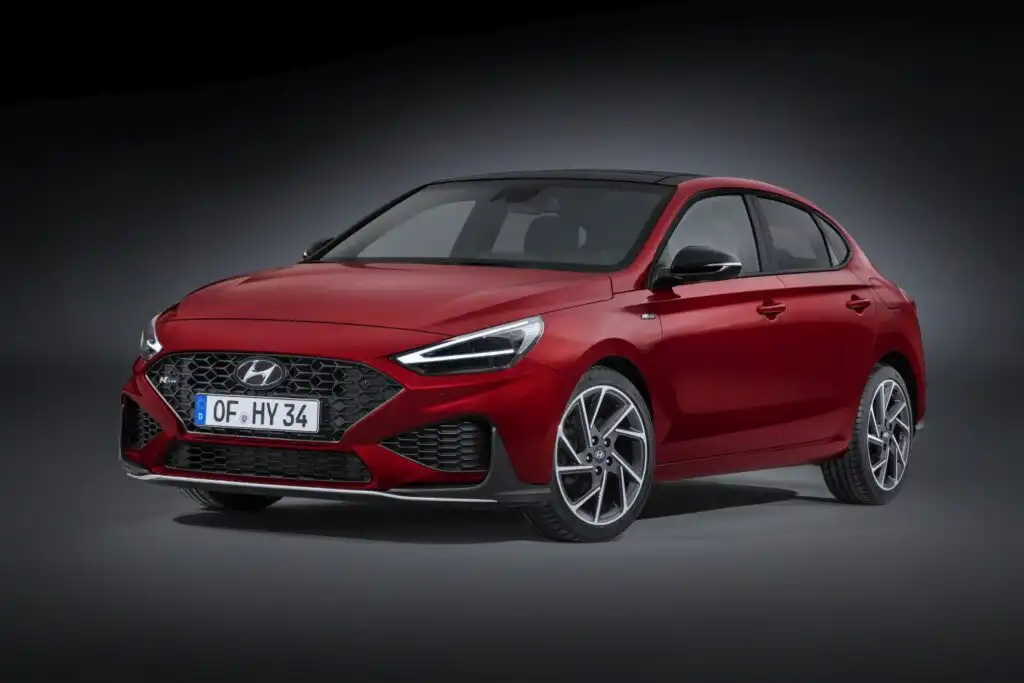
The Hyundai i30 III Fastback, specifically the facelifted version introduced in May 2020 and continuing through June 2024, represents Hyundai’s entry into the competitive compact fastback segment. This variant, powered by a 1.5 T-GDi engine producing 160 horsepower and incorporating mild hybrid technology, aimed to balance performance, fuel efficiency, and modern features. Positioned as a mid-range offering within the i30 lineup, it catered to buyers seeking a stylish and practical vehicle with a degree of technological sophistication. The i30 Fastback, and this trim in particular, was primarily marketed in Europe, where the fastback body style enjoys significant popularity, offering an alternative to traditional hatchback designs.
Technical Specifications
| Brand | Hyundai |
| Model | i30 |
| Generation | i30 III Fastback (facelift 2020) |
| Type (Engine) | 1.5 T-GDi (160 Hp) Mild Hybrid |
| Start of production | May, 2020 |
| End of production | June, 2024 |
| Powertrain Architecture | MHEV (Mild Hybrid Electric Vehicle) |
| Body type | Fastback |
| Seats | 5 |
| Doors | 5 |
| Fuel Type | Petrol (Gasoline) |
| Acceleration 0 – 100 km/h | 8.4 sec |
| Acceleration 0 – 62 mph | 8.4 sec |
| Acceleration 0 – 60 mph | 8 sec |
| Maximum speed | 210 km/h (130.49 mph) |
| Emission standard | Euro 6d |
| Weight-to-power ratio | 7.9 kg/Hp |
| Weight-to-torque ratio | 5 kg/Nm |
| Power | 160 Hp @ 5500 rpm |
| Power per litre | 108 Hp/l |
| Torque | 253 Nm @ 1500-3500 rpm (186.6 lb.-ft. @ 1500-3500 rpm) |
| Engine layout | Front, Transverse |
| Engine Model/Code | G4LH |
| Engine displacement | 1482 cm3 (90.44 cu. in.) |
| Number of cylinders | 4 |
| Engine configuration | Inline |
| Number of valves per cylinder | 4 |
| Fuel injection system | Direct injection |
| Engine aspiration | Turbocharger, Intercooler |
| Engine oil capacity | 4.2 l (4.44 US qt | 3.7 UK qt) |
| Coolant capacity | 6.6 l (6.97 US qt | 5.81 UK qt) |
| Kerb Weight | 1270 kg (2799.87 lbs.) |
| Max. weight | 1840 kg (4056.51 lbs.) |
| Max load | 570 kg (1256.63 lbs.) |
| Trunk (boot) space – minimum | 450 l (15.89 cu. ft.) |
| Trunk (boot) space – maximum | 1351 l (47.71 cu. ft.) |
| Max. roof load | 80 kg (176.37 lbs.) |
| Permitted trailer load with brakes (12%) | 1200 kg (2645.55 lbs.) |
| Permitted trailer load without brakes | 600 kg (1322.77 lbs.) |
| Length | 4455 mm (175.39 in.) |
| Width | 1795 mm (70.67 in.) |
| Height | 1425 mm (56.1 in.) |
| Wheelbase | 2650 mm (104.33 in.) |
| Drivetrain Architecture | ICE and electric motor drive front wheels (MHEV) |
| Drive wheel | Front wheel drive |
| Number of gears | 6 |
| Gearbox type | Manual transmission |
| Front suspension | Independent, McPherson with coil spring and anti-roll bar |
| Rear suspension | Independent multi-link suspension |
| Assisting systems | ABS (Anti-lock braking system) |
| Steering type | Steering rack and pinion |
Powertrain & Engine Architecture
At the heart of the i30 Fastback 1.5 T-GDi Mild Hybrid lies the G4LH engine, a 1.482-liter inline-four cylinder gasoline engine. This engine utilizes direct fuel injection and a single turbocharger with an intercooler to deliver a balance of power and efficiency. The ‘T-GDi’ designation signifies Hyundai’s Turbocharged Gasoline Direct Injection technology. The mild hybrid system incorporates a 48V battery and a belt-driven starter generator (BSG). The BSG allows for features like extended start-stop operation, regenerative braking (capturing energy during deceleration), and a slight power assist during acceleration. This system doesn’t allow for fully electric driving, but it does contribute to improved fuel economy and reduced emissions. The engine’s valvetrain employs four valves per cylinder, contributing to its breathing efficiency. The six-speed manual transmission was the standard offering, providing drivers with direct control over the engine’s power delivery.
Driving Characteristics
The 160 horsepower and 186.6 lb.-ft. of torque produced by the 1.5 T-GDi engine, coupled with the six-speed manual transmission, provided a reasonably engaging driving experience. Acceleration from 0-60 mph in around 8 seconds was respectable for the class. The turbocharger provides a noticeable boost in power, particularly in the mid-range, making overtaking maneuvers relatively effortless. Compared to the base 1.0 T-GDi engine, the 1.5 T-GDi offered a significant performance upgrade. While not as sporty as higher-performance i30 variants, such as those with more powerful engines, it provided a good balance between responsiveness and fuel efficiency. The mild hybrid system, while subtle, contributed to smoother start-stop transitions and a slight improvement in low-speed acceleration. The gear ratios were well-chosen for everyday driving, offering a good compromise between fuel economy and performance.
Equipment & Trim Levels
The i30 III Fastback 1.5 T-GDi Mild Hybrid typically came equipped with a solid array of standard features. These included air conditioning, a touchscreen infotainment system with Apple CarPlay and Android Auto compatibility, Bluetooth connectivity, and a suite of safety features such as ABS, ESC (Electronic Stability Control), and multiple airbags. Higher trim levels offered upgrades such as a larger touchscreen display, navigation system, a premium sound system, leather upholstery, heated front seats, and advanced driver-assistance systems (ADAS) like lane keeping assist and adaptive cruise control. Exterior features often included alloy wheels, LED headlights, and a rear spoiler. The interior design was modern and functional, with a focus on ergonomics and user-friendliness.
Chassis & Braking
The i30 Fastback utilized a McPherson strut front suspension and a multi-link rear suspension, providing a comfortable and controlled ride. The suspension was tuned to balance handling and ride comfort, making it suitable for both city driving and longer journeys. The front brakes were typically ventilated discs, while the rear brakes were solid discs on most trims, providing adequate stopping power. The steering was a rack and pinion system, offering precise and responsive handling. Stabilizer bars were fitted to both the front and rear axles to reduce body roll during cornering.
Market Reception & Comparison
The Hyundai i30 III Fastback 1.5 T-GDi Mild Hybrid was generally well-received by automotive critics. It was praised for its stylish design, comfortable ride, and efficient engine. The mild hybrid system was seen as a positive step towards improving fuel economy and reducing emissions. Compared to other compact fastbacks in its class, such as the Volkswagen Arteon or the Audi A3 Sportback, the i30 offered a competitive price point and a generous level of standard equipment. Fuel economy figures typically ranged from 45-55 mpg (combined cycle), depending on driving conditions. Reliability reports generally indicated good reliability, with few major issues reported.
Legacy
The 1.5 T-GDi Mild Hybrid powertrain has proven to be a relatively reliable unit in the Hyundai i30. While long-term durability data is still accumulating, early indications suggest that the engine and transmission are robust and capable of handling significant mileage. On the used car market, this variant of the i30 Fastback represents a good value proposition, offering a blend of style, efficiency, and features at a competitive price. The mild hybrid technology, while not groundbreaking, has contributed to the i30’s appeal to environmentally conscious buyers. As Hyundai continues to expand its hybrid and electric vehicle offerings, the i30 Fastback 1.5 T-GDi Mild Hybrid serves as an important stepping stone in the company’s transition towards a more sustainable future.