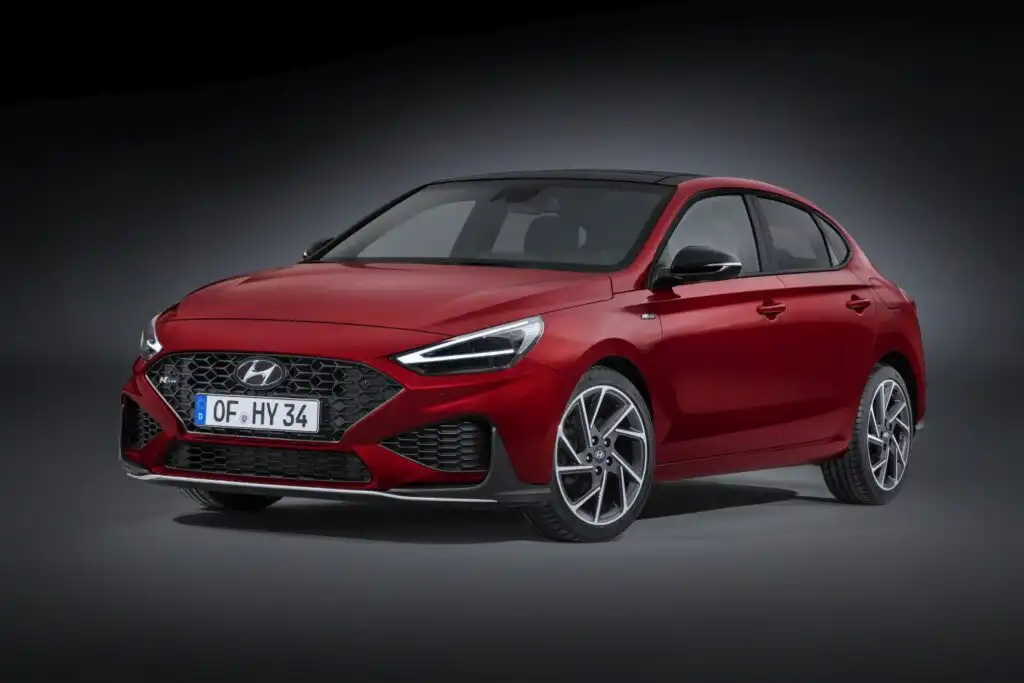
The Hyundai i30 III Fastback N Performance 2.0 T-GDi (280 Hp) represents the high-performance variant of Hyundai’s compact liftback, produced from May 2021 to June 2024. Positioned as the flagship of the i30 Fastback range, it builds upon the third generation (PD) i30, which itself is based on the PQ35 platform shared with other Hyundai and Kia models. The “N” designation signifies Hyundai’s performance division, and this model aimed to deliver a compelling driving experience focused on track capability and enthusiast appeal within the competitive hot hatch segment. This particular iteration, with its 2.0-liter turbocharged engine and six-speed manual transmission, was primarily marketed in Europe and select international markets.
Technical Specifications
| Brand | Hyundai |
| Model | i30 |
| Generation | i30 III Fastback (facelift 2020) |
| Type (Engine) | N Performance 2.0 T-GDi (280 Hp) |
| Start of production | May, 2021 |
| End of production | June, 2024 |
| Powertrain Architecture | Internal Combustion engine |
| Body type | Fastback |
| Seats | 5 |
| Doors | 5 |
| Fuel Type | Petrol (Gasoline) |
| Maximum speed | 249 km/h (154.72 mph) |
| 0-100 km/h | 34.6 m |
| Emission standard | Euro 6d |
| Weight-to-power ratio | 5.1 kg/Hp, 195.7 Hp/tonne |
| Weight-to-torque ratio | 3.7 kg/Nm, 273.9 Nm/tonne |
| Power | 280 Hp @ 6000 rpm |
| Power per litre | 140.1 Hp/l |
| Torque | 392 Nm @ 2100-4700 rpm (289.12 lb.-ft. @ 2100-4700 rpm) |
| Engine layout | Front, Transverse |
| Engine Model/Code | G4KH |
| Engine displacement | 1998 cm3 (121.93 cu. in.) |
| Number of cylinders | 4 |
| Engine configuration | Inline |
| Cylinder Bore | 86 mm (3.39 in.) |
| Piston Stroke | 86 mm (3.39 in.) |
| Compression ratio | 9.5:1 |
| Number of valves per cylinder | 4 |
| Fuel injection system | Direct injection |
| Engine aspiration | Turbocharger, Intercooler |
| Valvetrain | DOHC, E-CVVT |
| Engine oil capacity | 4.8 l (5.07 US qt | 4.22 UK qt) |
| Coolant | 8.5 l (8.98 US qt | 7.48 UK qt) |
| Kerb Weight | 1431-1511 kg (3154.81 – 3331.18 lbs.) |
| Trunk (boot) space – minimum | 436 l (15.4 cu. ft.) |
| Trunk (boot) space – maximum | 1337 l (47.22 cu. ft.) |
| Fuel tank capacity | 50 l (13.21 US gal | 11 UK gal) |
| Max. roof load | 80 kg (176.37 lbs.) |
| Permitted trailer load with brakes (12%) | 1600 kg (3527.4 lbs.) |
| Permitted trailer load without brakes | 700 kg (1543.24 lbs.) |
| Permitted towbar download | 80 kg (176.37 lbs.) |
| Length | 4455 mm (175.39 in.) |
| Width | 1795 mm (70.67 in.) |
| Height | 1445 mm (56.89 in.) |
| Wheelbase | 2650 mm (104.33 in.) |
| Minimum turning circle | 11.66 m (38.25 ft.) |
| Drivetrain Architecture | Front wheel drive |
| Number of gears and type of gearbox | 6 gears, manual transmission |
| Front suspension | Independent type McPherson |
| Rear suspension | Independent multi-link suspension |
| Front brakes | Disc, 345 mm |
| Rear brakes | Disc, 314 mm |
| Assisting systems | ABS (Anti-lock braking system) |
| Steering type | Steering rack and pinion |
| Power steering | Electric Steering |
| Tires size | 235/35 R19 Y |
| Wheel rims size | 8.0J x 19 |
Powertrain & Engine Architecture
At the heart of the i30 N Performance Fastback lies the Hyundai-Kia G4KH 2.0-liter turbocharged inline-four engine. This engine is a significant departure from the naturally aspirated engines found in lower trims of the i30. The G4KH utilizes direct injection, a twin-scroll turbocharger, and an intercooler to produce 280 horsepower at 6000 rpm and 392 Nm (289 lb-ft) of torque between 2100 and 4700 rpm. The engine features a dual continuously variable valve timing (DOHC E-CVVT) system, optimizing valve timing for improved performance and efficiency. The six-speed manual transmission was the sole gearbox option for this performance variant, chosen for its driver engagement and direct control. The transmission features closely spaced gear ratios designed to maximize acceleration and maintain optimal engine speed during spirited driving. A reinforced clutch was employed to handle the increased torque output.
Driving Characteristics
The i30 N Performance Fastback delivers a noticeably more engaging driving experience compared to standard i30 models. The 280 hp engine provides brisk acceleration, with Hyundai claiming a 0-62 mph (0-100 km/h) time of around 6.1 seconds. The manual transmission allows for precise gear selection, and the short throw shifter enhances the driving experience. The suspension is tuned for performance, offering reduced body roll and improved handling. While the ride is firmer than on standard i30 models, it remains reasonably comfortable for everyday use. The exhaust note is also more aggressive, adding to the sporty character of the car. Compared to the base i30 models, the N Performance offers a significantly more responsive throttle and a more direct steering feel.
Equipment & Trim Levels
The N Performance trim level was the highest specification available for the i30 Fastback. Standard features included sport seats upholstered in a combination of suede and leather, a leather-wrapped steering wheel, and aluminum pedals. Infotainment was provided by an 8-inch touchscreen display with Apple CarPlay and Android Auto compatibility. Safety features included automatic emergency braking, lane keeping assist, and blind-spot monitoring. Optional extras included a panoramic sunroof, premium sound system, and various exterior styling enhancements. The interior featured unique N-branded accents, further differentiating it from other i30 models.
Chassis & Braking
The i30 N Performance Fastback benefits from a reinforced chassis and upgraded braking system. The front suspension utilizes a McPherson strut design with stiffer springs and dampers, while the rear suspension employs a multi-link setup. Larger disc brakes (345mm front, 314mm rear) provide improved stopping power. The car also features an electronic stability control system with selectable driving modes, allowing drivers to adjust the level of intervention. The steering system is a rack-and-pinion type with electric power assistance, offering precise and responsive steering feel.
Market Reception & Comparison
The Hyundai i30 N Performance Fastback was generally well-received by automotive critics. It was praised for its engaging driving dynamics, powerful engine, and comprehensive equipment list. Compared to rivals such as the Volkswagen Golf GTI and Ford Focus ST, the i30 N offered a compelling alternative with a more aggressive character and a competitive price point. Fuel economy was respectable for a performance car, averaging around 30-35 mpg in mixed driving conditions. Reliability reports have been generally positive, with few major issues reported. However, some reviewers noted that the interior materials, while well-assembled, weren’t quite as premium as those found in some of its German competitors.
Legacy
The Hyundai i30 N Performance Fastback represents a significant step forward for Hyundai’s N performance division. It demonstrated the brand’s ability to develop genuinely engaging and competitive hot hatches. The G4KH engine and six-speed manual transmission have proven to be reliable and durable, and the car has maintained a strong following among enthusiasts. On the used car market, well-maintained examples of the i30 N Performance Fastback command a premium price, reflecting its desirability and performance capabilities. The model helped establish Hyundai as a serious player in the hot hatch segment and paved the way for future N performance models.