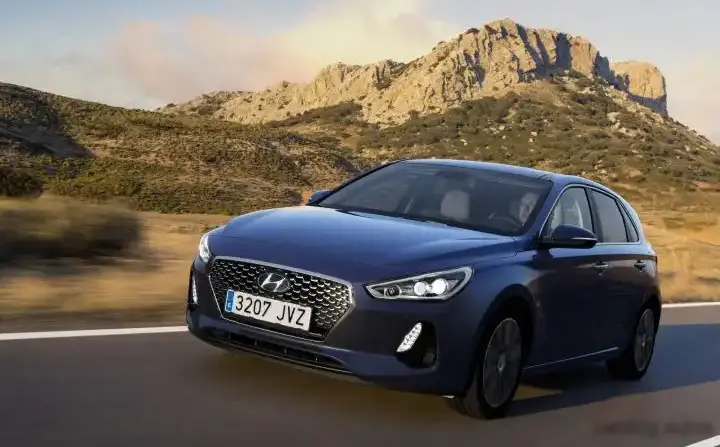
The Hyundai i30 III N 2.0 T-GDI (250 Hp) represents Hyundai’s initial foray into the high-performance hot hatch segment, launched in 2017 and continuing through 2018. Built on the PD (i30 III) platform, this variant aimed to directly compete with established European rivals like the Volkswagen Golf GTI and Ford Focus ST. The “N” designation signifies Hyundai’s newly formed high-performance division, drawing inspiration from motorsport experience gained at the Nürburgring test facility. This model was primarily targeted at the European market, though limited examples were available in other regions. It marked a significant shift for Hyundai, demonstrating a commitment to driver-focused engineering and performance.
Technical Specifications
| Brand | Hyundai |
| Model | i30 |
| Generation | i30 III |
| Type (Engine) | N 2.0 T-GDI (250 Hp) |
| Start of production | 2017 |
| End of production | 2018 |
| Powertrain Architecture | Internal Combustion engine |
| Body type | Hatchback |
| Seats | 5 |
| Doors | 5 |
| Fuel Type | Petrol (Gasoline) |
| Acceleration 0 – 100 km/h | 6.4 sec |
| Acceleration 0 – 62 mph | 6.4 sec |
| Acceleration 0 – 60 mph | 6.1 sec |
| Maximum speed | 250 km/h (155.34 mph) |
| Weight-to-power ratio | 5.8 kg/Hp, 173.6 Hp/tonne |
| Weight-to-torque ratio | 4.1 kg/Nm, 245.1 Nm/tonne |
| Power | 250 Hp @ 6000 rpm |
| Power per litre | 125.1 Hp/l |
| Torque | 353 Nm @ 1450-4000 rpm (260.36 lb.-ft. @ 1450-4000 rpm) |
| Engine layout | Front, Transverse |
| Engine Model/Code | G4KH |
| Engine displacement | 1998 cm3 (121.93 cu. in.) |
| Number of cylinders | 4 |
| Engine configuration | Inline |
| Cylinder Bore | 86 mm (3.39 in.) |
| Piston Stroke | 86 mm (3.39 in.) |
| Compression ratio | 9.5:1 |
| Number of valves per cylinder | 4 |
| Fuel injection system | Direct injection |
| Engine aspiration | Turbocharger, Intercooler |
| Valvetrain | DOHC, E-CVVT |
| Engine oil capacity | 4.8 l (5.07 US qt | 4.22 UK qt) |
| Coolant | 8.5 l (8.98 US qt | 7.48 UK qt) |
| Kerb Weight | 1440-1480 kg (3174.66 – 3262.84 lbs.) |
| Max. weight | 1950 kg (4299.01 lbs.) |
| Max load | 470-510 kg (1036.17 – 1124.36 lbs.) |
| Trunk (boot) space – minimum | 395 l (13.95 cu. ft.) |
| Trunk (boot) space – maximum | 1301 l (45.94 cu. ft.) |
| Fuel tank capacity | 50 l (13.21 US gal | 11 UK gal) |
| Length | 4335 mm (170.67 in.) |
| Width | 1795 mm (70.67 in.) |
| Height | 1447-1451 mm (56.97 – 57.13 in.) |
| Wheelbase | 2650 mm (104.33 in.) |
| Front overhang | 905 mm (35.63 in.) |
| Rear overhang | 780 mm (30.71 in.) |
| Ride height (ground clearance) | 136-132 mm (5.35 – 5.2 in.) |
| Minimum turning circle | 11.6 m (38.06 ft.) |
| Drivetrain Architecture | Front wheel drive |
| Drive wheel | Front wheel drive |
| Number of gears | 6 gears, manual transmission |
| Front suspension | Independent type McPherson |
| Rear suspension | Independent multi-link suspension |
| Front brakes | Ventilated discs |
| Rear brakes | Disc |
| Assisting systems | ABS (Anti-lock braking system) |
| Steering type | Steering rack and pinion |
| Power steering | Electric Steering |
| Tires size | 225/40 R18; 235/35 R19 |
| Wheel rims size | 18; 19 |
INTRODUCTION
The i30 N 2.0 T-GDI, produced from 2017 to 2018, was the first performance-oriented model developed under Hyundai’s “N” sub-brand. It’s based on the third-generation i30 (PD), a compact hatchback known for its practicality and value. The N variant, however, was a radical departure, focusing on delivering a genuinely engaging driving experience. This initial N model was exclusively offered with a six-speed manual transmission, a deliberate choice to appeal to driving enthusiasts. It quickly gained recognition for its surprisingly capable performance and well-balanced chassis, challenging the dominance of established hot hatch manufacturers.
Powertrain & Engine Architecture
At the heart of the i30 N lies the G4KH 2.0-liter turbocharged inline-four cylinder engine. This engine is a member of Hyundai’s Theta II family, but significantly modified for performance. It features direct injection, a twin-scroll turbocharger, and an intercooler to maximize power and efficiency. The engine produces 250 horsepower at 6,000 rpm and 353 Nm (260 lb-ft) of torque between 1,450 and 4,000 rpm. The engine utilizes a DOHC (Dual Overhead Camshaft) valvetrain with Hyundai’s E-CVVT (Electronic Continuously Variable Valve Timing) system for optimized performance across the rev range. The six-speed manual transmission was specifically chosen for its robust construction and direct feel. The gear ratios are relatively short, contributing to the car’s responsive acceleration.
Driving Characteristics
The i30 N 2.0 T-GDI delivers a noticeably engaging driving experience. The 250 hp engine, coupled with the manual transmission, provides brisk acceleration, achieving 0-60 mph in approximately 6.1 seconds. The turbocharger provides strong mid-range torque, making the car feel responsive in everyday driving situations. The short gear ratios contribute to a lively feel, but can also result in higher engine speeds at highway cruising. Hyundai engineers focused heavily on chassis tuning, equipping the i30 N with stiffer springs, dampers, and stabilizer bars compared to the standard i30. This results in reduced body roll and improved handling precision. The steering is well-weighted and provides good feedback, enhancing driver confidence. The car’s limited-slip differential (LSD) further enhances traction and allows for more aggressive cornering.
Equipment & Trim Levels
The i30 N 2.0 T-GDI came relatively well-equipped, focusing on performance-enhancing features rather than luxury. Standard equipment included sport seats with enhanced bolstering, a leather-wrapped steering wheel, and aluminum pedals. Infotainment was provided by a touchscreen display with Apple CarPlay and Android Auto compatibility. Optional extras included a panoramic sunroof, upgraded sound system, and various exterior styling enhancements. The interior design was functional and driver-focused, with a clear and concise instrument cluster. The N-specific touches, such as the N logo on the steering wheel and seats, reinforced the car’s performance credentials.
Chassis & Braking
The i30 N’s chassis was extensively reworked to handle the increased power and provide a more dynamic driving experience. The front suspension utilizes a McPherson strut design, while the rear features a multi-link setup. Both ends were fitted with stiffer springs and dampers, and the stabilizer bars were upgraded for increased roll resistance. Braking duties are handled by ventilated discs at all four corners, providing ample stopping power. The car is equipped with ABS (Anti-lock Braking System) and Electronic Stability Control (ESC), although the ESC can be partially deactivated for track use. The standard tire size is 225/40 R18, with an optional 235/35 R19 upgrade available.
Market Reception & Comparison
The i30 N 2.0 T-GDI was generally well-received by automotive critics. It was praised for its engaging driving dynamics, strong performance, and surprisingly affordable price point. Compared to rivals like the Volkswagen Golf GTI and Ford Focus ST, the i30 N offered a more raw and visceral driving experience. While the GTI prioritized refinement and everyday usability, the i30 N focused on delivering a more direct and connected feel. Fuel economy was respectable, averaging around 28-32 mpg in mixed driving. Reliability reports have been generally positive, with few major issues reported. However, some owners have noted that the car’s suspension can be firm, making it less comfortable for long-distance journeys.
Legacy
The i30 N 2.0 T-GDI established Hyundai as a serious contender in the hot hatch market. It demonstrated the brand’s commitment to performance engineering and laid the foundation for future N models. On the used car market, the i30 N has held its value relatively well, due to its limited production numbers and enthusiastic following. The G4KH engine has proven to be reasonably reliable, although regular maintenance is essential. The i30 N remains a popular choice for driving enthusiasts seeking an affordable and engaging hot hatch. It represents a pivotal moment in Hyundai’s history, marking its transition from a value-focused brand to a performance-oriented manufacturer.