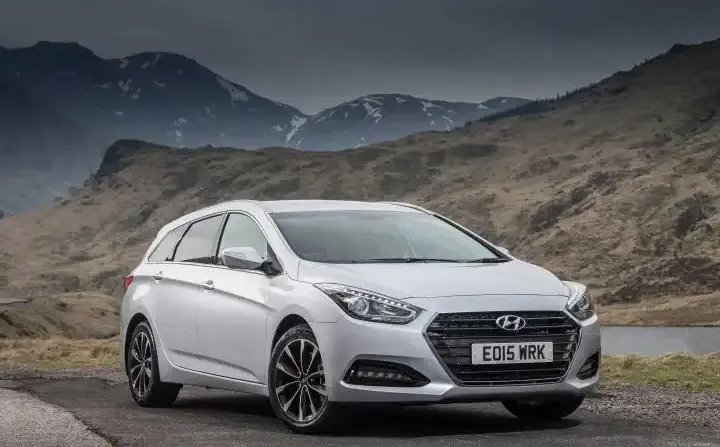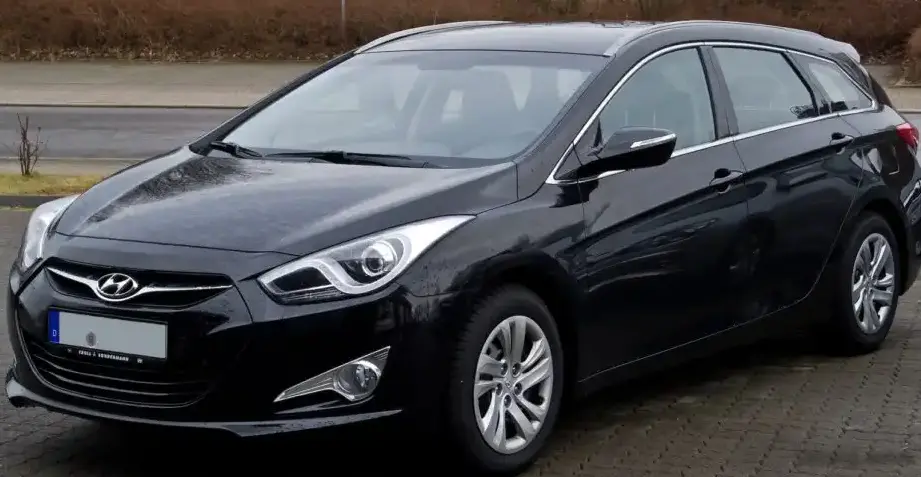
The Hyundai i40 Combi 2.0 GDI (177 hp) Automatic, produced from 2011 to 2015, represents a significant offering in Hyundai’s European lineup. Positioned as a mid-range trim within the i40 Combi (station wagon) series, it aimed to provide a balance of performance, fuel efficiency, and practicality for families and individuals needing ample cargo space. The i40 Combi, built on the Hyundai i40 platform (often referred to as the VF platform), was designed specifically for the European market to compete with established rivals like the Ford Mondeo, Volkswagen Passat, and Opel/Vauxhall Insignia. This variant, with its direct-injection gasoline engine and six-speed automatic transmission, was intended to appeal to buyers seeking a comfortable and refined driving experience without sacrificing utility.
Technical Specifications
| Brand | Hyundai |
| Model | i40 |
| Generation | i40 Combi |
| Type (Engine) | 2.0 GDI (177 Hp) Automatic |
| Start of production | 2011 |
| End of production | 2015 |
| Powertrain Architecture | Internal Combustion engine |
| Body type | Station wagon (estate) |
| Seats | 5 |
| Doors | 5 |
| Fuel consumption (urban) | 10.4 l/100 km (22.6 US mpg, 27.2 UK mpg, 9.6 km/l) |
| Fuel consumption (extra urban) | 5.9 l/100 km (39.9 US mpg, 47.9 UK mpg, 16.9 km/l) |
| Fuel consumption (combined) | 7.5 l/100 km (31.4 US mpg, 37.7 UK mpg, 13.3 km/l) |
| Fuel Type | Petrol (Gasoline) |
| Acceleration 0 – 100 km/h | 10.8 sec |
| Acceleration 0 – 62 mph | 10.8 sec |
| Acceleration 0 – 60 mph | 10.3 sec |
| Maximum speed | 200 km/h (124.27 mph) |
| Emission standard | Euro 5 |
| Weight-to-power ratio | 8.1 kg/Hp, 122.8 Hp/tonne |
| Weight-to-torque ratio | 6.8 kg/Nm, 147.8 Nm/tonne |
| Power | 177 Hp @ 6500 rpm |
| Power per litre | 88.5 Hp/l |
| Torque | 213 Nm @ 4700 rpm (157.1 lb.-ft. @ 4700 rpm) |
| Engine layout | Front, Transverse |
| Engine Model/Code | G4NC |
| Engine displacement | 1999 cm3 (121.99 cu. in.) |
| Number of cylinders | 4 |
| Engine configuration | Inline |
| Cylinder Bore | 81 mm (3.19 in.) |
| Piston Stroke | 97 mm (3.82 in.) |
| Compression ratio | 11.5:1 |
| Number of valves per cylinder | 4 |
| Fuel injection system | Direct injection |
| Engine aspiration | Naturally aspirated engine |
| Valvetrain | D-CVVT |
| Engine oil capacity | 4 l (4.23 US qt | 3.52 UK qt) |
| Coolant capacity | 6.8 l (7.19 US qt | 5.98 UK qt) |
| Kerb Weight | 1441 kg (3176.86 lbs.) |
| Max. weight | 2080 kg (4585.62 lbs.) |
| Max load | 639 kg (1408.75 lbs.) |
| Trunk (boot) space – minimum | 553 l (19.53 cu. ft.) |
| Trunk (boot) space – maximum | 1719 l (60.71 cu. ft.) |
| Fuel tank capacity | 70 l (18.49 US gal | 15.4 UK gal) |
| Length | 4770 mm (187.8 in.) |
| Width | 1815 mm (71.46 in.) |
| Height | 1470 mm (57.87 in.) |
| Wheelbase | 2770 mm (109.06 in.) |
| Front track | 1591 mm (62.64 in.) |
| Rear track | 1597 mm (62.87 in.) |
| Minimum turning circle | 10.94 m (35.89 ft.) |
| Drivetrain Architecture | Front wheel drive |
| Number of gears | 6 |
| Gearbox type | Automatic transmission |
| Front suspension | Independent type McPherson |
| Rear suspension | Independent coil spring |
| Front brakes | Ventilated discs |
| Rear brakes | Disc |
| Assisting systems | ABS (Anti-lock braking system) |
| Steering type | Steering rack and pinion |
| Power steering | Electric Steering |
| Tires size | 205/60 R16; 215/50 R17; 225/45 R18 |
| Wheel rims size | 7.0J x 16; 7.5J x 17; 8.0J x 18 |
Powertrain & Engine Architecture
The heart of the i40 Combi 2.0 GDI Automatic is the Hyundai G4NC engine, a 1.999-liter (2.0L) inline-four cylinder gasoline engine. This engine utilizes direct fuel injection (GDI – Gasoline Direct Injection), a technology that improves fuel efficiency and power output by injecting fuel directly into the combustion chamber. The G4NC engine also features Hyundai’s D-CVVT (Dual Continuous Variable Valve Timing) system, which optimizes valve timing for both intake and exhaust valves, further enhancing performance and reducing emissions. The six-speed automatic transmission, sourced from Hyundai’s own development, provides smooth and responsive gear changes. While not a dual-clutch transmission, it was designed to offer a comfortable driving experience, prioritizing refinement over outright sportiness. The engine’s control unit (ECU) manages fuel delivery, ignition timing, and valve timing to maximize efficiency and power.
Driving Characteristics
The 177 hp and 157 lb-ft of torque delivered by the 2.0 GDI engine, coupled with the six-speed automatic, resulted in a comfortable and predictable driving experience. Acceleration from 0-60 mph took around 10.3 seconds, which was adequate for everyday driving but not particularly sporty. The automatic transmission was programmed for smooth shifts, prioritizing fuel economy over aggressive downshifts. Compared to the more powerful 2.4L GDI engine option available in some markets, the 2.0L felt less urgent, but it offered better fuel economy. Against the diesel options (like the 1.7 CRDi), the 2.0 GDI provided a smoother, quieter ride, but at the expense of fuel efficiency and low-end torque. The gear ratios were tuned for relaxed cruising, making it a suitable vehicle for long highway journeys.
Equipment & Trim Levels
The i40 Combi 2.0 GDI Automatic typically came equipped with a respectable level of standard features. These included air conditioning, power windows and mirrors, a CD/MP3 stereo system with USB connectivity, and alloy wheels. Higher trim levels added features such as leather upholstery, a panoramic sunroof, a touchscreen infotainment system with navigation, and parking sensors. Safety features like ABS, ESP (Electronic Stability Program), and multiple airbags were standard across the range. Optional extras included a rear-view camera, heated seats, and a premium sound system.
Chassis & Braking
The i40 Combi featured a front-wheel-drive layout with an independent McPherson strut suspension at the front and an independent coil spring suspension at the rear. This setup provided a comfortable ride quality, absorbing bumps and imperfections in the road effectively. The braking system consisted of ventilated discs at the front and solid discs at the rear, providing adequate stopping power for the vehicle’s weight. ABS (Anti-lock Braking System) was standard, enhancing safety during emergency braking situations. The steering was electrically assisted, offering a light and easy driving experience.
Market Reception & Comparison
The Hyundai i40 Combi 2.0 GDI Automatic was generally well-received by automotive critics. It was praised for its spacious interior, comfortable ride, and generous equipment levels. However, some reviewers noted that the engine lacked the punch of some of its rivals, and the automatic transmission could feel a bit sluggish at times. Compared to the diesel variants, the 2.0 GDI offered a more refined driving experience but suffered from higher fuel consumption. Against competitors like the Ford Mondeo and Volkswagen Passat, the i40 Combi offered a compelling value proposition, providing a similar level of practicality and comfort at a lower price point.
Legacy
The Hyundai i40 Combi 2.0 GDI Automatic has proven to be a relatively reliable vehicle in the used car market. The G4NC engine is known for its durability, and the six-speed automatic transmission has a good track record. Common issues are generally minor, such as occasional sensor failures or wear and tear on suspension components. Today, the i40 Combi remains a practical and affordable option for buyers seeking a spacious and comfortable station wagon. Its blend of practicality, comfort, and value continues to make it a popular choice in the used car market, particularly for families and individuals needing a versatile vehicle.