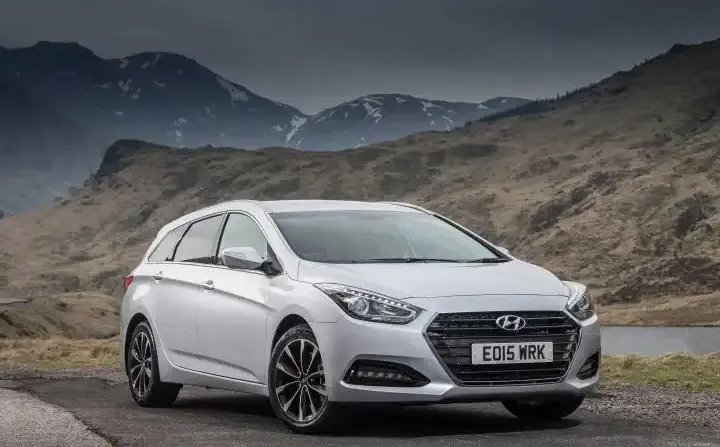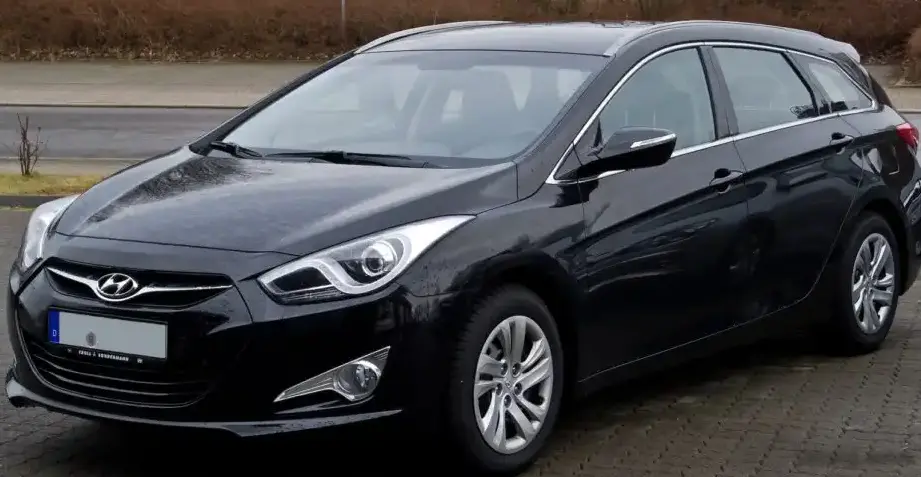
The Hyundai i40 Combi 2.0 GDI Automatic, produced between 2011 and 2015, marked Hyundai’s significant foray into the competitive European D-segment station wagon market. Positioned as a practical and well-equipped family vehicle, the i40 Combi aimed to challenge established rivals like the Ford Mondeo, Volkswagen Passat, and Opel/Vauxhall Insignia. This particular variant, featuring the 2.0-liter Gasoline Direct Injection (GDI) engine paired with a six-speed automatic transmission, occupied a mid-range position within the i40 lineup, offering a balance between performance, fuel efficiency, and convenience. While the i40 Combi was never officially sold in the North American market, it was a crucial model for Hyundai in Europe and other regions, demonstrating the brand’s growing ambition and engineering capabilities.
Technical Specifications
| Brand | Hyundai |
| Model | i40 |
| Generation | i40 Combi |
| Type (Engine) | 2.0 GDI (178 Hp) Automatic |
| Start of production | 2011 |
| End of production | 2015 |
| Powertrain Architecture | Internal Combustion engine |
| Body type | Station wagon (estate) |
| Seats | 5 |
| Doors | 5 |
| Fuel Type | Petrol (Gasoline) |
| Weight-to-power ratio | 8.3 kg/Hp, 120.7 Hp/tonne |
| Weight-to-torque ratio | 7 kg/Nm, 143.7 Nm/tonne |
| Power | 178 Hp @ 6500 rpm |
| Power per litre | 89 Hp/l |
| Torque | 212 Nm @ 4700 rpm (156.36 lb.-ft. @ 4700 rpm) |
| Engine layout | Front, Transverse |
| Engine Model/Code | G4NC |
| Engine displacement | 1999 cm3 (121.99 cu. in.) |
| Number of cylinders | 4 |
| Engine configuration | Inline |
| Cylinder Bore | 81 mm (3.19 in.) |
| Piston Stroke | 97 mm (3.82 in.) |
| Compression ratio | 11.5:1 |
| Number of valves per cylinder | 4 |
| Fuel injection system | Direct injection |
| Engine aspiration | Naturally aspirated engine |
| Valvetrain | DOHC |
| Engine oil capacity | 4 l (4.23 US qt | 3.52 UK qt) |
| Coolant | 6.8 l (7.19 US qt | 5.98 UK qt) |
| Kerb Weight | 1475 kg (3251.82 lbs.) |
| Fuel tank capacity | 70 l (18.49 US gal | 15.4 UK gal) |
| Length | 4815 mm (189.57 in.) |
| Width | 1815 mm (71.46 in.) |
| Height | 1470 mm (57.87 in.) |
| Wheelbase | 2770 mm (109.06 in.) |
| Front track | 1579 mm (62.17 in.) |
| Rear (Back) track | 1585 mm (62.4 in.) |
| Drag coefficient (Cd) | 0.29 |
| Minimum turning circle | 10.94 m (35.89 ft.) |
| Drivetrain Architecture | The Internal combustion engine (ICE) drives the front wheels of the vehicle. |
| Drive wheel | Front wheel drive |
| Number of gears | 6 |
| Gearbox type | automatic transmission |
| Front brakes | Ventilated discs |
| Rear brakes | Disc |
| Assisting systems | ABS (Anti-lock braking system) |
| Steering type | Steering rack and pinion |
| Power steering | Electric Steering |
| Tires size | 215/50 R17 |
| Wheel rims size | 17 |
Powertrain & Engine Architecture
The heart of the i40 Combi 2.0 GDI Automatic is the Hyundai G4NC engine, a 1.999-liter (2.0L) inline-four cylinder gasoline engine. “GDI” stands for Gasoline Direct Injection, a technology that significantly improves both power and fuel efficiency compared to traditional port fuel injection. The G4NC utilizes a multi-point direct injection system, injecting fuel directly into the combustion chamber at high pressure. This allows for more precise fuel control, better atomization, and a higher compression ratio of 11.5:1. The engine features a double overhead camshaft (DOHC) valvetrain with four valves per cylinder, optimizing airflow for increased performance. The six-speed automatic transmission, developed in-house by Hyundai, provides smooth and relatively quick shifts. While not a dual-clutch transmission, it was a competent unit designed to balance efficiency and drivability. The transmission’s control logic was tuned for comfortable cruising and predictable responses, rather than aggressive performance.
Driving Characteristics
The 178 horsepower and 212 Nm (156 lb-ft) of torque produced by the 2.0 GDI engine, when coupled with the six-speed automatic, provided adequate performance for everyday driving. Acceleration from 0 to 62 mph (0-100 km/h) was typically around 9.5-10 seconds. Compared to the base 1.6 GDI engine, the 2.0 GDI offered a noticeable improvement in responsiveness, particularly when overtaking or carrying a full load. However, it wasn’t a particularly sporty vehicle. The automatic transmission, while smooth, could sometimes feel hesitant during quick downshifts, lacking the immediacy of a manual gearbox or a dual-clutch system. Manual versions of the i40 with the 2.0 GDI offered a more engaging driving experience, but the automatic prioritized comfort and ease of use. The gear ratios were tuned for fuel economy, meaning the engine could feel somewhat strained at higher speeds or when climbing hills. Overall, the driving experience was refined and comfortable, prioritizing practicality over outright performance.
Equipment & Trim Levels
The i40 Combi 2.0 GDI Automatic typically came well-equipped, even in base trim levels. Standard features often included air conditioning, power windows and mirrors, a multi-function steering wheel, a radio/CD player with USB connectivity, and alloy wheels. Higher trim levels added features such as leather upholstery, heated front seats, a sunroof, a navigation system, and parking sensors. Interior upholstery was generally a durable cloth in lower trims, with leather options available. The dashboard layout was functional and straightforward, prioritizing usability over flashy design. Optional extras included a premium sound system, automatic headlights and wipers, and a rear-view camera. The i40 Combi aimed to provide a generous level of equipment for the price, making it an attractive option for families.
Chassis & Braking
The i40 Combi utilized a typical front-wheel-drive chassis layout with MacPherson strut suspension in the front and a multi-link suspension in the rear. This setup provided a comfortable ride quality, absorbing bumps and imperfections in the road effectively. Stabilizer bars were fitted to both the front and rear axles to reduce body roll during cornering. Braking duties were handled by ventilated discs on the front wheels and solid discs on the rear. Anti-lock Braking System (ABS) was standard, enhancing safety and control during emergency braking situations. The steering was electrically assisted, providing light and precise steering feel. The suspension tuning prioritized comfort and stability, making the i40 Combi a pleasant vehicle for long journeys.
Market Reception & Comparison
The Hyundai i40 Combi 2.0 GDI Automatic received generally positive reviews from automotive critics. It was praised for its spacious interior, comfortable ride, and generous equipment levels. The 2.0 GDI engine was considered a good compromise between performance and fuel economy, although some reviewers noted its lack of outright excitement. Compared to the 1.6 GDI version, the 2.0 GDI offered a more refined driving experience and better performance, but at a slightly higher price point. Fuel economy was competitive for its class, typically averaging around 35-40 mpg (combined cycle). Reliability proved to be generally good, with few major issues reported. Critics often highlighted the i40 Combi’s value for money, offering a similar level of equipment and practicality as more expensive rivals.
Legacy
The Hyundai i40 Combi, while not a massive sales success in all markets, helped to establish Hyundai as a credible competitor in the European D-segment. The 2.0 GDI engine and six-speed automatic transmission proved to be a reliable and durable powertrain combination. On the used car market today, the i40 Combi 2.0 GDI Automatic represents a good value proposition, offering a spacious, well-equipped, and relatively reliable family vehicle at an affordable price. Maintenance costs are generally reasonable, and parts availability is good. However, potential buyers should be aware of the typical wear and tear associated with any used vehicle, such as suspension components and brake pads. The i40 Combi demonstrated Hyundai’s commitment to building high-quality, practical vehicles that could compete with established European brands.