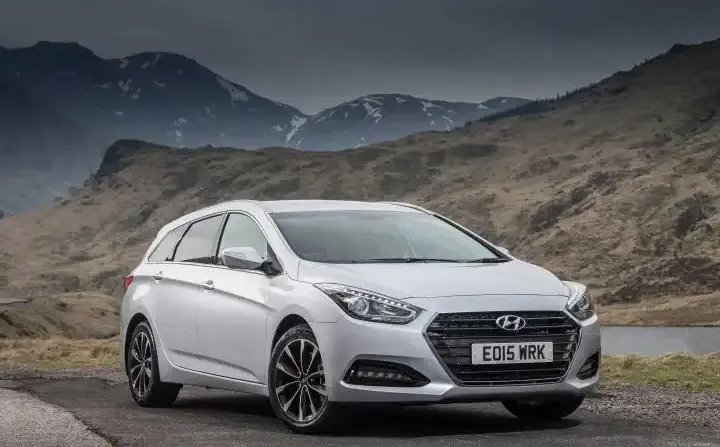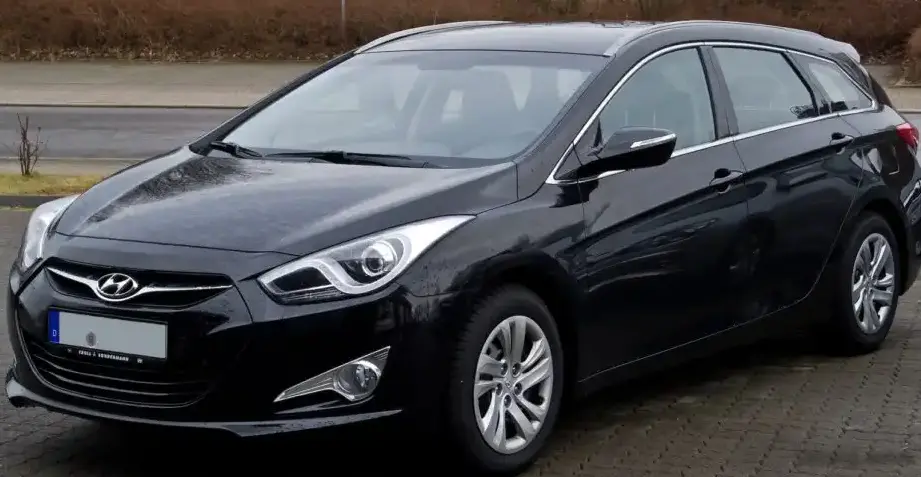
The Hyundai i40 Combi 2.0 MPI (166 hp) was a front-wheel-drive station wagon produced by the South Korean automaker Hyundai from 2011 to 2015. Positioned as a practical and spacious family vehicle, the i40 Combi aimed to compete with established European rivals like the Ford Focus Estate and Volkswagen Passat Variant. It represented Hyundai’s increasing focus on offering vehicles with a more refined driving experience and a longer list of standard features. This particular variant, equipped with the 2.0-liter naturally aspirated engine and a six-speed manual transmission, occupied a mid-range position within the i40 Combi lineup, offering a balance between performance and fuel economy.
Technical Specifications
| Brand | Hyundai |
| Model | i40 |
| Generation | i40 Combi |
| Type (Engine) | 2.0 MPI (166 Hp) |
| Start of production | 2011 |
| End of production | 2015 |
| Powertrain Architecture | Internal Combustion engine |
| Body type | Station wagon (estate) |
| Seats | 5 |
| Doors | 5 |
| Fuel Type | Petrol (Gasoline) |
| Acceleration 0 – 100 km/h | 10.5 sec |
| Acceleration 0 – 62 mph | 10.5 sec |
| Acceleration 0 – 60 mph | 10 sec |
| Maximum speed | 203 km/h (126.14 mph) |
| Emission standard | Euro 4 |
| Weight-to-power ratio | 8.5 kg/Hp, 117.3 Hp/tonne |
| Weight-to-torque ratio | 7.1 kg/Nm, 141.3 Nm/tonne |
| Power | 166 Hp @ 6500 rpm |
| Power per litre | 83 Hp/l |
| Torque | 200 Nm @ 4800 rpm (147.51 lb.-ft. @ 4800 rpm) |
| Engine layout | Front, Transverse |
| Engine Model/Code | Nu / G4NA |
| Engine displacement | 1999 cm3 (121.99 cu. in.) |
| Number of cylinders | 4 |
| Engine configuration | Inline |
| Cylinder Bore | 81 mm (3.19 in.) |
| Piston Stroke | 97 mm (3.82 in.) |
| Number of valves per cylinder | 4 |
| Fuel injection system | Multi-port manifold injection |
| Engine aspiration | Naturally aspirated engine |
| Valvetrain | DOHC |
| Engine oil capacity | 4 l (4.23 US qt | 3.52 UK qt) |
| Coolant | 7.1 l (7.5 US qt | 6.25 UK qt) |
| Kerb Weight | 1415 kg (3119.54 lbs) |
| Max. weight | 2050 kg (4519.48 lbs) |
| Max load | 635 kg (1399.94 lbs) |
| Fuel tank capacity | 70 l (18.49 US gal | 15.4 UK gal) |
| Length | 4770 mm (187.8 in.) |
| Width | 1815 mm (71.46 in.) |
| Height | 1470 mm (57.87 in.) |
| Wheelbase | 2770 mm (109.06 in.) |
| Front track | 1591 mm (62.64 in.) |
| Rear (Back) track | 1597 mm (62.87 in.) |
| Drag coefficient (Cd) | 0.29 |
| Minimum turning circle | 10.94 m (35.89 ft.) |
| Drive wheel | Front wheel drive |
| Number of gears | 6 gears, manual transmission |
| Front brakes | Ventilated discs |
| Rear brakes | Disc |
| Assisting systems | ABS (Anti-lock braking system) |
| Steering type | Steering rack and pinion |
| Power steering | Electric Steering |
| Tires size | 205/60 R16 |
| Wheel rims size | 16 |
Powertrain & Engine Architecture
The i40 Combi 2.0 MPI utilized Hyundai’s Nu engine family, specifically the G4NA code. This 1.999-liter inline-four cylinder engine featured a double overhead camshaft (DOHC) valvetrain with four valves per cylinder. The engine employed multi-point fuel injection, delivering fuel directly into the intake ports. The Nu engine was designed for a balance of efficiency and adequate power output. It wasn’t a particularly high-technology engine, relying on proven designs rather than cutting-edge innovations. The six-speed manual transmission offered precise shifts and contributed to a more engaging driving experience compared to the optional automatic. The transmission’s gear ratios were tuned for both fuel efficiency and reasonable acceleration, with a relatively tall sixth gear for highway cruising.
Driving Characteristics
The 166 hp output of the 2.0 MPI engine, coupled with the six-speed manual transmission, provided adequate performance for everyday driving. Acceleration from 0 to 60 mph took approximately 10 seconds, which was competitive within its class. While not a sports car, the i40 Combi offered sufficient power for overtaking maneuvers and maintaining comfortable speeds on the highway. The manual transmission allowed drivers to take full control of the engine’s powerband, extracting the most performance possible. Compared to the lower-powered 1.6L gasoline engine, the 2.0 MPI offered a noticeable improvement in responsiveness. However, it lacked the torque of the diesel options available in Europe, which were favored by drivers prioritizing fuel economy and effortless cruising.
Equipment & Trim Levels
The i40 Combi 2.0 MPI typically came standard with features such as air conditioning, power windows, power mirrors, a CD/MP3 stereo system, and ABS brakes. Higher trim levels added features like alloy wheels, a touchscreen infotainment system, rear parking sensors, and a sunroof. Interior upholstery was typically cloth, with leather options available on higher trims. The dashboard layout was functional and user-friendly, with logically placed controls. Optional extras included a navigation system, heated seats, and a panoramic sunroof.
Chassis & Braking
The i40 Combi featured a typical front-wheel-drive chassis layout with MacPherson strut front suspension and a multi-link rear suspension. This setup provided a comfortable ride quality and decent handling characteristics. The front brakes were ventilated discs, offering good stopping power, while the rear brakes were solid discs. The steering was electrically assisted, providing light and precise control. Stabilizer bars were fitted to both the front and rear axles to reduce body roll during cornering. The suspension tuning was geared towards comfort rather than outright sportiness, making it a pleasant vehicle for long journeys.
Market Reception & Comparison
The Hyundai i40 Combi was generally well-received by automotive critics, who praised its spacious interior, comfortable ride, and generous standard equipment. The 2.0 MPI engine was considered adequate for most drivers, although some reviewers noted that it lacked the refinement of some of its European competitors. Fuel economy was respectable, but not class-leading. Compared to the diesel variants, the 2.0 MPI offered lower running costs in terms of maintenance, but higher fuel consumption. The i40 Combi represented a significant step forward for Hyundai in terms of build quality and overall refinement, helping to establish the brand as a serious contender in the European market.
Legacy
The Hyundai i40 Combi 2.0 MPI has proven to be a relatively reliable vehicle in the used car market. The Nu engine is known for its durability, and the six-speed manual transmission is generally trouble-free. Common issues are typically limited to routine maintenance items such as brake pads, tires, and suspension components. The i40 Combi remains a practical and affordable option for families seeking a spacious and comfortable station wagon. Its blend of practicality, reliability, and value has ensured its continued popularity in the used car market.