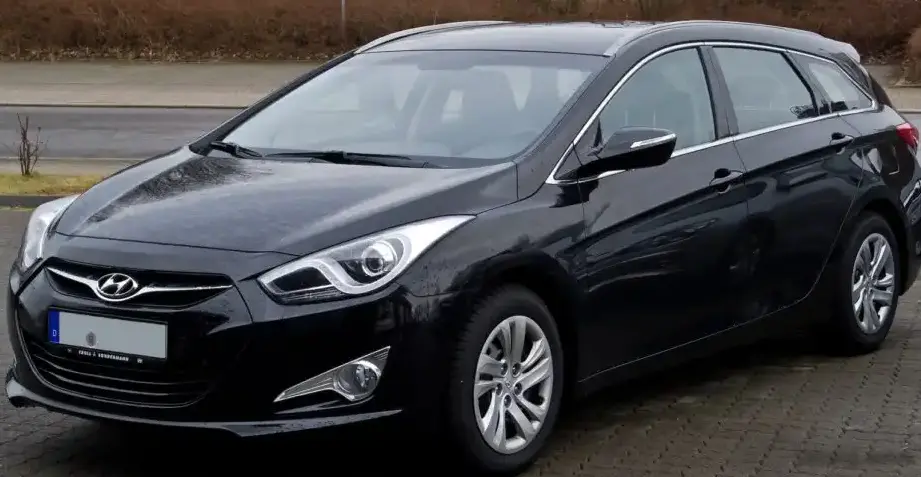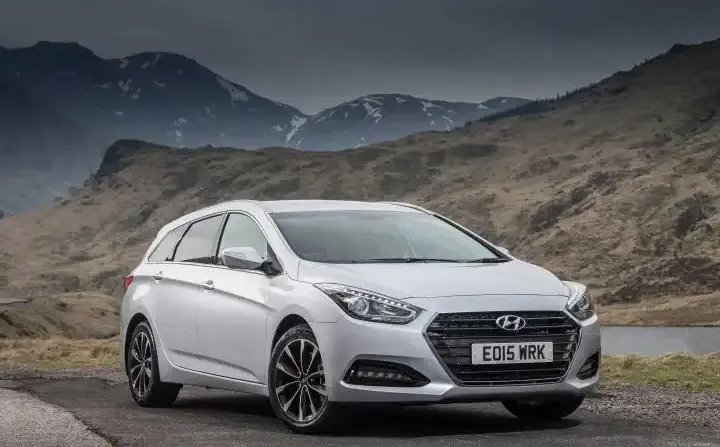
The Hyundai i40 Combi (facelift, produced from 2015 to 2018) represents Hyundai’s entry into the competitive European D-segment wagon market. Positioned as a practical and well-equipped family vehicle, the i40 Combi aimed to offer a compelling alternative to established rivals like the Ford Mondeo, Volkswagen Passat, and Opel Insignia. The facelift brought styling updates and refinements to the original i40, enhancing its appeal. This specific variant, the 2.0 GDI (165 hp) with a six-speed automatic transmission, occupied a mid-range position within the i40 lineup, offering a balance between performance, fuel efficiency, and convenience. It was designed to appeal to buyers seeking a comfortable and capable long-distance cruiser with the added practicality of a spacious estate body style.
Technical Specifications
| Brand | Hyundai |
| Model | i40 |
| Generation | i40 Combi (facelift 2015) |
| Type (Engine) | 2.0 GDI (165 Hp) Automatic |
| Start of production | 2015 |
| End of production | 2018 |
| Powertrain Architecture | Internal Combustion engine |
| Body type | Station wagon (estate) |
| Seats | 5 |
| Doors | 5 |
| Fuel consumption (urban) | 10.2-10.4 l/100 km (23.1 – 22.6 US mpg) |
| Fuel consumption (extra urban) | 5.8-5.9 l/100 km (40.6 – 39.9 US mpg) |
| Fuel consumption (combined) | 7.4-7.5 l/100 km (31.8 – 31.4 US mpg) |
| CO2 emissions | 173-176 g/km |
| Fuel Type | Petrol (Gasoline) |
| Acceleration 0 – 100 km/h | 10.8 sec |
| Acceleration 0 – 62 mph | 10.8 sec |
| Acceleration 0 – 60 mph | 10.3 sec |
| Maximum speed | 205 km/h (127.38 mph) |
| Emission standard | Euro 6 |
| Weight-to-power ratio | 9 kg/Hp |
| Weight-to-torque ratio | 7.3 kg/Nm |
| Power | 165 Hp @ 6200 rpm |
| Torque | 203 Nm @ 4700 rpm (149.73 lb.-ft. @ 4700 rpm) |
| Engine layout | Front, Transverse |
| Engine Model/Code | G4NC |
| Engine displacement | 1999 cm3 (121.99 cu. in.) |
| Number of cylinders | 4 |
| Engine configuration | Inline |
| Cylinder Bore | 81 mm (3.19 in.) |
| Piston Stroke | 97 mm (3.82 in.) |
| Compression ratio | 11.5:1 |
| Number of valves per cylinder | 4 |
| Fuel injection system | Direct injection |
| Engine aspiration | Naturally aspirated engine |
| Valvetrain | DOHC |
| Engine oil capacity | 4 l (4.23 US qt | 3.52 UK qt) |
| Coolant | 6.8 l (7.19 US qt | 5.98 UK qt) |
| Kerb Weight | 1483 kg (3269.46 lbs.) |
| Max. weight | 2080 kg (4585.62 lbs.) |
| Max load | 597 kg (1316.16 lbs.) |
| Trunk (boot) space – minimum | 506 l (17.87 cu. ft.) |
| Trunk (boot) space – maximum | 1672 l (59.05 cu. ft.) |
| Fuel tank capacity | 70 l (18.49 US gal | 15.4 UK gal) |
| Max. roof load | 100 kg (220.46 lbs.) |
| Length | 4775 mm (187.99 in.) |
| Width | 1815 mm (71.46 in.) |
| Height | 1470 mm (57.87 in.) |
| Wheelbase | 2770 mm (109.06 in.) |
| Front track | 1591 mm (62.64 in.) |
| Rear (Back) track | 1597 mm (62.87 in.) |
| Ride height (ground clearance) | 140 mm (5.51 in.) |
| Minimum turning circle | 10.94 m (35.89 ft.) |
| Drivetrain Architecture | Front wheel drive |
| Number of gears | 6 |
| Gearbox type | Automatic transmission |
| Front suspension | Independent type McPherson |
| Rear suspension | Independent coil spring |
| Front brakes | Ventilated discs |
| Rear brakes | Disc |
| Tires size | 205/60 R16; 215/50 R17; 225/45 R18 |
| Wheel rims size | 7.0J x 16; 7.5J x 17; 8.0J x 18 |
Powertrain & Engine Architecture
The heart of this i40 Combi variant is the Hyundai G4NC 2.0-liter naturally aspirated four-cylinder gasoline engine. This engine utilizes direct fuel injection (GDI) technology, which improves combustion efficiency and power output compared to traditional port fuel injection systems. The G4NC engine features a double overhead camshaft (DOHC) valvetrain with four valves per cylinder, contributing to its responsive nature. The engine produces 165 horsepower at 6,200 rpm and 203 Nm (149.73 lb-ft) of torque at 4,700 rpm. The six-speed automatic transmission, while providing convenience, is a traditional torque-converter type, prioritizing smooth shifts over outright performance. It’s designed for comfortable cruising rather than aggressive acceleration.
Driving Characteristics
The 2.0 GDI automatic i40 Combi delivers a comfortable and predictable driving experience. Acceleration from 0-60 mph takes around 10.3 seconds, which is adequate for everyday driving but doesn’t offer particularly sporty performance. The automatic transmission is generally smooth in its operation, although it can sometimes feel hesitant during quick overtaking maneuvers. The gear ratios are tuned for fuel efficiency and relaxed cruising, rather than maximizing performance. Compared to the manual transmission version of the same engine, the automatic sacrifices some responsiveness. Higher-output engine options, such as a potential turbocharged variant (not widely available in all markets), would offer significantly more spirited performance.
Equipment & Trim Levels
The 2.0 GDI automatic trim typically included a good level of standard equipment. This generally encompassed features like air conditioning, a touchscreen infotainment system with Bluetooth connectivity, alloy wheels, and a suite of safety systems including ABS, ESC (Electronic Stability Control), and multiple airbags. Higher trim levels offered upgrades such as leather upholstery, a panoramic sunroof, heated seats, and a more advanced navigation system. Interior materials were generally of good quality, providing a comfortable and refined cabin environment. The i40 Combi prioritized practicality, offering ample space for passengers and luggage.
Chassis & Braking
The i40 Combi utilizes a front-wheel-drive layout with an independent McPherson strut suspension at the front and an independent coil spring suspension at the rear. This setup provides a good balance between ride comfort and handling. The steering is light and precise, making it easy to maneuver in urban environments. Braking duties are handled by ventilated discs at the front and solid discs at the rear, providing adequate stopping power for most driving situations. ABS (Anti-lock Braking System) is standard, enhancing safety during emergency braking.
Market Reception & Comparison
The Hyundai i40 Combi 2.0 GDI automatic was generally well-received by automotive critics. It was praised for its spacious interior, comfortable ride, and generous equipment levels. However, some reviewers noted that the engine lacked the punch of some of its rivals, and the automatic transmission could feel somewhat sluggish. Fuel economy was considered respectable, but not class-leading. Compared to the diesel-powered i40 variants, the 2.0 GDI offered a smoother and quieter driving experience, but at the expense of fuel efficiency. Against competitors like the Ford Mondeo and Volkswagen Passat, the i40 Combi offered a strong value proposition, often undercutting them on price while providing a comparable level of features.
Legacy
The Hyundai i40 Combi, including the 2.0 GDI automatic variant, has proven to be a relatively reliable vehicle in the used car market. The G4NC engine is known for its durability, and the automatic transmission, while not the most exciting, is generally dependable. Common issues are relatively minor, often relating to wear and tear on suspension components or electrical glitches. The i40 Combi remains a practical and affordable option for buyers seeking a spacious and well-equipped estate car. Its comfortable ride and generous interior space continue to make it a popular choice for families.