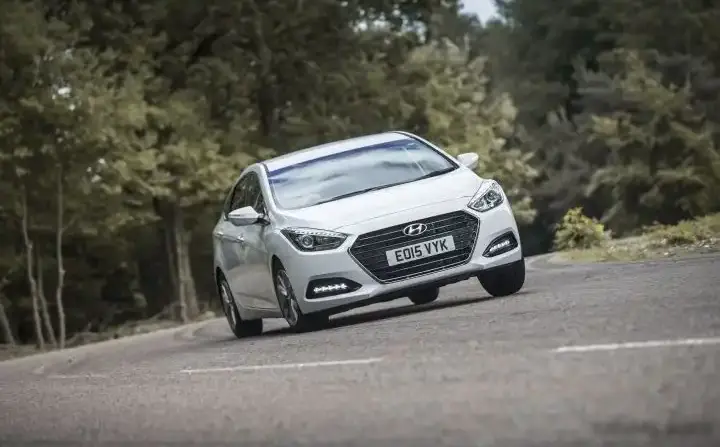
The Hyundai i40 Sedan, specifically the facelifted version released in 2015 with the 2.0 GDI (Gasoline Direct Injection) engine paired with a six-speed automatic transmission, represented a significant offering in the mid-size sedan segment. Produced from 2015 to 2018, this variant aimed to provide a balance of performance, fuel efficiency, and comfort for buyers seeking a practical and well-equipped family car. It was positioned as a mid-range trim within the i40 lineup, offering more power and refinement than the base models while remaining more accessible than the fully-loaded options. The i40, in general, was designed primarily for the European market, where Hyundai sought to establish a stronger presence with vehicles tailored to local preferences, but it was also sold in select markets including North America.
Technical Specifications
| Brand | Hyundai |
| Model | i40 |
| Generation | i40 Sedan (facelift 2015) |
| Type (Engine) | 2.0 GDI (165 Hp) Automatic |
| Start of production | 2015 |
| End of production | 2018 |
| Powertrain Architecture | Internal Combustion engine |
| Body type | Sedan |
| Seats | 5 |
| Doors | 4 |
| Fuel consumption (urban) | 10.2-10.4 l/100 km (23.1 – 22.6 US mpg) |
| Fuel consumption (extra urban) | 5.8-5.9 l/100 km (40.6 – 39.9 US mpg) |
| Fuel consumption (combined) | 7.4-7.5 l/100 km (31.8 – 31.4 US mpg) |
| CO2 emissions | 173-176 g/km |
| Fuel Type | Petrol (Gasoline) |
| Acceleration 0 – 100 km/h | 10.6 sec |
| Acceleration 0 – 62 mph | 10.6 sec |
| Acceleration 0 – 60 mph | 10.1 sec |
| Maximum speed | 208 km/h (129.25 mph) |
| Emission standard | Euro 6 |
| Weight-to-power ratio | 8.9 kg/Hp |
| Weight-to-torque ratio | 7.2 kg/Nm |
| Power | 165 Hp @ 6200 rpm |
| Torque | 203 Nm @ 4700 rpm (149.73 lb.-ft. @ 4700 rpm) |
| Engine layout | Front, Transverse |
| Engine Model/Code | G4NC |
| Engine displacement | 1999 cm3 (121.99 cu. in.) |
| Number of cylinders | 4 |
| Engine configuration | Inline |
| Cylinder Bore | 81 mm (3.19 in.) |
| Piston Stroke | 97 mm (3.82 in.) |
| Compression ratio | 11.5:1 |
| Number of valves per cylinder | 4 |
| Fuel injection system | Direct injection |
| Engine aspiration | Naturally aspirated engine |
| Valvetrain | DOHC |
| Engine oil capacity | 4 l (4.23 US qt | 3.52 UK qt) |
| Coolant | 6.8 l (7.19 US qt | 5.98 UK qt) |
| Kerb Weight | 1468 kg (3236.39 lbs.) |
| Max. weight | 2040 kg (4497.43 lbs.) |
| Max load | 572 kg (1261.04 lbs.) |
| Trunk (boot) space – minimum | 506 l (17.87 cu. ft.) |
| Trunk (boot) space – maximum | 1672 l (59.05 cu. ft.) |
| Fuel tank capacity | 70 l (18.49 US gal | 15.4 UK gal) |
| Max. roof load | 100 kg (220.46 lbs.) |
| Length | 4775 mm (187.99 in.) |
| Width | 1815 mm (71.46 in.) |
| Height | 1470 mm (57.87 in.) |
| Wheelbase | 2770 mm (109.06 in.) |
| Front track | 1591 mm (62.64 in.) |
| Rear (Back) track | 1597 mm (62.87 in.) |
| Ride height (ground clearance) | 140 mm (5.51 in.) |
| Minimum turning circle | 10.94 m (35.89 ft.) |
| Drivetrain Architecture | Front wheel drive |
| Number of gears and type of gearbox | 6 gears, automatic transmission |
| Front suspension | Independent type McPherson |
| Rear suspension | Independent coil spring |
| Front brakes | Ventilated discs |
| Rear brakes | Disc |
| Tires size | 205/60 R16; 215/50 R17; 225/45 R18 |
| Wheel rims size | 7.0J x 16; 7.5J x 17; 8.0J x 18 |
INTRODUCTION
The 2015 facelift of the Hyundai i40 Sedan brought a refreshed design and updated features to the model, building upon the foundation laid by the original i40 introduced in 2011. This generation of i40 (VF series) was built on the Hyundai-Kia ‘C’ platform, also known as the 1HX0/A3 platform, shared with models like the Kia Optima. The 2.0 GDI Automatic variant was a key part of the lineup, offering a step up in performance and driving experience compared to the lower-spec engine options. Hyundai aimed to compete with established players in the mid-size sedan segment, such as the Toyota Camry, Honda Accord, and Ford Fusion, by offering a compelling combination of value, features, and a long warranty.
Powertrain & Engine Architecture
At the heart of the i40 2.0 GDI Automatic lies the Hyundai G4NC engine, a 1.999-liter (2.0L) inline-four cylinder gasoline engine. This engine utilizes direct fuel injection (GDI) technology, which injects fuel directly into the combustion chamber, improving efficiency and power output. The G4NC engine features a double overhead camshaft (DOHC) valvetrain with four valves per cylinder, optimizing airflow for enhanced performance. The engine produces 165 horsepower at 6200 rpm and 203 Nm (149.73 lb-ft) of torque at 4700 rpm. Paired with this engine is a six-speed automatic transmission, designed to provide smooth and efficient gear changes. This transmission was a conventional torque-converter automatic, prioritizing comfort and ease of use over outright sportiness. The engine code ‘G4NC’ is crucial for identifying specific parts and service information.
Driving Characteristics
The i40 2.0 GDI Automatic offered a comfortable and refined driving experience. While not a performance-oriented sedan, the 165 hp engine provided adequate power for everyday driving and highway cruising. Acceleration from 0 to 60 mph took around 10.1 seconds, which was competitive within its class. The six-speed automatic transmission was generally smooth in its shifts, although it could sometimes feel hesitant during quick acceleration. Compared to the manual transmission versions of the i40, the automatic offered less driver engagement but greater convenience. The automatic’s gear ratios were tuned for fuel efficiency and comfortable cruising, rather than aggressive acceleration. Compared to other i40 trims, such as those with smaller displacement engines, the 2.0 GDI offered a noticeable improvement in responsiveness and overall driving enjoyment.
Equipment & Trim Levels
The 2.0 GDI Automatic trim typically included a generous array of standard features. These often included air conditioning, power windows and locks, a touchscreen infotainment system with Bluetooth connectivity, a rearview camera, and alloy wheels. Higher trim levels added features such as leather upholstery, a sunroof, heated front seats, and advanced safety technologies like lane departure warning and automatic emergency braking. Interior upholstery was typically cloth on the base trims, with leather options available on higher-spec models. The dashboard layout was functional and well-designed, with a focus on ergonomics and ease of use. Optional extras could include a navigation system, premium sound system, and various cosmetic enhancements.
Chassis & Braking
The i40 2.0 GDI Automatic featured a front-wheel-drive layout with an independent McPherson strut suspension in the front and an independent coil spring suspension in the rear. This suspension setup provided a comfortable ride quality, absorbing bumps and imperfections in the road effectively. The braking system consisted of ventilated discs on the front wheels and solid discs on the rear wheels. Anti-lock Braking System (ABS) was standard, enhancing safety and control during emergency braking situations. The i40’s chassis was designed to provide a balance of handling and stability, making it a predictable and easy-to-drive sedan. Stabilizer bars were included both front and rear to reduce body roll during cornering.
Market Reception & Comparison
The Hyundai i40 2.0 GDI Automatic generally received positive reviews from automotive critics. It was praised for its comfortable ride, spacious interior, and generous features list. However, some critics noted that the engine lacked the refinement and power of some of its competitors. Fuel economy was considered respectable, with combined fuel consumption figures ranging from 7.4 to 7.5 l/100 km (31.8 – 31.4 US mpg). Compared to the base engine options in the i40 lineup, the 2.0 GDI offered a significant improvement in performance and driving enjoyment, justifying the higher price tag. In terms of reliability, the i40 generally proved to be a dependable vehicle, although some owners reported minor issues with the infotainment system and certain electronic components.
Legacy
The Hyundai i40 2.0 GDI Automatic has established itself as a reliable and affordable used car option. The G4NC engine, while not without its quirks, has proven to be relatively durable with proper maintenance. The six-speed automatic transmission is also generally considered to be reliable. Today, these i40s can be found at reasonable prices, making them an attractive option for buyers seeking a practical and well-equipped mid-size sedan. The i40’s long warranty (originally 5 years/60,000 miles) also adds to its appeal in the used car market, as many examples may still be covered by the original warranty or have transferable benefits. While it may not be a collector’s item, the i40 2.0 GDI Automatic represents a solid and dependable choice for everyday transportation.