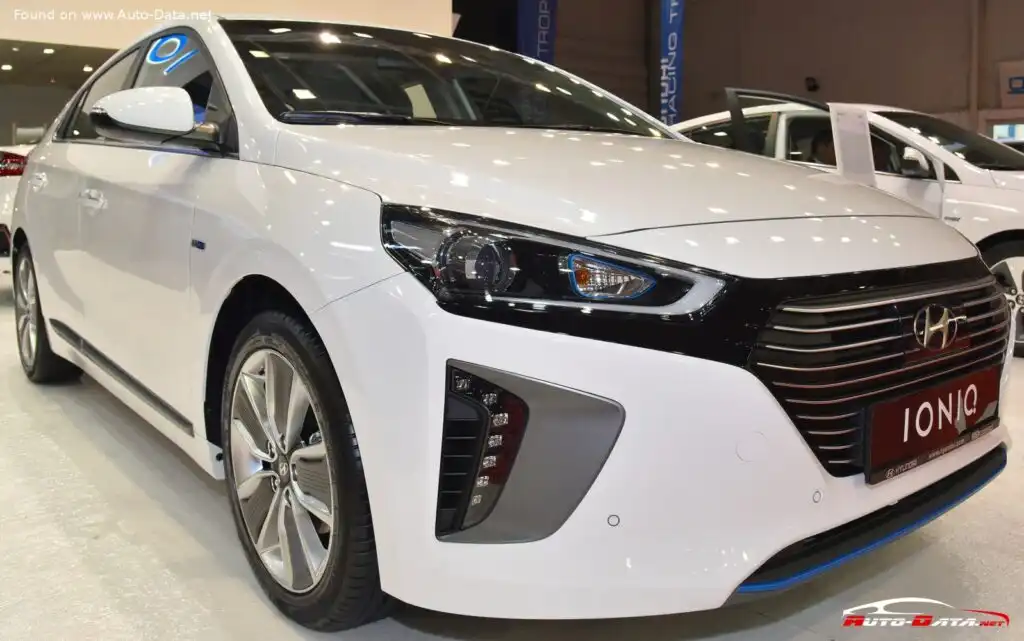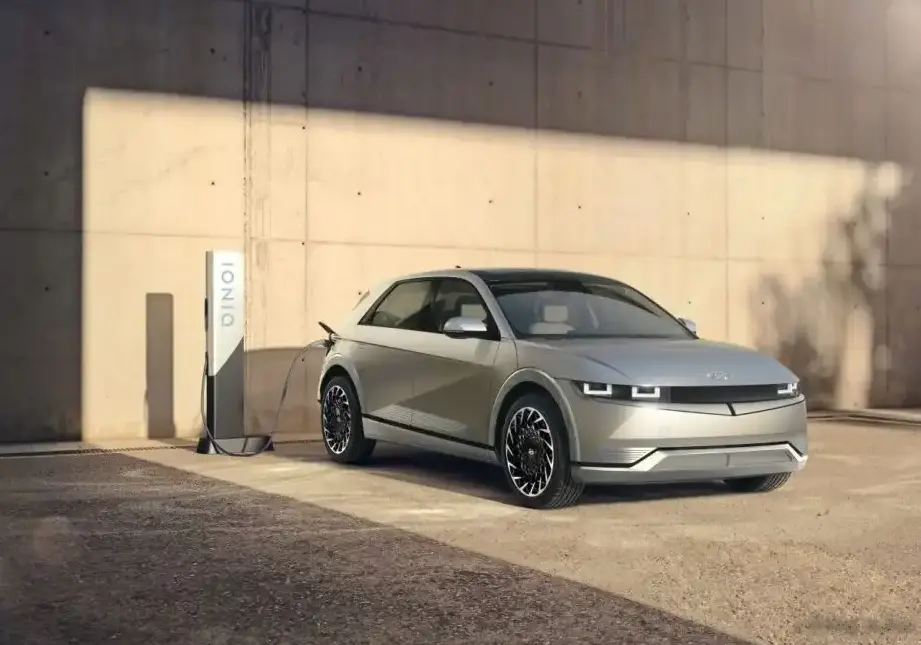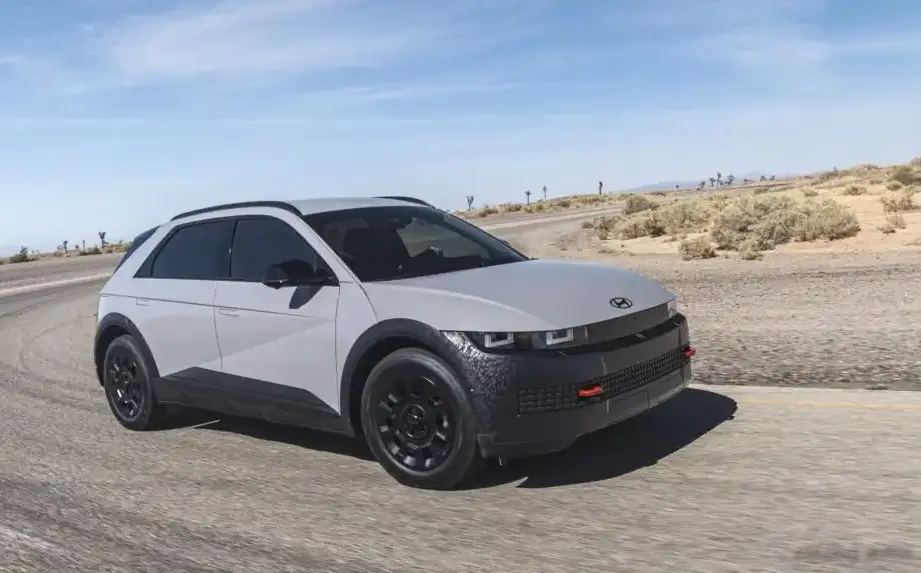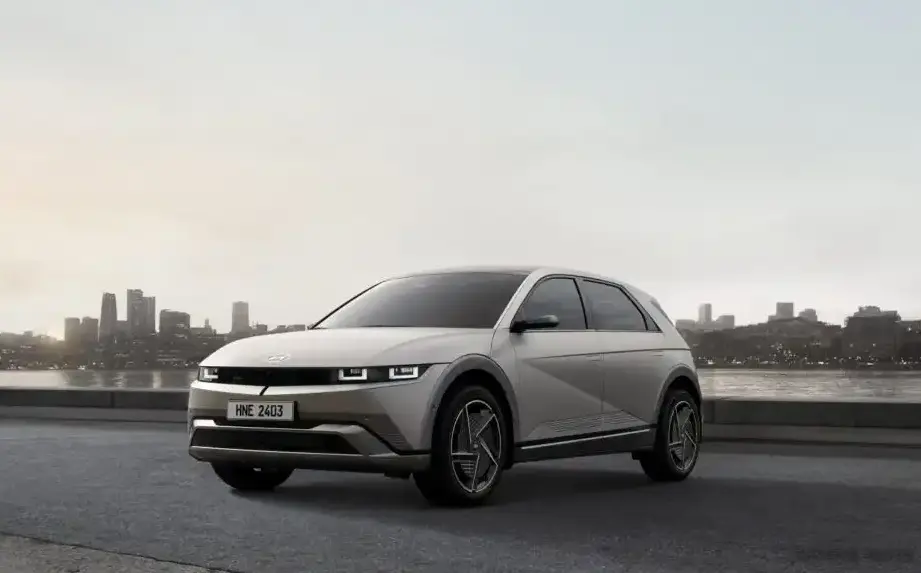
The Hyundai IONIQ 5, particularly the Long Range variant with the 84 kWh battery pack and 229 horsepower electric motor, represents a significant step forward in Hyundai’s commitment to electric vehicle technology. Introduced with the facelift in March 2024, this version builds upon the success of the initial IONIQ 5, offering increased range and refined features. It slots into the mid-to-upper range of the IONIQ 5 lineup, positioned above the Standard Range models and offering a compelling alternative to other long-range EVs in the competitive crossover segment.
Technical Specifications
| Brand | Hyundai |
| Model | IONIQ 5 |
| Generation | IONIQ 5 (facelift 2024) |
| Type (Engine) | Long Range 84 kWh (229 Hp) Electric |
| Start of production | March, 2024 |
| Powertrain Architecture | BEV (Electric Vehicle) |
| Body type | SUV |
| Seats | 5 |
| Doors | 5 |
| Fuel Type | Electricity |
| Weight-to-power ratio | 8.8 kg/Hp, 113.6 Hp/tonne |
| Weight-to-torque ratio | 5.8 kg/Nm, 173.7 Nm/tonne |
| Gross battery capacity | 84 kWh |
| Battery voltage | 697 V |
| Battery technology | Lithium-ion (Li-Ion) |
| Battery location | Below the floor |
| All-electric range | 441-485 km (274.02 – 301.37 mi) |
| Average Energy consumption | 19.2-21.3 kWh/100 km (30.9 – 34.28 kWh/100 mi) |
| MPGe | 109 – 98 |
| km/kWh | 5.2 – 4.7 |
| mi/kWh | 3.2 – 2.9 |
| Electric motor power | 229 Hp |
| Electric motor Torque | 350 Nm (258.15 lb.-ft.) |
| Electric motor location | Rear axle, Transverse |
| Electric motor type | Synchronous |
| System power | 229 Hp |
| System torque | 350 Nm (258.15 lb.-ft.) |
| Kerb Weight | 2015-2055 kg (4442.31 – 4530.5 lbs.) |
| Length | 4655 mm (183.27 in.) |
| Width | 1890 mm (74.41 in.) |
| Height | 1605 mm (63.19 in.) |
| Wheelbase | 3000 mm (118.11 in.) |
| Front track | 1628-1638 mm (64.09 – 64.49 in.) |
| Rear track | 1637-1647 mm (64.45 – 64.84 in.) |
| Front overhang | 866 mm (34.09 in.) |
| Rear overhang | 789 mm (31.06 in.) |
| Drivetrain Architecture | One electric motor drives the rear wheels. |
| Drive wheel | Rear wheel drive |
| Number of gears | 1 |
| Gearbox type | automatic transmission |
| Front suspension | Independent type McPherson |
| Rear suspension | Independent multi-link suspension |
| Assisting systems | ABS (Anti-lock braking system) |
| Steering type | Steering rack and pinion |
| Power steering | Electric Steering |
| Tires size | 235/55 R19; 255/45 R20 |
| Wheel rims size | 19; 20 |
Powertrain & Engine Architecture
The IONIQ 5 Long Range utilizes a permanent magnet synchronous motor (PMSM) located on the rear axle. This motor produces 229 horsepower and 350 Nm (258 lb-ft) of torque. The 84 kWh battery pack, composed of lithium-ion cells, is positioned under the floor of the vehicle, contributing to a low center of gravity and improved handling. The battery operates at a high voltage of 697V, enabling faster charging times when connected to compatible DC fast chargers. The single-speed automatic transmission efficiently delivers power to the rear wheels. Hyundai’s advanced battery management system (BMS) optimizes battery performance, longevity, and safety by monitoring cell voltage, temperature, and state of charge.
Driving Characteristics
The rear-wheel-drive configuration of the IONIQ 5 Long Range provides a balanced and engaging driving experience. Acceleration is brisk, with the electric motor delivering instant torque. While not as overtly sporty as some performance-focused EVs, the IONIQ 5 offers ample power for everyday driving and highway merging. The single-speed transmission provides seamless acceleration, and the regenerative braking system allows for one-pedal driving in certain conditions. Compared to the Standard Range model, the Long Range variant offers significantly improved range and a more relaxed driving experience on longer journeys. The weight distribution, aided by the underfloor battery pack, contributes to stable cornering.
Equipment & Trim Levels
The IONIQ 5 Long Range typically comes standard with a comprehensive suite of features, including a dual 12.3-inch display screen (instrument cluster and infotainment), Hyundai SmartSense safety features (such as forward collision-avoidance assist, lane keeping assist, and blind-spot monitoring), and a premium sound system. Interior upholstery is typically a combination of synthetic leather and cloth, with higher trims offering genuine leather options. Available options include a panoramic sunroof, ventilated and heated front seats, a head-up display, and advanced driver-assistance systems like Highway Driving Assist 2. The 2024 facelift introduced updated interior materials and improved user interface elements.
Chassis & Braking
The IONIQ 5 utilizes an independent McPherson strut suspension in the front and a multi-link suspension in the rear, providing a comfortable and controlled ride. The suspension is tuned to balance ride comfort with handling performance. The braking system features ventilated disc brakes on all four wheels, along with ABS, electronic stability control, and regenerative braking. Steering is provided by an electric power steering system, offering precise and responsive control. Tire sizes vary depending on the trim level, with options ranging from 235/55 R19 to 255/45 R20.
Market Reception & Comparison
The Hyundai IONIQ 5 has been widely praised by automotive critics for its innovative design, spacious interior, fast charging capabilities, and competitive range. The Long Range variant, in particular, has been lauded for its ability to deliver a practical and enjoyable electric driving experience. Compared to rivals like the Tesla Model Y, Ford Mustang Mach-E, and Kia EV6, the IONIQ 5 offers a compelling value proposition, with a well-equipped interior and a comfortable ride. Fuel economy, expressed as MPGe, typically ranges from 109 to 98, depending on driving conditions and wheel size.
Legacy
The Hyundai IONIQ 5 represents a pivotal moment for the brand, demonstrating its commitment to electric mobility and innovative design. The 84 kWh Long Range variant has proven to be a popular choice among consumers seeking a practical and long-range EV. While long-term reliability data is still emerging, early reports suggest that the IONIQ 5’s powertrain is robust and dependable. As the used car market matures, the IONIQ 5 is expected to hold its value well, thanks to its advanced technology, spacious interior, and growing demand for electric vehicles.