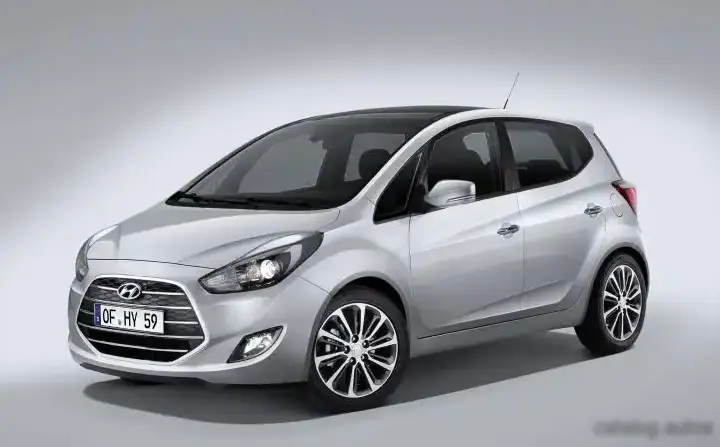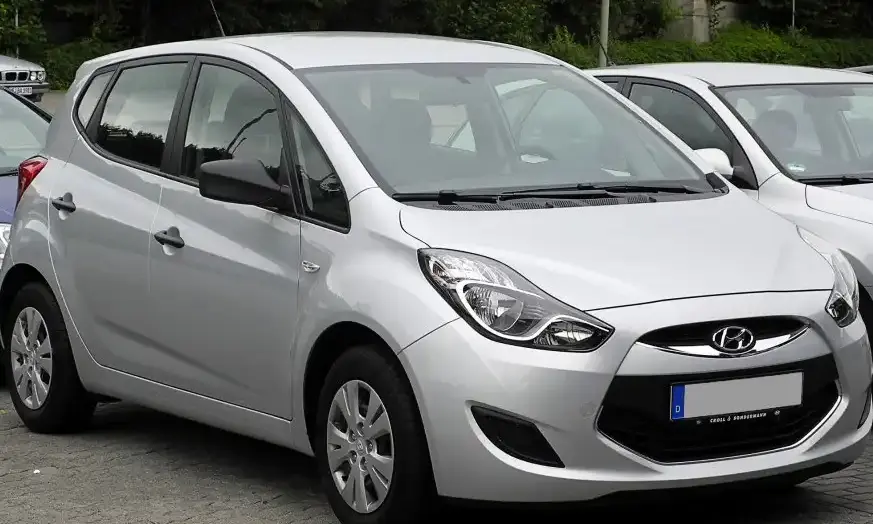
The Hyundai ix20 1.6i (125 hp) Automatic, produced from October 2010 to 2015, represents a key variant within the first generation of Hyundai’s B-segment MPV (Multi-Purpose Vehicle). Designed primarily for the European market, the ix20 aimed to provide a spacious and practical alternative to traditional small hatchbacks, offering a more versatile interior and a higher driving position. This particular 1.6-liter, automatic transmission combination occupied a mid-range position in the ix20 lineup, balancing affordability with convenience. It was positioned above the base 1.4-liter engine option and below the more powerful diesel variants.
Technical Specifications
| Brand | Hyundai |
| Model | ix20 |
| Generation | ix20 |
| Type (Engine) | 1.6i (125 Hp) Automatic |
| Start of production | October, 2010 |
| End of production | 2015 |
| Powertrain Architecture | Internal Combustion engine |
| Body type | Hatchback |
| Seats | 5 |
| Doors | 5 |
| Fuel consumption (urban) | 8.3 l/100 km (28.3 US mpg, 34 UK mpg, 12 km/l) |
| Fuel consumption (extra urban) | 5.5 l/100 km (42.8 US mpg, 51.4 UK mpg, 18.2 km/l) |
| Fuel consumption (combined) | 6.5 l/100 km (36.2 US mpg, 43.5 UK mpg, 15.4 km/l) |
| CO2 emissions | 154 g/km |
| Fuel Type | Petrol (Gasoline) |
| Acceleration 0 – 100 km/h | 12.2 sec |
| Acceleration 0 – 62 mph | 12.2 sec |
| Acceleration 0 – 60 mph | 11.6 sec |
| Maximum speed | 183 km/h (113.71 mph) |
| Emission standard | Euro 5 |
| Weight-to-power ratio | 10.4 kg/Hp, 96.6 Hp/tonne |
| Weight-to-torque ratio | 8.3 kg/Nm, 120.6 Nm/tonne |
| Power | 125 Hp @ 6300 rpm |
| Power per litre | 78.6 Hp/l |
| Torque | 156 Nm @ 4200 rpm (115.06 lb.-ft. @ 4200 rpm) |
| Engine layout | Front, Transverse |
| Engine Model/Code | Gamma I / G4FC |
| Engine displacement | 1591 cm3 (97.09 cu. in.) |
| Number of cylinders | 4 |
| Engine configuration | Inline |
| Cylinder Bore | 77 mm (3.03 in.) |
| Piston Stroke | 85.4 mm (3.36 in.) |
| Compression ratio | 10.5:1 |
| Number of valves per cylinder | 4 |
| Fuel injection system | Multi-port manifold injection |
| Engine aspiration | Naturally aspirated engine |
| Valvetrain | DOHC |
| Engine oil capacity | 3.3 l (3.49 US qt | 2.9 UK qt) |
| Coolant | 5.8 l (6.13 US qt | 5.1 UK qt) |
| Kerb Weight | 1294 kg (2852.78 lbs.) |
| Max. weight | 1730 kg (3814 lbs.) |
| Max load | 436 kg (961.22 lbs.) |
| Trunk (boot) space – minimum | 440 l (15.54 cu. ft.) |
| Trunk (boot) space – maximum | 1486 l (52.48 cu. ft.) |
| Fuel tank capacity | 48 l (12.68 US gal | 10.56 UK gal) |
| Max. roof load | 70 kg (154.32 lbs.) |
| Permitted trailer load with brakes (12%) | 1100 kg (2425.08 lbs.) |
| Permitted trailer load without brakes | 550 kg (1212.54 lbs.) |
| Permitted towbar download | 75 kg (165.35 lbs.) |
| Length | 4100 mm (161.42 in.) |
| Width | 1765 mm (69.49 in.) |
| Height | 1600 mm (62.99 in.) |
| Wheelbase | 2615 mm (102.95 in.) |
| Front track | 1547 mm (60.91 in.) |
| Rear (Back) track | 1551 mm (61.06 in.) |
| Drivetrain Architecture | The Internal combustion engine (ICE) drives the front wheels of the vehicle. |
| Drive wheel | Front wheel drive |
| Number of gears and type of gearbox | 4 gears, automatic transmission |
| Front suspension | Independent type McPherson |
| Rear suspension | Torsion |
| Front brakes | Disc |
| Rear brakes | Disc |
| Assisting systems | ABS (Anti-lock braking system) |
| Steering type | Steering rack and pinion |
| Power steering | Electric Steering |
| Tires size | 205/55 R16 |
| Wheel rims size | 6.0J x 16 |
Powertrain & Engine Architecture
The ix20 1.6i Automatic utilizes Hyundai’s Gamma I engine family, specifically the G4FC code. This 1.6-liter inline-four engine is a naturally aspirated powerplant featuring a multi-point fuel injection system. The engine employs a double overhead camshaft (DOHC) valvetrain with four valves per cylinder, contributing to its relatively efficient operation. The engine’s 125 horsepower output at 6300 rpm and 156 Nm (115 lb-ft) of torque at 4200 rpm are respectable for its displacement, but not particularly high-performance. The automatic transmission is a conventional four-speed unit, chosen for its ease of use and affordability. While not offering the efficiency of more modern transmissions with greater gear counts, it provided a smooth driving experience for everyday use.
Driving Characteristics
The driving experience in the ix20 1.6i Automatic is best described as comfortable and practical rather than sporty. The four-speed automatic transmission, while smooth, lacks the responsiveness of more modern gearboxes. Acceleration from 0-60 mph takes around 11.6 seconds, and 0-100 km/h in 12.2 seconds, making it adequate for urban and highway driving but not particularly quick. The gear ratios are tuned for fuel economy and relaxed cruising, meaning the engine can feel strained when pushed hard. Compared to the manual transmission version of the same engine, the automatic suffers a slight performance penalty. The diesel variants, offering significantly more torque, provided noticeably stronger acceleration and better fuel economy.
Equipment & Trim Levels
The ix20 1.6i Automatic typically came equipped with a reasonable level of standard features. These included air conditioning, power windows, central locking, and a basic audio system with USB connectivity. Higher trim levels added features such as alloy wheels, fog lights, a more advanced audio system, and parking sensors. Interior upholstery was generally cloth, with options for upgraded materials on higher trims. Safety features included ABS brakes, airbags, and electronic stability control. Optional extras often included a panoramic sunroof, leather upholstery, and a navigation system.
Chassis & Braking
The ix20 utilizes a front-wheel-drive layout with an independent McPherson strut suspension at the front and a torsion beam suspension at the rear. This setup provides a comfortable ride quality, absorbing bumps and imperfections in the road effectively. The braking system consists of disc brakes on all four wheels, providing adequate stopping power for the vehicle’s weight and performance. ABS (Anti-lock Braking System) is standard, enhancing safety during emergency braking situations. The steering is rack and pinion with electric power assistance, offering light and easy steering feel.
Market Reception & Comparison
The Hyundai ix20 1.6i Automatic was generally well-received by automotive critics as a practical and affordable MPV. It was praised for its spacious interior, comfortable ride, and reasonable fuel economy (around 36.2 US mpg combined). However, the engine was sometimes criticized for lacking outright power, and the four-speed automatic transmission was considered somewhat dated compared to competitors offering more modern gearboxes. Compared to other B-segment MPVs like the Renault Modus or Opel Meriva, the ix20 offered a competitive package in terms of price, space, and features. The diesel variants of the ix20 were often favored by those prioritizing fuel economy and performance.
Legacy
The Hyundai ix20, and specifically the 1.6i Automatic variant, has proven to be a relatively reliable vehicle in the used car market. The Gamma I engine is known for its durability, and the four-speed automatic transmission, while not the most sophisticated, is generally robust. Common issues are typically limited to routine maintenance items such as oil leaks and worn suspension components. Today, the ix20 1.6i Automatic represents an affordable and practical option for buyers seeking a spacious and versatile small MPV. Its relatively low running costs and proven reliability make it a sensible choice for families or individuals needing a versatile vehicle for everyday use.