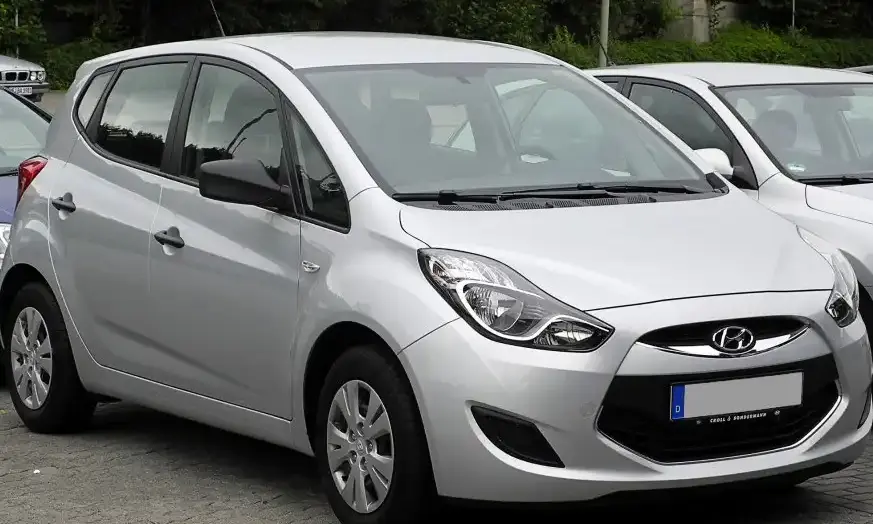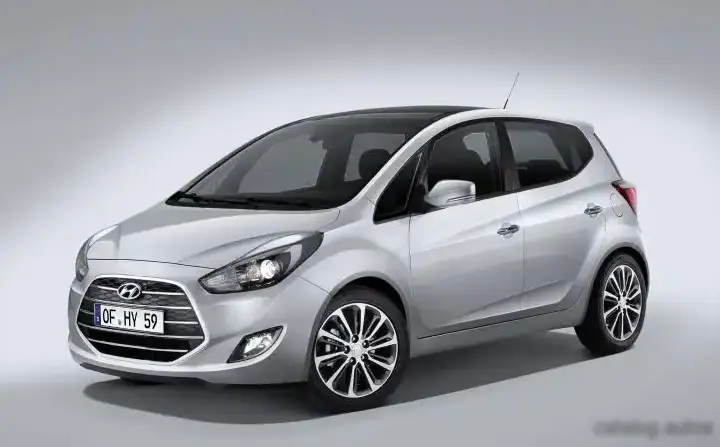
The Hyundai ix20 1.6d (128 hp) represents a significant offering within the first generation of Hyundai’s B-segment MPV, produced from 2015 to 2018 as part of a facelifted model range. Positioned as a practical and fuel-efficient option, this variant aimed to provide a balance between performance and economy for European buyers. The ix20, not initially sold in the US market, was designed specifically for the European market as a competitor to vehicles like the Renault Modus and Opel Meriva, offering a compact, five-seater package with a focus on interior space and versatility. This particular 1.6-liter diesel configuration was a mid-range offering, slotting between the lower-powered diesel options and the gasoline-powered variants.
Technical Specifications
| Brand | Hyundai |
| Model | ix20 |
| Generation | ix20 (facelift 2015) |
| Type (Engine) | 1.6d (128 Hp) |
| Start of production | 2015 |
| End of production | 2018 |
| Powertrain Architecture | Internal Combustion engine |
| Body type | Hatchback |
| Seats | 5 |
| Doors | 5 |
| Fuel Type | Diesel |
| Acceleration 0 – 100 km/h | 11.1 sec |
| Acceleration 0 – 62 mph | 11.1 sec |
| Acceleration 0 – 60 mph | 10.5 sec |
| Maximum speed | 186 km/h (115.58 mph) |
| Emission standard | Euro 6 |
| Weight-to-power ratio | 10 kg/Hp, 99.9 Hp/tonne |
| Weight-to-torque ratio | 4.9 kg/Nm, 203 Nm/tonne |
| Power | 128 Hp @ 4000 rpm |
| Power per litre | 80.9 Hp/l |
| Torque | 260 Nm @ 1500-3000 rpm (191.77 lb.-ft. @ 1500-3000 rpm) |
| Engine layout | Front, Transverse |
| Engine Model/Code | U / D4FB |
| Engine displacement | 1582 cm3 (96.54 cu. in.) |
| Number of cylinders | 4 |
| Engine configuration | Inline |
| Cylinder Bore | 77.2 mm (3.04 in.) |
| Piston Stroke | 84.5 mm (3.33 in.) |
| Compression ratio | 16:1 |
| Number of valves per cylinder | 4 |
| Fuel injection system | Diesel Commonrail |
| Engine aspiration | Turbocharger, Intercooler |
| Valvetrain | DOHC |
| Engine oil capacity | 5.3 l (5.6 US qt | 4.66 UK qt) |
| Coolant | 6.3 l (6.66 US qt | 5.54 UK qt) |
| Kerb Weight | 1281 kg (2824.12 lbs.) |
| Trunk (boot) space – minimum | 440 l (15.54 cu. ft.) |
| Trunk (boot) space – maximum | 1486 l (52.48 cu. ft.) |
| Fuel tank capacity | 50 l (13.21 US gal | 11 UK gal) |
| Length | 4115 mm (162.01 in.) |
| Width | 1765 mm (69.49 in.) |
| Height | 1600 mm (62.99 in.) |
| Wheelbase | 2615 mm (102.95 in.) |
| Front overhang | 820 mm (32.28 in.) |
| Rear overhang | 680 mm (26.77 in.) |
| Minimum turning circle | 10.42 m (34.19 ft.) |
| Drivetrain Architecture | The Internal combustion engine (ICE) drives the front wheels of the vehicle. |
| Drive wheel | Front wheel drive |
| Number of gears | 6 gears, manual transmission |
| Front suspension | Independent, type McPherson with coil spring and anti-roll bar |
| Rear suspension | Semi-independent, coil spring |
| Front brakes | Ventilated discs |
| Rear brakes | Disc |
| Assisting systems | ABS (Anti-lock braking system) |
| Steering type | Steering rack and pinion |
| Power steering | Electric Steering |
| Tires size | 195/65 R15; 205/55 R16; 205/50 R17 |
| Wheel rims size | 15; 16; 17 |
Powertrain & Engine Architecture
The heart of the ix20 1.6d is the Hyundai D4FB engine, a 1.6-liter inline-four cylinder diesel. This engine utilizes a common-rail direct injection system, delivering fuel at extremely high pressure for optimized combustion. The D4FB is a turbocharged engine, employing a variable geometry turbocharger (VGT) to enhance low-end torque and overall responsiveness. The engine also features an intercooler to reduce intake air temperature, further improving efficiency and power output. The engine’s DOHC (Double Overhead Camshaft) valvetrain, with four valves per cylinder, contributes to its breathing efficiency. This engine was part of Hyundai-Kia’s ‘U’ engine family, known for its relatively robust design and widespread use in various models. The 6-speed manual transmission was the standard offering for this variant, providing a balance between fuel economy and driver control. The transmission’s gear ratios were tuned to maximize the engine’s torque output, providing adequate acceleration for everyday driving.
Driving Characteristics
The 128 hp 1.6d ix20 offered a practical and comfortable driving experience. While not a performance-oriented vehicle, the engine’s 260 Nm (191.77 lb-ft) of torque, available from 1500-3000 rpm, provided sufficient power for overtaking and navigating varied road conditions. The 6-speed manual transmission allowed drivers to keep the engine within its optimal power band. Compared to the lower-powered diesel variants, the 1.6d offered noticeably improved acceleration and highway cruising ability. However, it didn’t match the responsiveness of the gasoline engines. The suspension setup, featuring McPherson struts at the front and a semi-independent coil spring arrangement at the rear, prioritized ride comfort over sporty handling. Steering was light and easy, making it well-suited for urban driving.
Equipment & Trim Levels
The ix20 1.6d typically came equipped with a reasonable level of standard features. These included air conditioning, power windows, central locking, and a basic audio system with USB connectivity. Higher trim levels, such as Style or Premium, added features like alloy wheels, fog lights, a more advanced audio system with Bluetooth connectivity, and parking sensors. Interior upholstery was typically cloth, with options for upgraded materials on higher trims. Safety features included ABS, airbags, and electronic stability control. Optional extras included a panoramic sunroof, navigation system, and leather upholstery.
Chassis & Braking
The ix20’s chassis was designed to maximize interior space and provide a comfortable ride. The front suspension utilized McPherson struts, a common and effective design for compact vehicles. The rear suspension employed a semi-independent coil spring setup, which offered a good balance between ride comfort and handling. Braking duties were handled by ventilated discs at the front and solid discs at the rear. The ABS (Anti-lock Braking System) was standard, enhancing safety during emergency braking situations. The steering system was a rack and pinion type with electric power assistance, providing light and precise steering feel.
Market Reception & Comparison
The Hyundai ix20 1.6d was generally well-received by automotive critics for its practicality, spacious interior, and fuel efficiency. The 1.6-liter diesel engine was praised for its torque and responsiveness, making it a suitable choice for both city and highway driving. Compared to the lower-powered diesel variants, the 1.6d offered a noticeable improvement in performance. However, some critics noted that the ride could be a bit firm on rough roads. In terms of fuel economy, the 1.6d offered competitive figures, typically achieving around 4.5-5.5 liters per 100 kilometers (52-63 mpg) in mixed driving conditions. Compared to gasoline-powered variants, the diesel offered significantly better fuel economy.
Legacy
The Hyundai ix20, and specifically the 1.6d variant, has proven to be a relatively reliable vehicle in the used car market. The D4FB engine, while not without its potential issues (such as diesel particulate filter clogging), is generally considered robust when properly maintained. Common maintenance items include regular oil changes, filter replacements, and timing belt replacement (if applicable). The ix20’s spacious interior and practical design continue to appeal to buyers looking for a compact MPV. While no longer in production, the ix20 remains a viable option for those seeking an affordable and fuel-efficient family vehicle.