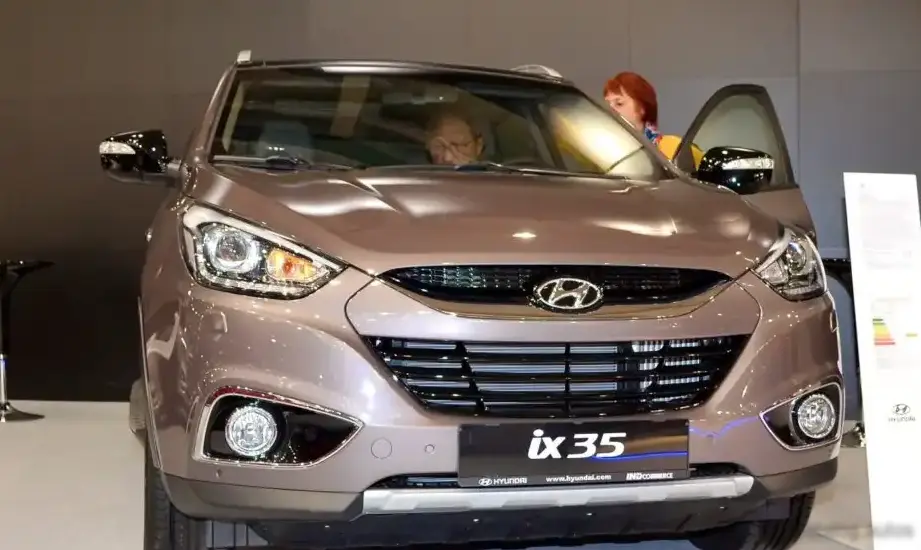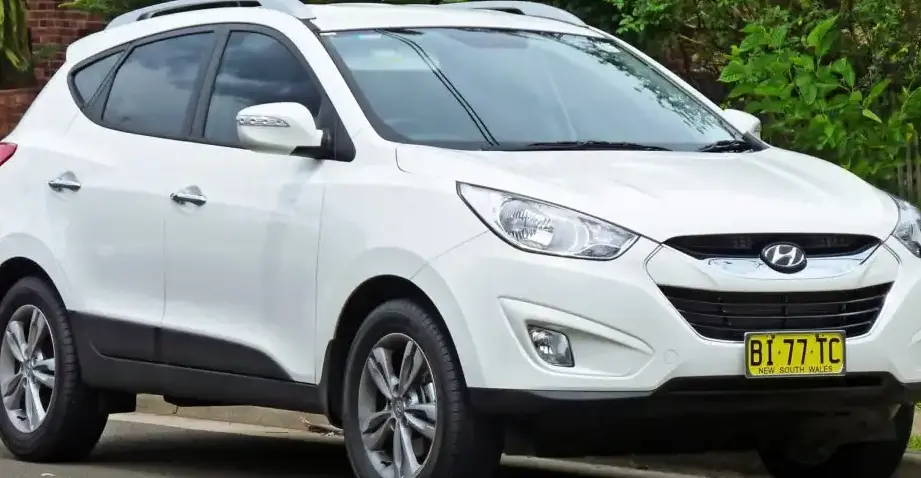
The Hyundai ix35 2.0 CVVT with a 6-speed automatic transmission, produced between 2009 and 2013, represented a significant step forward for Hyundai in the compact SUV segment. Positioned as a mid-range offering within the ix35 lineup, it aimed to balance affordability with a reasonable level of performance and features. The ix35 (sold as the Tucson in some markets) was Hyundai’s replacement for the older Tucson, and was designed to compete with established European and Japanese rivals like the Nissan Qashqai, Kia Sportage, and Volkswagen Tiguan. This particular variant was crucial for appealing to buyers seeking an automatic transmission, a popular choice in the North American market and increasingly so in Europe.
Technical Specifications
| Brand | Hyundai |
| Model | ix35 |
| Generation | ix35 |
| Type (Engine) | 2.0 CVVT (163 Hp) Automatic |
| Start of production | 2009 year |
| End of production | 2013 year |
| Powertrain Architecture | Internal Combustion engine |
| Body type | SUV |
| Seats | 5 |
| Doors | 5 |
| Fuel consumption (economy) – urban | 10.6 l/100 km (22.2 US mpg) |
| Fuel consumption (economy) – extra urban | 6.8 l/100 km (34.6 US mpg) |
| Fuel consumption (economy) – combined | 8.2 l/100 km (28.7 US mpg) |
| Fuel Type | Petrol (Gasoline) |
| Acceleration 0 – 100 km/h | 11.3 sec |
| Acceleration 0 – 62 mph | 11.3 sec |
| Acceleration 0 – 60 mph | 10.7 sec |
| Maximum speed | 180 km/h (111.85 mph) |
| Emission standard | Euro 5 |
| Weight-to-power ratio | 9 kg/Hp |
| Weight-to-torque ratio | 7.6 kg/Nm |
| Power | 163 Hp @ 6200 rpm |
| Torque | 194 Nm @ 4600 rpm (143.09 lb.-ft. @ 4600 rpm) |
| Engine layout | Front, Transverse |
| Engine Model/Code | Theta II / G4KD |
| Engine displacement | 1998 cm3 (121.93 cu. in.) |
| Number of cylinders | 4 |
| Engine configuration | Inline |
| Cylinder Bore | 86 mm (3.39 in.) |
| Piston Stroke | 86 mm (3.39 in.) |
| Compression ratio | 10.5:1 |
| Number of valves per cylinder | 4 |
| Fuel injection system | Multi-port manifold injection |
| Engine aspiration | Naturally aspirated engine |
| Valvetrain | DOHC |
| Engine oil capacity | 4.1 l (4.33 US qt | 3.61 UK qt) |
| Coolant | 6.7 l (7.08 US qt | 5.9 UK qt) |
| Kerb Weight | 1469 kg (3238.59 lbs.) |
| Max. weight | 2030 kg (4475.38 lbs.) |
| Max load | 561 kg (1236.79 lbs.) |
| Trunk (boot) space – minimum | 591 l (20.87 cu. ft.) |
| Trunk (boot) space – maximum | 1436 l (50.71 cu. ft.) |
| Fuel tank capacity | 55 l (14.53 US gal | 12.1 UK gal) |
| Length | 4410 mm (173.62 in.) |
| Width | 1820 mm (71.65 in.) |
| Height | 1660 mm (65.35 in.) |
| Wheelbase | 2640 mm (103.94 in.) |
| Front track | 1591 mm (62.64 in.) |
| Rear (Back) track | 1592 mm (62.68 in.) |
| Minimum turning circle | 10.58 m (34.71 ft.) |
| Drive wheel | All wheel drive (4×4) |
| Number of gears | 6 |
| Gearbox type | automatic transmission |
| Front suspension | Independent type McPherson |
| Rear suspension | Independent multi-link spring suspension with stabilizer |
| Front brakes | Ventilated discs |
| Rear brakes | Disc |
| Assisting systems | ABS (Anti-lock braking system) |
| Steering type | Steering rack and pinion |
| Power steering | Electric Steering |
| Tires size | 225/60 R17; 225/55 R18 |
| Wheel rims size | 6.5J x 17; 6.5J x18 |
Powertrain & Engine Architecture
The heart of the ix35 2.0 CVVT Automatic is the Hyundai Theta II engine, specifically the G4KD variant. This 1998cc (2.0 liter) inline-four cylinder engine utilizes a cast iron block with an aluminum cylinder head. The “CVVT” designation stands for Continuously Variable Valve Timing, a technology employed on both the intake and exhaust valves to optimize engine performance and fuel efficiency across the rev range. The engine employs multi-point fuel injection, delivering fuel directly to the intake ports. The 6-speed automatic transmission, sourced from Hyundai’s own development, was designed to provide smooth shifts and contribute to improved fuel economy compared to older 4-speed automatics. It features a torque converter and electronically controlled shifting.
Driving Characteristics
The 163 horsepower and 143 lb-ft of torque produced by the 2.0 CVVT engine, when paired with the 6-speed automatic, resulted in adequate, but not particularly exhilarating, performance. Acceleration from 0-60 mph took around 10.7 seconds, making it competitive within its class but noticeably slower than versions equipped with a manual transmission or the more powerful 2.4-liter engine. The automatic transmission was tuned for comfort and fuel efficiency, often prioritizing smooth gear changes over aggressive downshifts. The gear ratios were relatively conservative, favoring mid-range torque over high-revving power. In real-world driving, the ix35 2.0 Automatic felt competent for everyday commuting and highway cruising, but struggled when fully loaded or attempting quick overtaking maneuvers.
Equipment & Trim Levels
The 2.0 CVVT Automatic trim typically included standard features such as air conditioning, power windows and locks, a basic audio system with CD player and auxiliary input, and alloy wheels. Safety features included ABS, front airbags, and seatbelt pretensioners. Higher trim levels, such as the Limited or Luxury, added features like leather upholstery, a sunroof, automatic climate control, a more advanced audio system with Bluetooth connectivity, and rear parking sensors. Optional extras included navigation systems and upgraded wheel designs.
Chassis & Braking
The ix35 utilized a McPherson strut front suspension and a multi-link rear suspension, providing a comfortable ride quality. The suspension was tuned to prioritize comfort over sporty handling. Braking duties were handled by ventilated discs at the front and solid discs at the rear. ABS (Anti-lock Braking System) was standard, enhancing braking performance and stability. The all-wheel-drive system, when equipped, was typically an on-demand system, automatically engaging the rear wheels when traction was lost at the front.
Market Reception & Comparison
The Hyundai ix35 2.0 CVVT Automatic was generally well-received by automotive critics as a practical and well-equipped SUV. However, the engine’s performance was often cited as a weakness, particularly when compared to some of its European rivals. Fuel economy was considered average for the class. Compared to the higher-output 2.4-liter engine option, the 2.0-liter offered better fuel efficiency but significantly less power. The 2.0L automatic was often seen as a good choice for buyers prioritizing comfort and fuel economy over outright performance. Reliability was generally good, although some owners reported minor issues with the automatic transmission over time.
Legacy
The Hyundai ix35, and specifically the 2.0 CVVT Automatic variant, played a key role in establishing Hyundai as a major player in the global SUV market. The Theta II engine proved to be a relatively reliable powerplant, and the 6-speed automatic transmission offered a smooth and efficient driving experience. On the used car market today, the ix35 2.0 Automatic represents a relatively affordable and practical option for buyers seeking a compact SUV. Maintenance costs are generally reasonable, and parts availability is good. However, potential buyers should be aware of the possibility of minor transmission issues and should ensure that the vehicle has been properly maintained.