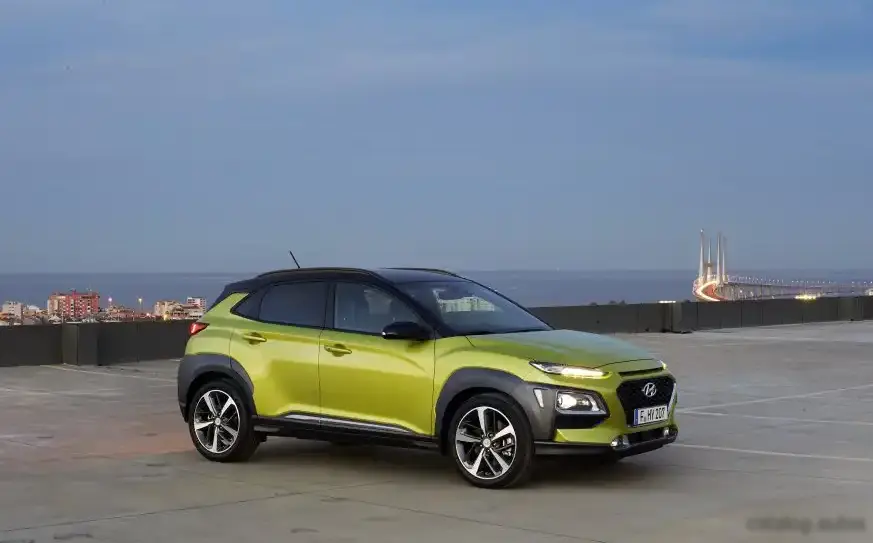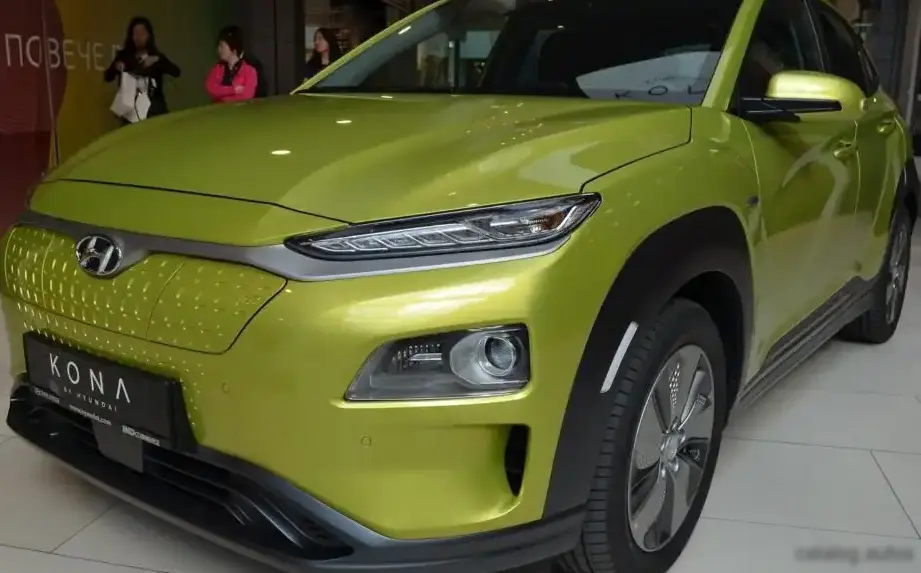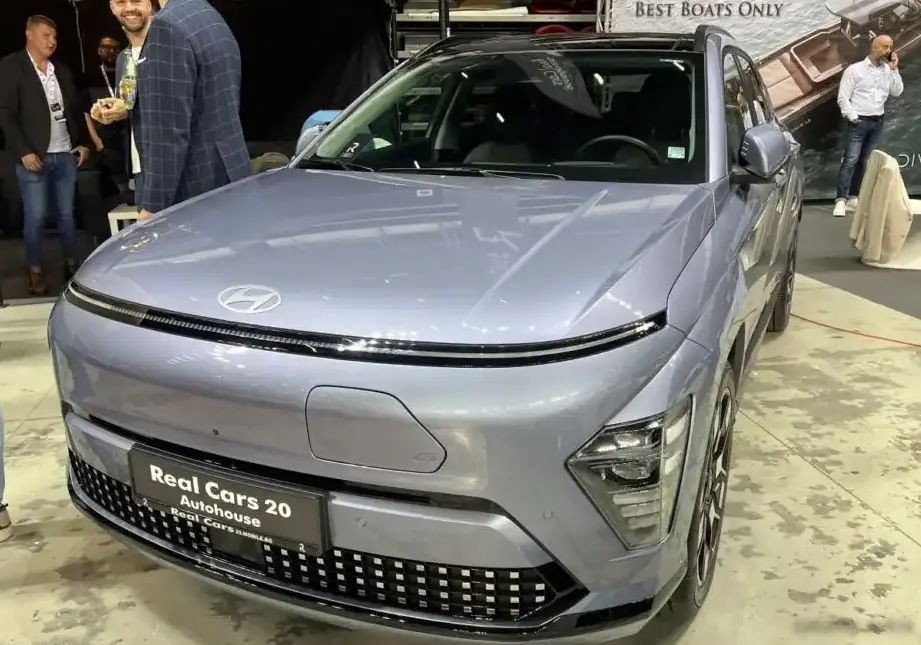
The Hyundai Kona II 49 kWh Electric, launched in May 2025, represents Hyundai’s entry point into the second generation of the popular Kona subcompact SUV. This variant, producing 135 horsepower, is a battery electric vehicle (BEV) designed to offer an accessible and efficient option within the rapidly expanding EV market. Positioned as the base trim for the electric Kona lineup, it targets buyers seeking a practical, affordable, and environmentally conscious vehicle for daily commuting and urban driving. The Kona II builds upon the foundation of the first-generation model, offering improved styling, technology, and overall refinement, while maintaining the compact footprint that made the original Kona a success.
Technical Specifications
| Brand | Hyundai |
| Model | Kona |
| Generation | Kona II |
| Type (Engine) | 49 kWh (135 Hp) Electric |
| Start of production | May, 2025 |
| Powertrain Architecture | BEV (Electric Vehicle) |
| Body type | SUV |
| Seats | 5 |
| Doors | 5 |
| Fuel Type | Electricity |
| Acceleration 0 – 100 km/h | 9.9 sec |
| Acceleration 0 – 62 mph | 9.9 sec |
| Acceleration 0 – 60 mph | 9.4 sec |
| Maximum speed | 162 km/h (100.66 mph) |
| Weight-to-power ratio | 12 kg/Hp, 83.6 Hp/tonne |
| Weight-to-torque ratio | 6.3 kg/Nm, 157.9 Nm/tonne |
| Gross battery capacity | 49 kWh |
| Battery technology | Lithium-ion (Li-Ion) |
| Battery location | Below the floor |
| All-electric range (WLTP) | 380 km (236.12 mi) |
| Average Energy consumption (WLTP) | 14.6 kWh/100 km (23.5 kWh/100 mi, 143 MPGe, 6.8 km/kWh, 4.3 mi/kWh) |
| Electric motor power | 135 Hp |
| Electric motor Torque | 255 Nm (188.08 lb.-ft.) |
| Electric motor location | Front axle, Transverse |
| Electric motor type | Synchronous |
| System power | 135 Hp |
| System torque | 255 Nm (188.08 lb.-ft.) |
| Kerb Weight | 1615-1690 kg (3560.47 – 3725.81 lbs.) |
| Max. weight | 2110 kg (4651.75 lbs.) |
| Max load | 420-495 kg (925.94 – 1091.29 lbs.) |
| Trunk (boot) space – minimum | 466 l (16.46 cu. ft.) |
| Trunk (boot) space – maximum | 1300 l (45.91 cu. ft.) |
| Max. roof load | 100 kg (220.46 lbs.) |
| Permitted trailer load with brakes (12%) | 300 kg (661.39 lbs.) |
| Permitted trailer load without brakes | 300 kg (661.39 lbs.) |
| Permitted towbar download | 100 kg (220.46 lbs.) |
| Length | 4355 mm (171.46 in.) |
| Width | 1825 mm (71.85 in.) |
| Height | 1580 mm (62.2 in.) |
| Wheelbase | 2660 mm (104.72 in.) |
| Front track | 1591 mm (62.64 in.) |
| Rear (Back) track | 1600 mm (62.99 in.) |
| Ride height (ground clearance) | 151 mm (5.94 in.) |
| Drive wheel | Front wheel drive |
| Number of gears and type of gearbox | 1 gears, automatic transmission |
| Front suspension | Independent type McPherson |
| Rear suspension | Independent multi-link suspension |
| Front brakes | Ventilated discs |
| Rear brakes | Disc |
| Assisting systems | ABS (Anti-lock braking system) |
| Steering type | Steering rack and pinion |
| Power steering | Electric Steering |
| Tires size | 215/60 R17 |
| Wheel rims size | 7.0J x 17 |
Powertrain & Engine Architecture
The Kona II 49 kWh Electric utilizes a front-wheel-drive configuration powered by a single synchronous electric motor. This motor delivers 135 horsepower and 255 Nm (188 lb-ft) of torque. The 49 kWh lithium-ion battery pack is positioned under the vehicle floor, contributing to a lower center of gravity and improved handling. The battery utilizes a liquid cooling system to maintain optimal operating temperatures. The vehicle employs a single-speed automatic transmission, typical of most electric vehicles, providing seamless acceleration. The power electronics and inverter are integrated into the powertrain to efficiently manage the flow of energy between the battery and the motor. Hyundai’s integrated charging system allows for both AC and DC fast charging capabilities.
Driving Characteristics
The 49 kWh Kona Electric offers a comfortable and refined driving experience, particularly well-suited for urban environments. Acceleration from 0-60 mph takes approximately 9.4 seconds, which is adequate for everyday driving but noticeably slower than higher-powered Kona Electric variants. The single-speed transmission provides linear power delivery, and the instant torque characteristic of electric motors offers brisk acceleration at lower speeds. The relatively low weight of the vehicle, ranging from 3560 to 3726 pounds, contributes to its agility. The steering is light and precise, making it easy to maneuver in tight spaces. While not a performance-oriented vehicle, the 49 kWh Kona Electric provides sufficient power for most driving situations.
Equipment & Trim Levels
The base trim of the Kona II 49 kWh Electric typically includes standard features such as automatic headlights, a touchscreen infotainment system with Apple CarPlay and Android Auto compatibility, a rearview camera, and a suite of advanced driver-assistance systems (ADAS) including lane-keeping assist and forward collision warning. Interior upholstery is typically cloth, and the dashboard features a modern design with a focus on usability. Optional extras may include a larger touchscreen display, a premium audio system, heated front seats, and a sunroof. The trim level aims to provide a well-equipped vehicle at an accessible price point.
Chassis & Braking
The Kona II utilizes an independent McPherson strut suspension in the front and an independent multi-link suspension in the rear, providing a comfortable ride and good handling characteristics. Ventilated disc brakes are used on the front wheels, while solid discs are employed at the rear. The vehicle is equipped with an Anti-lock Braking System (ABS) and Electronic Stability Control (ESC) as standard safety features. The suspension is tuned to prioritize comfort and ride quality, making it well-suited for everyday driving conditions. The electric power steering system provides a light and responsive feel.
Market Reception & Comparison
The Hyundai Kona II 49 kWh Electric has been generally well-received by critics as an affordable and practical entry point into the electric vehicle market. Its competitive pricing, decent range, and well-equipped interior have been praised. Compared to higher-trim Kona Electric variants with larger battery packs and more powerful motors, the 49 kWh model offers a lower price but sacrifices some range and performance. Against competitors like the Nissan LEAF and Chevrolet Bolt EV, the Kona Electric stands out with its more modern styling, longer warranty, and available advanced safety features. Fuel economy, expressed as MPGe, is estimated at 143 MPGe, making it highly efficient.
Legacy
The Hyundai Kona II 49 kWh Electric powertrain is expected to demonstrate good long-term reliability, benefiting from Hyundai’s advancements in electric vehicle technology. The battery pack is covered by a comprehensive warranty, providing peace of mind for owners. As the electric vehicle market continues to evolve, the 49 kWh Kona Electric is likely to remain a popular choice for budget-conscious buyers seeking a practical and efficient EV. On the used car market, these models are expected to hold their value reasonably well, particularly as demand for electric vehicles continues to grow. The Kona II represents a significant step forward in Hyundai’s commitment to electrification and sustainable mobility.