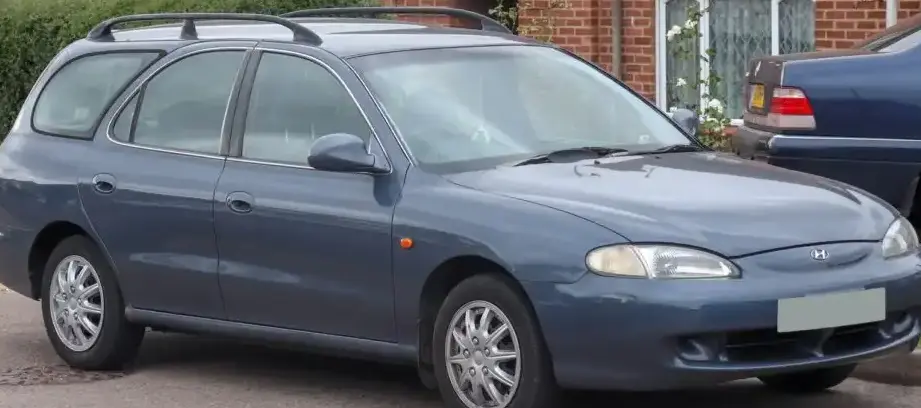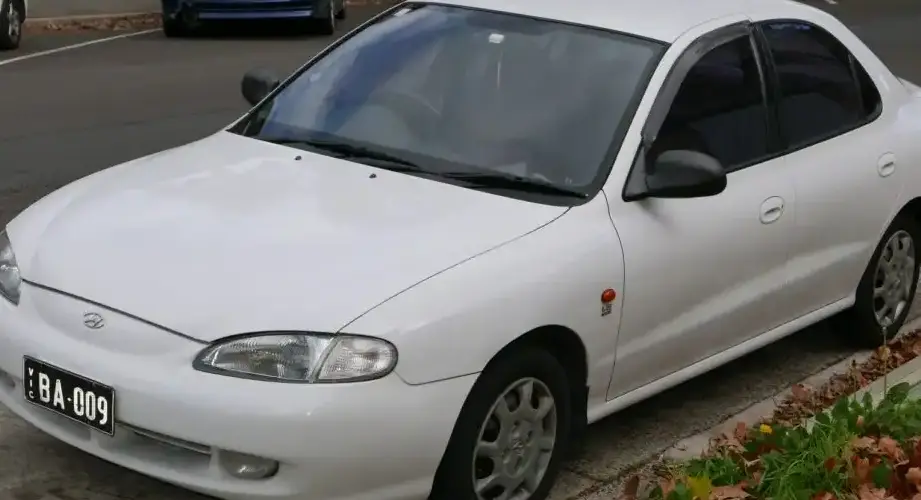
The Hyundai Lantra 1.8 16V, produced between 1995 and 2000, represented a significant step forward for the South Korean automaker in the competitive compact sedan segment. Part of the first generation Lantra (also known as the Sonata in some markets), this variant aimed to offer a balance of performance, fuel efficiency, and affordability, primarily targeting buyers in Europe and Asia where compact sedans were highly popular. It was positioned as a mid-range offering within the Lantra lineup, slotting between the base 1.6L engine and the more powerful 2.0L options. The Lantra, as a whole, was Hyundai’s attempt to establish itself as a credible alternative to established Japanese and European brands.
Technical Specifications
| Brand | Hyundai |
| Model | Lantra |
| Generation | Lantra (First Generation) |
| Type (Engine) | 1.8 16V (128 Hp) |
| Start of production | 1995 |
| End of production | 2000 |
| Powertrain Architecture | Internal Combustion Engine |
| Body type | Sedan |
| Seats | 5 |
| Doors | 4 |
| Fuel consumption (urban) | 10.8 l/100 km (21.8 US mpg) |
| Fuel consumption (extra urban) | 7.2 l/100 km (32.7 US mpg) |
| Fuel Type | Petrol (Gasoline) |
| Acceleration 0 – 100 km/h | 9.4 sec |
| Acceleration 0 – 62 mph | 9.4 sec |
| Acceleration 0 – 60 mph | 8.9 sec |
| Maximum speed | 196 km/h (121.79 mph) |
| Weight-to-power ratio | 9.7 kg/Hp |
| Weight-to-torque ratio | 7.7 kg/Nm |
| Power | 128 Hp @ 6100 rpm |
| Power per litre | 71.3 Hp/l |
| Torque | 162 Nm @ 5000 rpm (119.49 lb.-ft. @ 5000 rpm) |
| Engine layout | Front, Transverse |
| Engine Model/Code | Beta / G4GM |
| Engine displacement | 1795 cm3 (109.54 cu. in.) |
| Number of cylinders | 4 |
| Engine configuration | Inline |
| Cylinder Bore | 82 mm (3.23 in.) |
| Piston Stroke | 85 mm (3.35 in.) |
| Compression ratio | 10:1 |
| Number of valves per cylinder | 4 |
| Fuel injection system | Multi-port manifold injection |
| Engine aspiration | Naturally aspirated |
| Engine oil capacity | 4 l (4.23 US qt | 3.52 UK qt) |
| Coolant capacity | 6 l (6.34 US qt | 5.28 UK qt) |
| Kerb Weight | 1247 kg (2749.16 lbs.) |
| Max. weight | 1685 kg (3714.79 lbs.) |
| Max load | 438 kg (965.62 lbs.) |
| Trunk (boot) space – minimum | 393 l (13.88 cu. ft.) |
| Fuel tank capacity | 55 l (14.53 US gal | 12.1 UK gal) |
| Length | 4420 mm (174.02 in.) |
| Width | 1700 mm (66.93 in.) |
| Height | 1393 mm (54.84 in.) |
| Wheelbase | 2550 mm (100.39 in.) |
| Front track | 1465 mm (57.68 in.) |
| Rear track | 1450 mm (57.09 in.) |
| Drivetrain Architecture | Front Wheel Drive |
| Number of gears | 5 |
| Gearbox type | Manual Transmission |
| Front suspension | Wishbone |
| Rear suspension | Coil spring |
| Front brakes | Ventilated discs |
| Rear brakes | Drum |
| Assisting systems | ABS (Anti-lock braking system) |
| Steering type | Steering rack and pinion |
| Power steering | Hydraulic |
| Tires size | 195/60 R14 |
Powertrain & Engine Architecture
The heart of the Lantra 1.8 16V was the Hyundai Beta engine, specifically the G4GM code. This 1.8-liter inline-four cylinder engine featured a double overhead camshaft (DOHC) valvetrain operating 16 valves. The Beta engine was a significant development for Hyundai, representing a move towards more modern engine designs. It utilized multi-port fuel injection, a system that improved fuel atomization and efficiency compared to earlier throttle-body injection systems. The engine’s 10:1 compression ratio was a standard figure for the time, balancing performance and fuel economy. The 5-speed manual transmission was the standard offering, providing a relatively direct connection between the engine and the front wheels. While an automatic transmission was available, it was often criticized for its sluggish shifts and impact on fuel economy.
Driving Characteristics
The 1.8L engine delivered a respectable 128 horsepower, providing adequate acceleration for everyday driving. The 0-60 mph time of around 8.9 seconds was competitive for its class in the mid-1990s. However, compared to the more powerful 2.0L Lantra, the 1.8 felt noticeably less responsive, particularly when fully loaded or tackling steep inclines. The 5-speed manual transmission allowed drivers to keep the engine in its optimal power band, but the gear ratios weren’t particularly sporty. The automatic transmission, while offering convenience, significantly dulled the driving experience, with noticeable delays during gear changes. Handling was generally considered safe and predictable, but not particularly engaging. The suspension was tuned for comfort rather than outright performance.
Equipment & Trim Levels
The Lantra 1.8 16V typically came equipped with features considered standard for a mid-range compact sedan of the era. These included power steering, central locking, and basic audio system. Higher trim levels added features such as air conditioning, power windows, and upgraded interior upholstery. Interior materials were generally durable but not luxurious. The dashboard layout was functional and straightforward, prioritizing ease of use over aesthetic appeal. Optional extras included a sunroof, alloy wheels, and upgraded sound systems.
Chassis & Braking
The Lantra utilized a front-wheel-drive layout with an independent wishbone suspension at the front and a coil spring suspension at the rear. The front brakes were ventilated discs, providing adequate stopping power, while the rear brakes were drums, a cost-saving measure common in this segment. Anti-lock Braking System (ABS) was available, but not standard on all trims. The steering was rack and pinion, offering reasonable precision. The chassis was designed to provide a comfortable ride, prioritizing isolation from road imperfections over sporty handling.
Market Reception & Comparison
The Lantra 1.8 16V was generally well-received by automotive critics as a solid, reliable, and affordable compact sedan. However, it wasn’t considered a class leader in terms of performance or refinement. Compared to the 2.0L Lantra, the 1.8 offered better fuel economy but lacked the same level of punch. Against competitors like the Honda Civic, Toyota Corolla, and Nissan Sentra, the Lantra offered a competitive price point but often lagged behind in terms of brand reputation and perceived quality. Fuel economy figures were respectable for the time, averaging around 22 mpg in the city and 33 mpg on the highway.
Legacy
The Hyundai Lantra 1.8 16V, while not a groundbreaking vehicle, played a crucial role in establishing Hyundai as a viable competitor in the global automotive market. The Beta engine proved to be a relatively durable and reliable powerplant, and many examples are still on the road today. In the used car market, the Lantra 1.8 16V is often sought after as an affordable and dependable transportation option. Maintenance costs are generally low, and parts availability is still reasonable. However, potential buyers should be aware of potential issues with rust, particularly in regions with harsh winters. The Lantra’s success paved the way for Hyundai’s continued growth and development, ultimately leading to the highly regarded vehicles the company produces today.