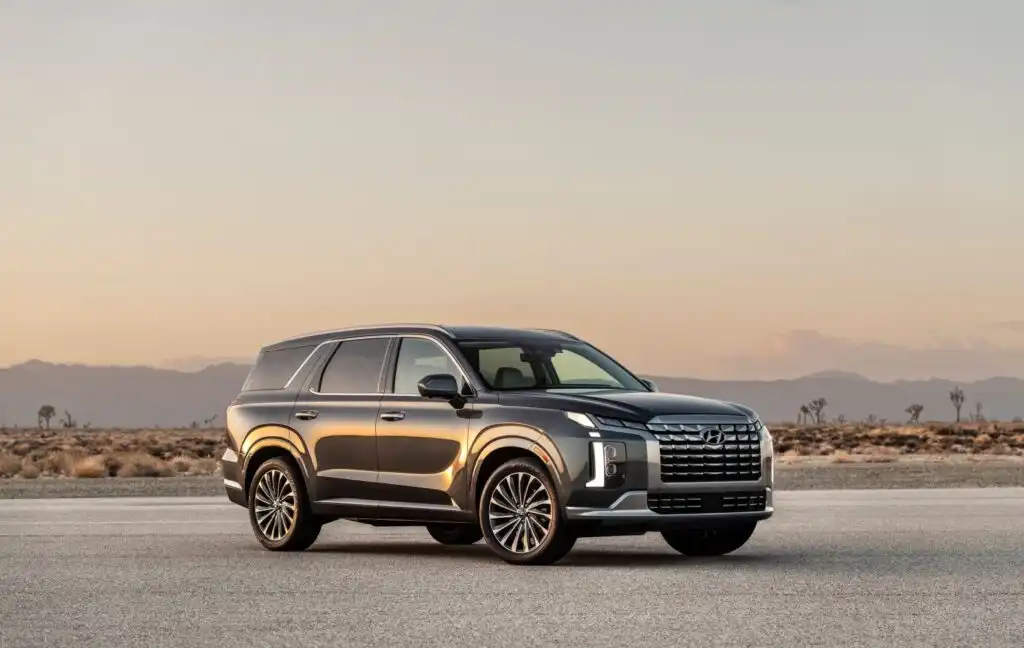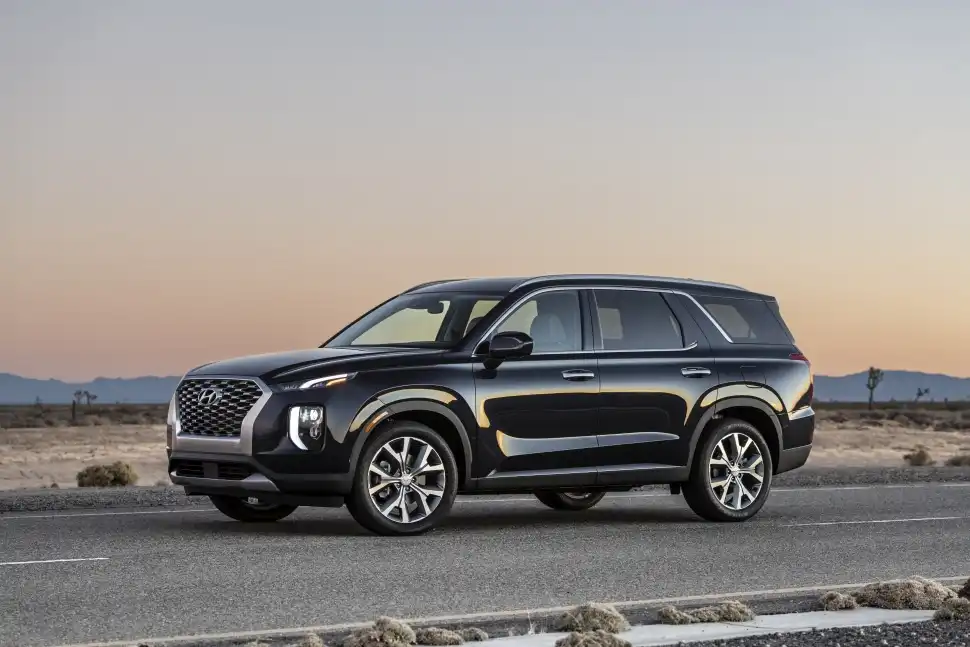
The Hyundai Palisade I 2.2 TCi (193 hp) Automatic, produced from November 2018 to April 2022, represents a significant entry for Hyundai into the highly competitive three-row mid-size SUV segment. Positioned as a more premium offering than the Santa Fe, the Palisade aimed to provide a spacious, well-equipped, and comfortable family vehicle. This particular variant, powered by the 2.2-liter turbocharged diesel engine paired with an eight-speed automatic transmission, was a key offering in many international markets, particularly where diesel fuel remains popular. It served as a mid-range option within the Palisade lineup, offering a balance between fuel efficiency and acceptable performance for everyday driving.
Technical Specifications
| Brand | Hyundai |
| Model | Palisade |
| Generation | Palisade I |
| Type (Engine) | 2.2 TCi (193 Hp) Automatic |
| Start of production | November, 2018 |
| End of production | April, 2022 |
| Powertrain Architecture | Internal Combustion engine |
| Body type | SUV, Crossover |
| Seats | 7-8 |
| Doors | 5 |
| Fuel consumption (urban) | 9.1 l/100 km (25.8 US mpg) |
| Fuel consumption (extra urban) | 5.6 l/100 km (42 US mpg) |
| Fuel consumption (combined) | 7 l/100 km (33.6 US mpg) |
| CO2 emissions | 182 g/km |
| Fuel Type | Diesel |
| Acceleration 0 – 100 km/h | 10.2 sec |
| Acceleration 0 – 62 mph | 10.2 sec |
| Acceleration 0 – 60 mph | 9.7 sec |
| Maximum speed | 190 km/h (118.06 mph) |
| Power | 193 Hp @ 3800 rpm |
| Torque | 441 Nm @ 1750-2750 rpm (325.26 lb.-ft. @ 1750-2750 rpm) |
| Engine Model/Code | R II / D4HB |
| Engine displacement | 2199 cm3 (134.19 cu. in.) |
| Number of cylinders | 4 |
| Engine configuration | Inline |
| Number of valves per cylinder | 4 |
| Fuel injection system | Diesel Commonrail |
| Engine aspiration | Turbocharger, Intercooler |
| Engine oil capacity | 6.5 l (6.87 US qt | 5.72 UK qt) |
| Coolant capacity | 8.8 l (9.3 US qt | 7.74 UK qt) |
| Kerb Weight | 1870-1998 kg (4122.64 – 4404.84 lbs.) |
| Max. weight | 2670 kg (5886.34 lbs.) |
| Max load | 672-800 kg (1481.51 – 1763.7 lbs.) |
| Length | 4980 mm (196.06 in.) |
| Width | 1975 mm (77.76 in.) |
| Height | 1750 mm (68.9 in.) |
| Wheelbase | 2900 mm (114.17 in.) |
| Front track | 1708 mm (67.24 in.) |
| Rear track | 1716 mm (67.56 in.) |
| Drivetrain | Front wheel drive |
| Number of gears | 8 |
| Gearbox type | Automatic transmission |
| Tire size | 245/60 R18; 245/50 R20 |
| Wheel rim size | 7.5J x 18; 7.5J x 20 |
Powertrain & Engine Architecture
The heart of this Palisade variant is the Hyundai R II 2.2-liter inline-four cylinder diesel engine, designated with the code D4HB. This engine utilizes a common-rail direct injection system, delivering fuel at extremely high pressure for optimized combustion. A variable geometry turbocharger (VGT) and intercooler work in tandem to boost power and improve efficiency. The engine produces 193 horsepower at 3800 rpm and a substantial 441 Nm (325 lb-ft) of torque between 1750 and 2750 rpm. This broad torque curve is a hallmark of diesel engines, providing strong pulling power at lower engine speeds. The engine features four valves per cylinder and is designed for relatively quiet operation for a diesel. The eight-speed automatic transmission, sourced from Hyundai’s own development, is designed to provide smooth and efficient gear changes. It’s programmed to prioritize fuel economy while still offering responsive acceleration when needed.
Driving Characteristics
The 2.2 TCi Automatic Palisade delivers a comfortable and composed driving experience. While not a performance-oriented SUV, the engine’s torque output provides adequate acceleration for merging onto highways and overtaking slower traffic. The eight-speed automatic transmission helps keep the engine in its optimal power band, contributing to a feeling of effortless cruising. Compared to the available gasoline engines in other markets, the diesel offers superior fuel economy, particularly on longer journeys. However, it lacks the immediate responsiveness of the gasoline options. The automatic transmission, while smooth, isn’t particularly sporty, and manual gear selection is available but doesn’t offer a particularly engaging experience. The front-wheel-drive configuration contributes to good fuel efficiency but limits traction in adverse weather conditions.
Equipment & Trim Levels
The 2.2 TCi Automatic trim typically included a generous array of standard features. These commonly included tri-zone automatic climate control, an 8-inch touchscreen infotainment system with Apple CarPlay and Android Auto compatibility, a rearview camera, and a suite of advanced driver-assistance systems (ADAS) such as lane-keeping assist, forward collision avoidance assist, and adaptive cruise control. Interior upholstery was typically cloth or leatherette, depending on the specific package. Optional extras often included a panoramic sunroof, premium leather upholstery, a larger touchscreen display, a premium sound system, and power-adjustable front seats. Higher trim levels added features like ventilated front seats, a 360-degree camera system, and parking assist.
Chassis & Braking
The Palisade I utilizes a front-wheel-drive based chassis with independent suspension at all four corners. The front suspension consists of MacPherson struts, while the rear features a multi-link setup. This configuration provides a comfortable ride quality, effectively absorbing bumps and irregularities in the road surface. Stabilizer bars are fitted to both the front and rear axles to reduce body roll during cornering. Braking duties are handled by ventilated disc brakes at the front and either disc or drum brakes at the rear, depending on the trim level and market. ABS (Anti-lock Braking System) is standard, along with electronic brake-force distribution (EBD) and brake assist.
Market Reception & Comparison
The Hyundai Palisade was generally well-received by automotive critics, praised for its spacious interior, comfortable ride, and long list of standard features. The 2.2 TCi diesel variant was particularly appreciated in markets where diesel fuel is prevalent due to its fuel efficiency. Compared to competitors like the Toyota Highlander and Honda Pilot, the Palisade offered a more luxurious interior and a more competitive price point. However, some critics noted that the diesel engine was somewhat noisy compared to gasoline alternatives. The fuel economy of the 2.2 TCi was consistently better than the gasoline-powered versions, making it an attractive option for drivers who prioritize efficiency.
Legacy
The Hyundai Palisade I 2.2 TCi Automatic has proven to be a relatively reliable powertrain combination. The R II diesel engine is known for its durability, and the eight-speed automatic transmission has also demonstrated good longevity. On the used car market, these Palissades hold their value reasonably well, particularly those that have been well-maintained. While diesel engines are facing increasing scrutiny due to emissions regulations, the 2.2 TCi remains a viable option for buyers seeking a spacious, comfortable, and fuel-efficient SUV. The Palisade, in general, helped elevate Hyundai’s brand image and establish it as a serious contender in the mid-size SUV segment.