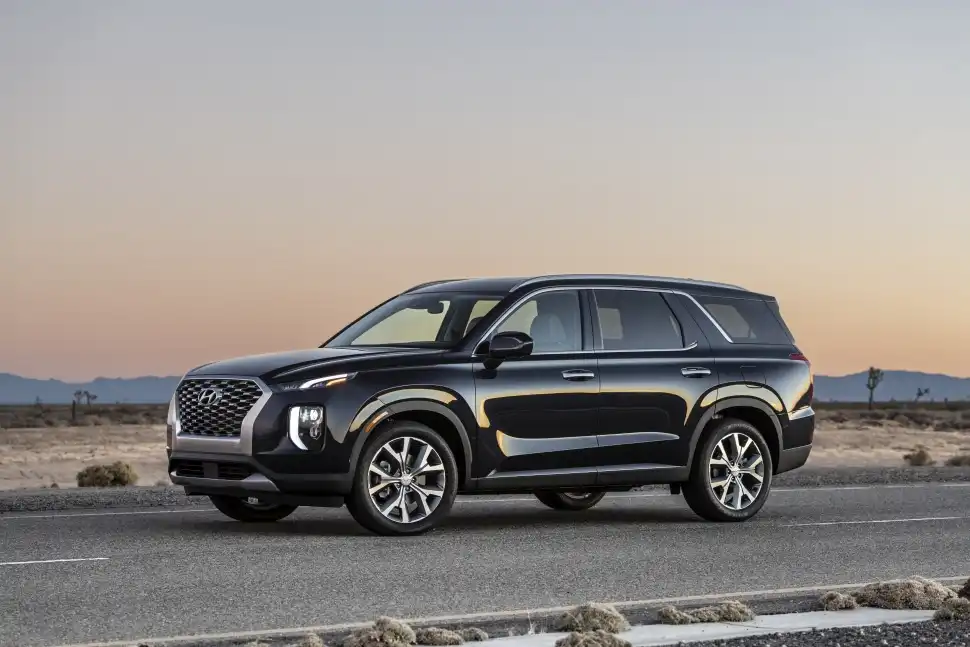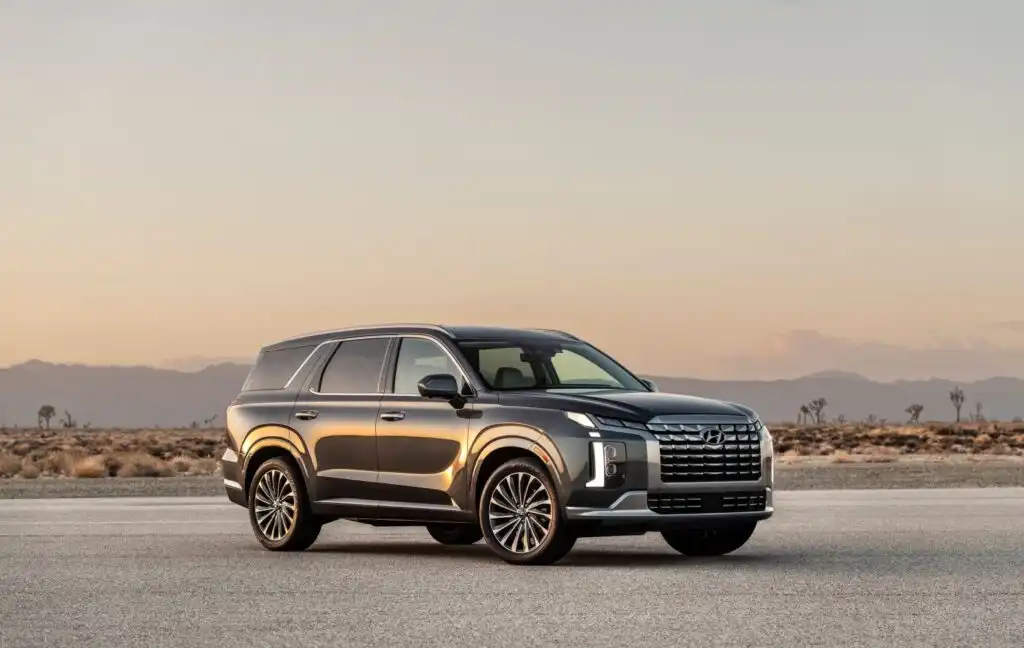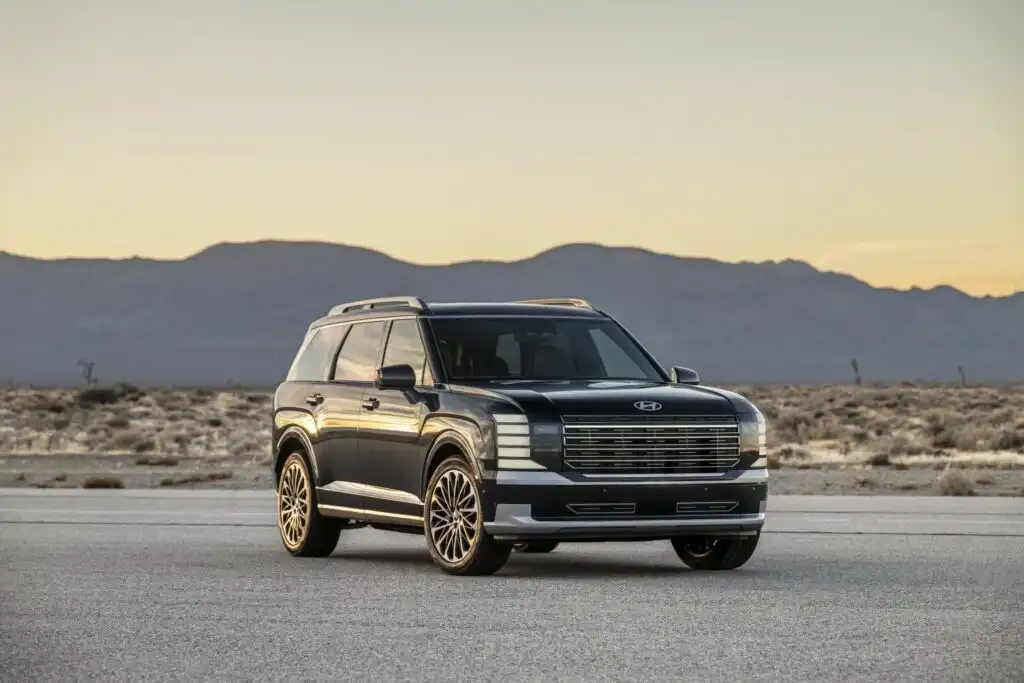
The Hyundai Palisade II 2.5T Full Hybrid HTRAC AWD Automatic represents the second generation of Hyundai’s flagship three-row SUV, launched in April 2025. Positioned as a premium offering within the Palisade lineup, this variant combines a turbocharged gasoline engine with a full hybrid electric system and Hyundai’s HTRAC all-wheel-drive technology. It aims to deliver a balance of performance, fuel efficiency, and sophisticated technology in a spacious family vehicle. The Palisade II builds upon the success of the first-generation model, addressing customer feedback and incorporating advancements in powertrain and safety features. This specific configuration is targeted towards buyers seeking a well-equipped, capable SUV with enhanced fuel economy compared to traditional gasoline-only options.
Technical Specifications
| Brand | Hyundai |
| Model | Palisade |
| Generation | Palisade II |
| Type (Engine) | 2.5T (329 Hp) Full Hybrid HTRAC AWD Automatic |
| Start of production | April, 2025 |
| Powertrain Architecture | FHEV (Full Hybrid Electric Vehicle) |
| Body type | SUV, Crossover |
| Seats | 7 |
| Doors | 5 |
| Fuel Type | Petrol (Gasoline) |
| Gross battery capacity | 1.65 kWh |
| Battery voltage | 300 V |
| Battery technology | Lithium-ion (Li-Ion) |
| Electric motor power (1) | 17 Hp @ 1300-2500 rpm |
| Electric motor Torque (1) | 102 Nm @ 1200 rpm / 75.23 lb.-ft. @ 1200 rpm |
| Electric motor location (1) | Integrated into the transmission |
| Electric motor type (1) | Synchronous |
| Electric motor power (2) | 72 Hp @ 2000-3000 rpm |
| Electric motor Torque (2) | 264 Nm @ 1900 rpm / 194.72 lb.-ft. @ 1900 rpm |
| Electric motor location (2) | Integrated into the transmission |
| Electric motor type (2) | Synchronous |
| System power | 329 Hp |
| System torque | 460 Nm / 339.28 lb.-ft. |
| Power | 258 Hp @ 5800 rpm |
| Power per litre | 103.3 Hp/l |
| Torque | 353 Nm @ 1800-4500 rpm / 260.36 lb.-ft. @ 1800-4500 rpm |
| Engine layout | Front, Transverse |
| Engine Model/Code | Smartstream |
| Engine displacement | 2497 cm3 / 152.38 cu. in. |
| Number of cylinders | 4 |
| Engine configuration | Inline |
| Cylinder Bore | 88.5 mm / 3.48 in. |
| Piston Stroke | 101.5 mm / 4 in. |
| Compression ratio | 12:1 |
| Number of valves per cylinder | 4 |
| Fuel injection system | Direct injection |
| Engine aspiration | Turbocharger, Intercooler |
| Valvetrain | DOHC |
| Engine oil capacity | 6.8 l / 7.19 US qt | 5.98 UK qt |
| Trunk (boot) space – minimum | 541 l / 19.11 cu. ft. |
| Trunk (boot) space – maximum | 2455 l / 86.7 cu. ft. |
| Fuel tank capacity | 69 l / 18.23 US gal | 15.18 UK gal |
| Max. roof load | 100 kg / 220.46 lbs. |
| Permitted trailer load with brakes (12%) | 1814 kg / 3999.19 lbs. |
| Permitted trailer load without brakes | 748 kg / 1649.06 lbs. |
| Length | 5060 mm / 199.21 in. |
| Width | 1981 mm / 77.99 in. |
| Height | 1765 mm / 69.49 in. |
| Wheelbase | 2969 mm / 116.89 in. |
| Front track | 1709-1720 mm / 67.28 – 67.72 in. |
| Rear (Back) track | 1720-1732 mm / 67.72 – 68.19 in. |
| Front overhang | 925 mm / 36.42 in. |
| Rear overhang | 1166 mm / 45.91 in. |
| Ride height (ground clearance) | 188 mm / 7.4 in. |
| Drag coefficient (Cd) | 0.31 |
| Minimum turning circle (turning diameter) | 11.9 m / 39.04 ft. |
| Approach angle | 18.6° |
| Departure angle | 21.1° |
| Ramp-over (brakeover) angle | 15.5° |
| Drivetrain Architecture | The Internal combustion engine (ICE) drives the front wheels permanently, and the rear wheels are driven through an electrically or mechanically operated clutch if necessary. Two electric motors drive the front wheels. There is an ability for running in full electric or mixed mode. |
| Drive wheel | All wheel drive (4×4) |
| Number of gears and type of gearbox | 6 gears, automatic transmission |
| Front suspension | Independent, type McPherson with coil spring and anti-roll bar |
| Rear suspension | Independent multi-link spring suspension with stabilizer |
| Front brakes | Ventilated discs, 345×30 mm |
| Rear brakes | Disc, 325×20 mm |
| Assisting systems | ABS (Anti-lock braking system) |
| Steering type | Steering rack and pinion |
| Power steering | Electric Steering |
| Tires size | 235/65 R18 106H; 255/50 R20 109V XL; 265/45 R21 108V XL |
| Wheel rims size | 8.0J x 18; 8.0J x 20; 8.5J x 21 |
Powertrain & Engine Architecture
At the heart of the Palisade II 2.5T Hybrid is Hyundai’s Smartstream 2.5-liter turbocharged four-cylinder gasoline engine. This engine produces 258 horsepower at 5800 rpm and 260 lb-ft of torque between 1800 and 4500 rpm. The engine utilizes direct injection and a twin-scroll turbocharger to enhance efficiency and responsiveness. Integrated with the engine is a full hybrid system comprised of two electric motors. The first motor, delivering 17 hp and 102 Nm (75 lb-ft) of torque, and the second, producing 72 hp and 264 Nm (195 lb-ft) of torque. These motors are integrated into the transmission and work in conjunction with the gasoline engine to provide a combined system output of 329 horsepower and 339 lb-ft of torque. The hybrid system employs a 1.65 kWh lithium-ion battery pack operating at 300 volts. The transmission is a six-speed automatic, specifically tuned to work seamlessly with the hybrid powertrain. The HTRAC all-wheel-drive system intelligently distributes power between the front and rear axles based on driving conditions, enhancing traction and stability.
Driving Characteristics
The 2.5T Hybrid powertrain delivers a refined and capable driving experience. The electric motors provide instant torque, resulting in brisk acceleration, particularly from a standstill. The combined output of 329 hp allows for confident highway merging and passing maneuvers. While not as overtly sporty as some competitors, the Palisade II prioritizes smooth power delivery and comfortable cruising. The six-speed automatic transmission is well-matched to the engine’s torque curve, providing seamless gear changes. The HTRAC all-wheel-drive system enhances stability in various weather conditions. Compared to lower-trim Palisade models with the naturally aspirated V6 engine, the 2.5T Hybrid offers noticeably improved acceleration and responsiveness. The hybrid system also allows for short periods of electric-only driving at low speeds, further enhancing fuel efficiency.
Equipment & Trim Levels
The 2.5T Hybrid trim typically represents the highest level of equipment in the Palisade II lineup. Standard features generally include leather upholstery, heated and ventilated front seats, a panoramic sunroof, a premium sound system, a 12.3-inch touchscreen infotainment system with navigation, and a suite of advanced driver-assistance systems (ADAS) such as adaptive cruise control, lane-keeping assist, and blind-spot monitoring. Optional extras may include a head-up display, a digital key, and premium interior trim options. The interior design emphasizes spaciousness and comfort, with high-quality materials and a modern aesthetic.
Chassis & Braking
The Palisade II utilizes an independent suspension setup at all four corners, featuring a McPherson strut design in the front and a multi-link setup in the rear. This configuration provides a comfortable ride quality while maintaining good handling characteristics. Stabilizer bars are included both front and rear to reduce body roll during cornering. Braking duties are handled by ventilated discs at the front (345x30mm) and solid discs at the rear (325x20mm). The vehicle is equipped with an anti-lock braking system (ABS) and electronic stability control (ESC) as standard safety features. Steering is provided by a rack-and-pinion system with electric power assistance.
Market Reception & Comparison
The Hyundai Palisade II 2.5T Hybrid has been well-received by automotive critics for its spacious interior, comfortable ride, and impressive fuel economy. The hybrid powertrain is a significant improvement over the previous generation’s V6, offering a compelling combination of performance and efficiency. Compared to competitors such as the Kia Telluride, Toyota Highlander Hybrid, and Honda Pilot, the Palisade II stands out with its generous standard features and upscale interior. Fuel economy figures are competitive within the hybrid SUV segment, typically achieving around 25-26 mpg combined. Reliability is expected to be good, based on Hyundai’s recent track record, though long-term data is still emerging.
Legacy
The Hyundai Palisade II 2.5T Hybrid represents a significant step forward for Hyundai in the three-row SUV segment. Its advanced hybrid powertrain, spacious interior, and comprehensive feature set position it as a strong contender in a competitive market. The Smartstream engine and hybrid system are expected to prove durable and reliable, offering owners a long-term ownership experience. As the model matures, its position in the used car market will likely be strong, appealing to buyers seeking a well-equipped, fuel-efficient, and family-friendly SUV.