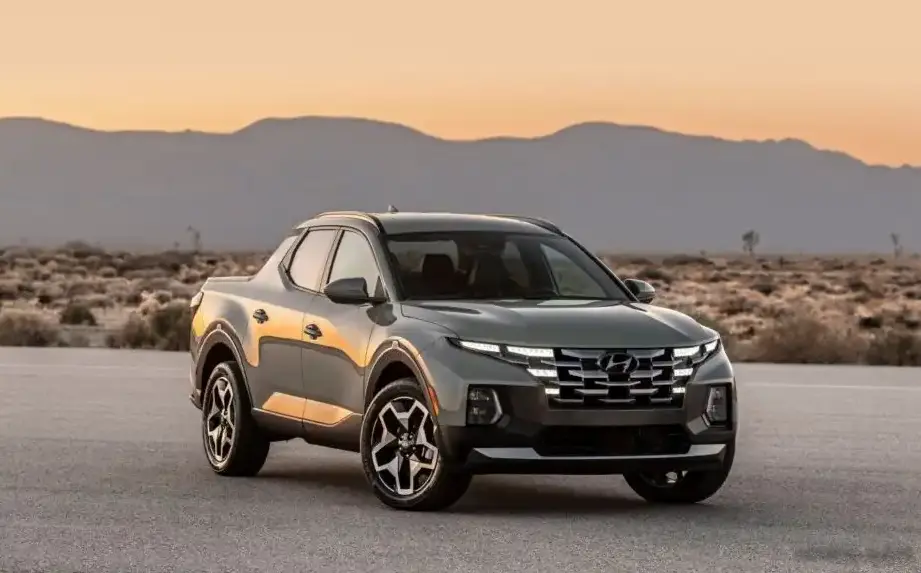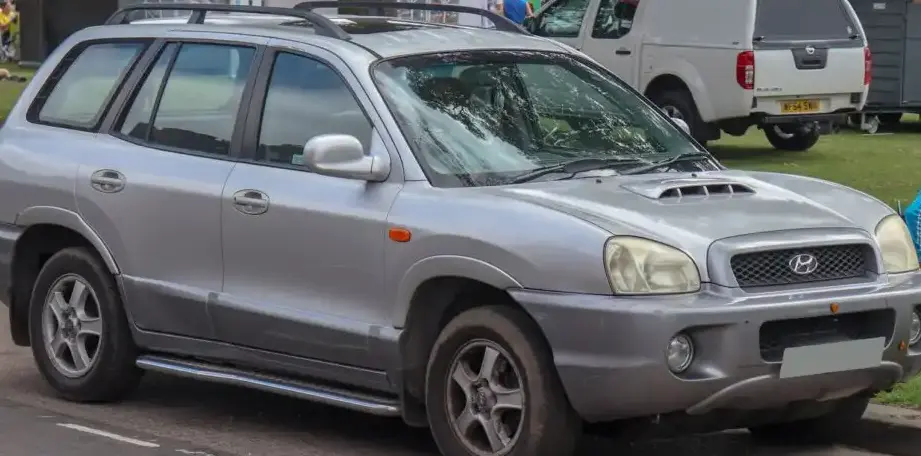
The Hyundai Santa Fe I (SM) 2.0 CRDi, produced between 2001 and 2006, represented Hyundai’s initial foray into the burgeoning compact SUV market. This variant, equipped with a 2.0-liter turbocharged diesel engine producing 112 horsepower, was a significant offering for European and Asian markets, where diesel engines were – and continue to be – highly favored for their fuel efficiency. Positioned as a mid-range option within the first-generation Santa Fe lineup (chassis code SM), it aimed to balance affordability with practicality and a degree of refinement. The Santa Fe SM was built on the Hyundai/Kia D platform, shared with the Kia Sportage, and marked a departure for Hyundai, moving towards more contemporary SUV designs.
Technical Specifications
| Brand | Hyundai |
| Model | Santa Fe |
| Generation | Santa Fe I (SM) |
| Type (Engine) | 2.0 CRDi (112 Hp) |
| Start of production | 2001 |
| End of production | 2006 |
| Powertrain Architecture | Internal Combustion engine |
| Body type | SUV |
| Seats | 5 |
| Doors | 5 |
| Fuel consumption (urban) | 10 l/100 km (23.5 US mpg) |
| Fuel consumption (extra urban) | 6.2 l/100 km (37.9 US mpg) |
| Fuel consumption (combined) | 7.6 l/100 km (30.9 US mpg) |
| Fuel Type | Diesel |
| Acceleration 0 – 100 km/h | 14.9 sec |
| Acceleration 0 – 62 mph | 14.9 sec |
| Acceleration 0 – 60 mph | 14.2 sec |
| Maximum speed | 167 km/h (103.77 mph) |
| Weight-to-power ratio | 15.2 kg/Hp |
| Weight-to-torque ratio | 6.7 kg/Nm |
| Power | 112 Hp @ 4000 rpm |
| Torque | 255 Nm @ 2000 rpm (188.08 lb.-ft. @ 2000 rpm) |
| Engine layout | Front, Transverse |
| Engine Model/Code | D / D4EA |
| Engine displacement | 1991 cm3 (121.5 cu. in.) |
| Number of cylinders | 4 |
| Engine configuration | Inline |
| Cylinder Bore | 83 mm (3.27 in.) |
| Piston Stroke | 92 mm (3.62 in.) |
| Compression ratio | 17.7:1 |
| Number of valves per cylinder | 4 |
| Fuel injection system | Diesel Commonrail |
| Engine aspiration | Turbocharger, Intercooler |
| Valvetrain | OHC |
| Engine oil capacity | 5.9 l (6.23 US qt | 5.19 UK qt) |
| Coolant capacity | 8.7 l (9.19 US qt | 7.65 UK qt) |
| Kerb Weight | 1705 kg (3758.88 lbs.) |
| Max. weight | 2240 kg (4938.35 lbs.) |
| Max load | 535 kg (1179.47 lbs.) |
| Trunk (boot) space – minimum | 850 l (30.02 cu. ft.) |
| Trunk (boot) space – maximum | 2100 l (74.16 cu. ft.) |
| Fuel tank capacity | 65 l (17.17 US gal | 14.3 UK gal) |
| Length | 4500 mm (177.17 in.) |
| Width | 1820 mm (71.65 in.) |
| Height | 1730 mm (68.11 in.) |
| Wheelbase | 2620 mm (103.15 in.) |
| Front track | 1540 mm (60.63 in.) |
| Rear track | 1540 mm (60.63 in.) |
| Drivetrain Architecture | Front wheel drive |
| Number of gears | 5 |
| Gearbox type | Manual transmission |
| Front suspension | Wishbone |
| Rear suspension | Coil spring |
| Front brakes | Ventilated discs |
| Rear brakes | Disc |
| Assisting systems | ABS (Anti-lock braking system) |
| Steering type | Steering rack and pinion |
| Power steering | Hydraulic |
| Tires size | 215/70 R15 |
| Wheel rims size | 15 |
Powertrain & Engine Architecture
The heart of the Santa Fe 2.0 CRDi is the Hyundai D4EA engine, a 1991cc inline-four cylinder diesel. This engine utilizes a second-generation common rail direct injection system, providing improved fuel atomization and more precise control over the combustion process. The D4EA is equipped with a turbocharger and intercooler, boosting power output to 112 hp at 4000 rpm and 255 Nm (188 lb-ft) of torque at 2000 rpm. The engine features a single overhead camshaft (OHC) design with four valves per cylinder. The 5-speed manual transmission was the standard offering for this variant, chosen for its balance of cost-effectiveness and fuel efficiency. The engine code ‘D’ often indicates earlier iterations of the D4EA, while ‘D4EA’ signifies later, refined versions.
Driving Characteristics
The 2.0 CRDi engine, paired with the 5-speed manual transmission, provided adequate, though not exhilarating, performance. Acceleration from 0-60 mph took approximately 14.2 seconds, and top speed was around 103.77 mph. The engine’s torque peak at 2000 rpm meant that usable power was available from relatively low engine speeds, making it suitable for everyday driving and hauling loads. Compared to the later 2.4L gasoline engine option, the 2.0 CRDi offered significantly better fuel economy but lacked the gasoline engine’s responsiveness. The manual transmission allowed for greater driver control, but the gear ratios were tuned for economy rather than outright performance. The 2.0 CRDi was noticeably slower than higher-spec Santa Fes equipped with the larger 2.7L V6 engine.
Equipment & Trim Levels
The 2.0 CRDi trim typically included features such as air conditioning, power windows, central locking, and an AM/FM radio with CD player. Interior upholstery was generally cloth, with options for upgraded materials available. Safety features included dual front airbags and ABS brakes. Optional extras included alloy wheels, a sunroof, and a more advanced audio system. The trim level often varied depending on the specific market, with some regions offering more standard equipment than others. The Santa Fe 2.0 CRDi was generally positioned as a well-equipped, value-oriented SUV, appealing to buyers seeking practicality and fuel efficiency.
Chassis & Braking
The Santa Fe I (SM) utilized a front-wheel-drive layout with independent wishbone suspension at the front and a coil spring setup at the rear. The front brakes were ventilated discs, providing good stopping power, while the rear brakes were solid discs. ABS (Anti-lock Braking System) was standard, enhancing safety. The suspension was tuned for comfort, providing a relatively smooth ride, although it could feel somewhat soft during spirited driving. Stabilizer bars were included to reduce body roll, but the Santa Fe was not designed for aggressive cornering.
Market Reception & Comparison
The Hyundai Santa Fe 2.0 CRDi was generally well-received in markets where diesel SUVs were popular. Critics praised its fuel efficiency, spacious interior, and competitive price. However, some reviewers noted its relatively slow acceleration and somewhat basic interior compared to rivals from established European brands. Compared to the gasoline-powered Santa Fe variants, the 2.0 CRDi offered superior fuel economy but less overall performance. Against competitors like the Toyota RAV4 and Honda CR-V, the Santa Fe offered a more affordable option with a comparable level of practicality.
Legacy
The Hyundai Santa Fe I (SM) 2.0 CRDi proved to be a reliable and durable vehicle. The D4EA engine, while not known for being particularly powerful, is generally considered to be robust and long-lasting, provided it receives regular maintenance. On the used car market, these Santa Fes are often sought after for their affordability and fuel efficiency. Common issues include wear and tear on suspension components and potential problems with the turbocharger. However, with proper care, the 2.0 CRDi Santa Fe can provide many years of reliable service, cementing its place as a significant early offering in Hyundai’s SUV lineup.