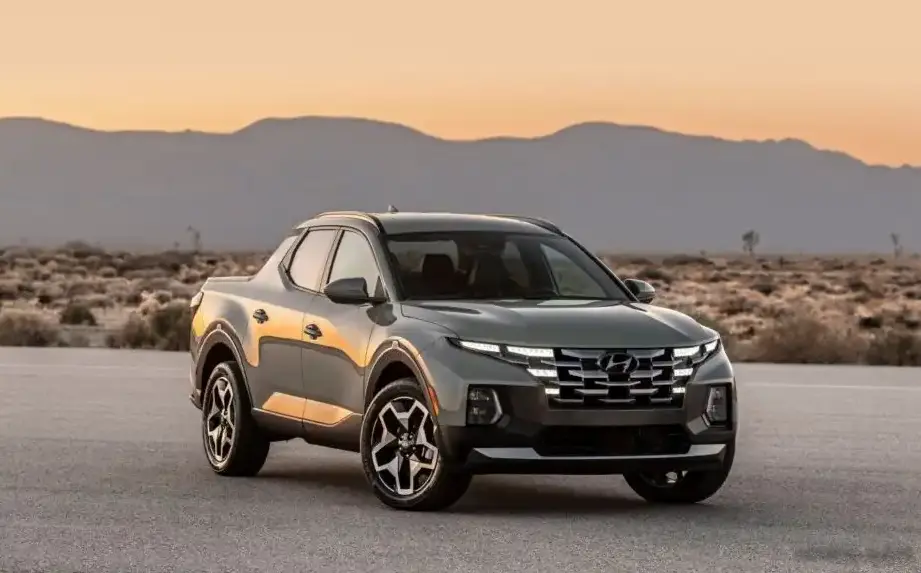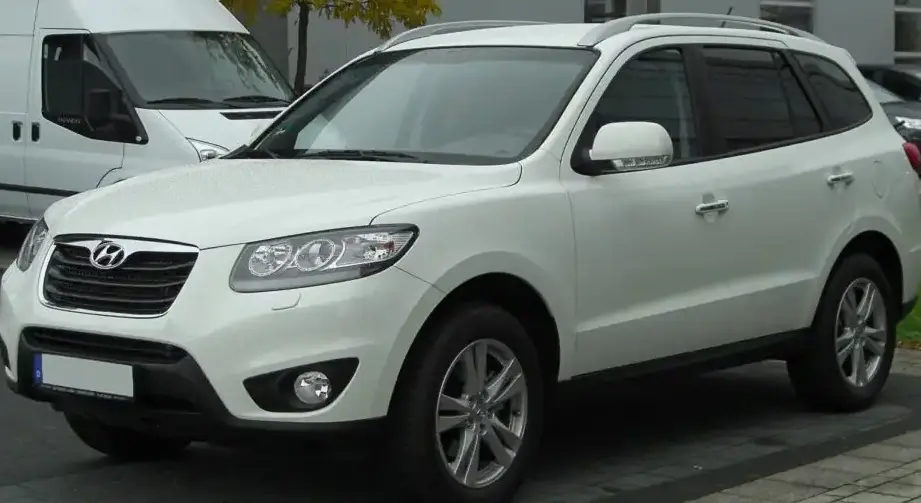
The Hyundai Santa Fe II (CM) facelift, produced from 2009 to 2012, represented a significant update to Hyundai’s popular mid-size SUV. The 2.2 CRDi variant, equipped with a 197 horsepower diesel engine and a six-speed automatic transmission, was a key offering in many European and Asian markets. This configuration aimed to balance fuel efficiency with acceptable performance for family transportation and light towing duties. Positioned as a mid-range trim, it offered a step up in power and refinement compared to the lower-spec petrol engines, while remaining more accessible than the range-topping models. The CM generation Santa Fe, and particularly this facelift, was crucial in establishing Hyundai as a serious contender in the competitive SUV segment.
Technical Specifications
| Brand | Hyundai |
| Model | Santa Fe |
| Generation | Santa Fe II (CM, facelift 2009) |
| Type (Engine) | 2.2 CRDi (197 Hp) Automatic |
| Start of production | 2009 |
| End of production | 2012 |
| Powertrain Architecture | Internal Combustion engine |
| Body type | SUV |
| Seats | 5 |
| Doors | 5 |
| Fuel consumption (urban) | 9 l/100 km (26.1 US mpg, 31.4 UK mpg, 11.1 km/l) |
| Fuel consumption (extra urban) | 6.1 l/100 km (38.6 US mpg, 46.3 UK mpg, 16.4 km/l) |
| Fuel consumption (combined) | 7.2 l/100 km (32.7 US mpg, 39.2 UK mpg, 13.9 km/l) |
| CO2 emissions | 192 g/km |
| Fuel Type | Diesel |
| Acceleration 0 – 100 km/h | 9.9 sec |
| Acceleration 0 – 62 mph | 9.9 sec |
| Acceleration 0 – 60 mph | 9.4 sec |
| Maximum speed | 190 km/h (118.06 mph) |
| Emission standard | Euro 5 |
| Weight-to-power ratio | 9.1 kg/Hp, 109.3 Hp/tonne |
| Weight-to-torque ratio | 4.1 kg/Nm, 242 Nm/tonne |
| Power | 197 Hp @ 3800 rpm |
| Power per litre | 89.6 Hp/l |
| Torque | 436 Nm @ 1800-2500 rpm (321.58 lb.-ft. @ 1800-2500 rpm) |
| Engine layout | Front, Transverse |
| Engine Model/Code | D4HB |
| Engine displacement | 2199 cm3 (134.19 cu. in.) |
| Number of cylinders | 4 |
| Engine configuration | Inline |
| Cylinder Bore | 85.4 mm (3.36 in.) |
| Piston Stroke | 96 mm (3.78 in.) |
| Compression ratio | 16:1 |
| Number of valves per cylinder | 4 |
| Fuel injection system | Diesel Commonrail |
| Engine aspiration | Turbocharger, Intercooler |
| Valvetrain | DOHC |
| Engine oil capacity | 6.7 l (7.08 US qt | 5.9 UK qt) |
| Coolant capacity | 9 l (9.51 US qt | 7.92 UK qt) |
| Kerb Weight | 1802-1882 kg (3972.73 – 4149.1 lbs.) |
| Max. weight | 2520 kg (5555.65 lbs.) |
| Max load | 638-718 kg (1406.55 – 1582.92 lbs.) |
| Trunk (boot) space (minimum) | 528 l (18.65 cu. ft.) |
| Fuel tank capacity | 75 l (19.81 US gal | 16.5 UK gal) |
| Max. roof load | 100 kg (220.46 lbs.) |
| Permitted trailer load (with brakes – 8%) | 2400 kg (5291.09 lbs.) |
| Permitted trailer load (with brakes – 12%) | 2000 kg (4409.25 lbs.) |
| Permitted trailer load (without brakes) | 750 kg (1653.47 lbs.) |
| Permitted towbar download | 80 kg (176.37 lbs.) |
| Length | 4660 mm (183.46 in.) |
| Width | 1890 mm (74.41 in.) |
| Height | 1760 mm (69.29 in.) |
| Wheelbase | 2700 mm (106.3 in.) |
| Front track | 1615 mm (63.58 in.) |
| Rear track | 1620 mm (63.78 in.) |
| Front overhang | 930 mm (36.61 in.) |
| Rear overhang | 1030 mm (40.55 in.) |
| Ride height (ground clearance) | 200 mm (7.87 in.) |
| Drag coefficient (Cd) | 0.38 |
| Minimum turning circle | 10.9 m (35.76 ft.) |
| Approach angle | 24.6° |
| Departure angle | 21.6° |
| Ramp-over angle | 17.9° |
| Wading depth | 500 mm (19.69 in.) |
| Drivetrain Architecture | Front wheel drive |
| Number of gears | 6 |
| Gearbox type | Automatic transmission |
| Front suspension | Independent, McPherson with coil spring and anti-roll bar |
| Rear suspension | Independent multi-link spring suspension with stabilizer |
| Front brakes | Ventilated discs |
| Rear brakes | Disc |
| Assisting systems | ABS (Anti-lock braking system) |
| Steering type | Steering rack and pinion |
| Power steering | Hydraulic |
| Tires size | 235/65 R17 |
| Wheel rims size | 7J x 17 |
Powertrain & Engine Architecture
The heart of this Santa Fe variant is the Hyundai D4HB 2.2-liter inline-four cylinder diesel engine. This engine utilizes a common-rail direct injection system, delivering fuel at extremely high pressure for optimized combustion. The D4HB is a turbocharged engine, employing a variable geometry turbocharger (VGT) and an intercooler to enhance power and torque output. The engine features a double overhead camshaft (DOHC) valvetrain with four valves per cylinder, contributing to its relatively high specific output. The six-speed automatic transmission, sourced from Hyundai’s own development, was designed to provide smooth shifts and efficient power delivery. It features adaptive shift logic, adjusting shift points based on driving conditions and throttle input. This transmission was a significant improvement over earlier Hyundai automatic offerings, offering a more refined driving experience.
Driving Characteristics
The 2.2 CRDi automatic Santa Fe offered a comfortable and capable driving experience. While not a performance-oriented SUV, the 197 horsepower and 321 lb-ft of torque provided adequate acceleration for everyday driving and highway merging. The automatic transmission, while smooth, did exhibit some slight hesitation during quick downshifts. The gear ratios were tuned for fuel efficiency and relaxed cruising, rather than outright speed. Compared to the manual transmission versions of the same engine, the automatic offered less direct control but greater convenience. Against the lower-powered petrol engines, the diesel provided a substantial boost in torque, making it more suitable for towing and carrying heavier loads. The front-wheel-drive configuration contributed to decent fuel economy, but limited traction in adverse weather conditions.
Equipment & Trim Levels
The 2.2 CRDi automatic trim typically included features such as air conditioning, power windows and locks, a CD/MP3 stereo system, and alloy wheels. Higher trim levels added features like leather upholstery, a sunroof, automatic climate control, and a more advanced audio system. Safety features included ABS, front airbags, and optional side airbags. The interior design was functional and reasonably well-appointed, though materials were generally of average quality for the segment. Optional extras included a navigation system, parking sensors, and a rear-view camera.
Chassis & Braking
The Santa Fe II utilized an independent McPherson strut suspension at the front and an independent multi-link suspension at the rear. This setup provided a comfortable ride quality, absorbing bumps and irregularities in the road surface effectively. A stabilizer bar was fitted to both axles to reduce body roll during cornering. The braking system consisted of ventilated disc brakes at the front and solid disc brakes at the rear. ABS was standard, providing enhanced braking control in emergency situations. The steering was hydraulic power-assisted, offering a reasonable level of feedback and precision.
Market Reception & Comparison
The 2.2 CRDi automatic Santa Fe was generally well-received by automotive critics. It was praised for its comfortable ride, spacious interior, and fuel-efficient diesel engine. However, some reviewers noted the slightly hesitant automatic transmission and the somewhat bland interior design. Compared to rivals like the Kia Sorento and the Toyota RAV4, the Santa Fe offered a competitive price point and a generous warranty. Fuel economy was a strong point, consistently achieving around 32-39 mpg in real-world driving. Reliability was generally good, though some owners reported issues with the diesel particulate filter (DPF) system.
Legacy
The Hyundai Santa Fe II (CM) 2.2 CRDi automatic has proven to be a relatively reliable and durable vehicle. The D4HB engine, while requiring regular maintenance (particularly regarding the DPF), is generally considered robust. Today, these vehicles are readily available on the used car market at affordable prices. They represent a good value proposition for buyers seeking a spacious, comfortable, and fuel-efficient SUV. However, potential buyers should be aware of the potential for DPF issues and ensure that the vehicle has been properly maintained. The CM Santa Fe played a key role in establishing Hyundai’s reputation for building well-equipped and reliable vehicles, paving the way for the brand’s continued success in the global automotive market.