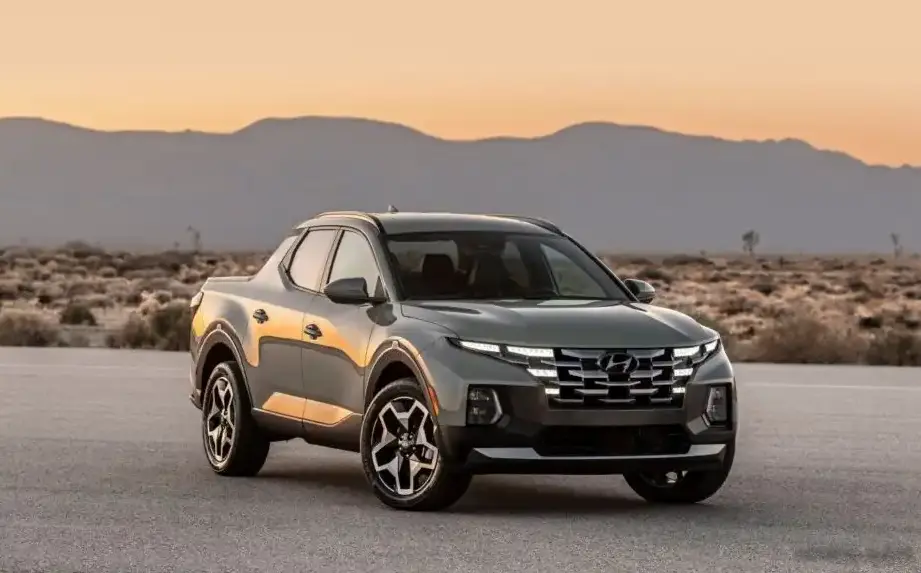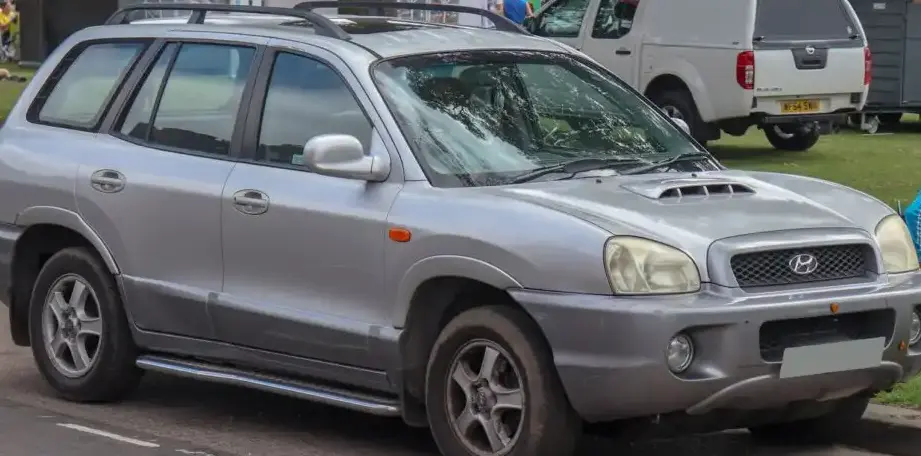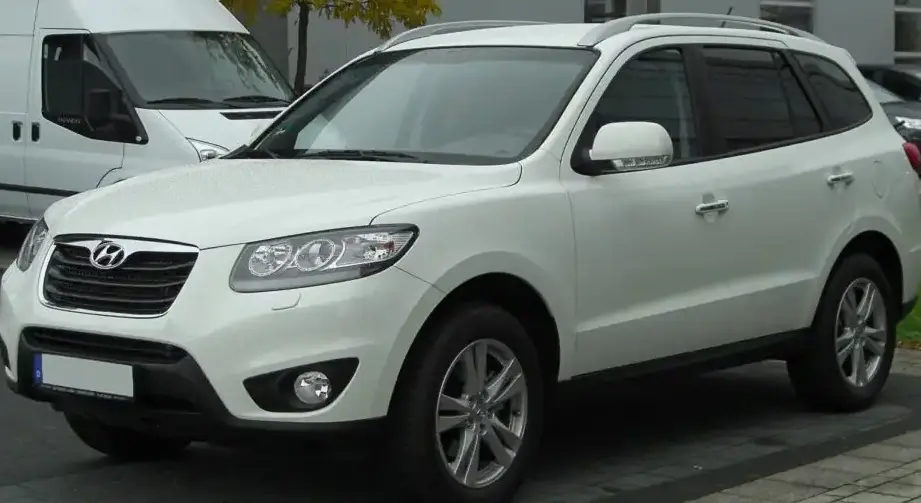
The Hyundai Santa Fe II (CM) facelift, produced from 2009 to 2012, represented a significant update to Hyundai’s popular mid-size SUV. The 2.4-liter, 174 horsepower, four-wheel-drive automatic variant occupied a middle ground within the CM lineup, offering a balance between affordability, fuel efficiency, and all-weather capability. This version aimed to appeal to families and individuals seeking a practical and comfortable SUV without the higher price tag of the V6 models. It was a key offering in the North American market, where SUVs were gaining increasing popularity, and provided a competitive alternative to established Japanese and American brands.
Technical Specifications
| Brand | Hyundai |
| Model | Santa Fe |
| Generation | Santa Fe II (CM, facelift 2009) |
| Type (Engine) | 2.4 (174 Hp) 4WD Automatic |
| Start of production | 2009 |
| End of production | 2012 |
| Powertrain Architecture | Internal Combustion engine |
| Body type | SUV |
| Seats | 5 |
| Doors | 5 |
| Fuel consumption (economy) – urban (NEDC) | 11.7 l/100 km (20.1 US mpg, 24.1 UK mpg, 8.5 km/l) |
| Fuel consumption (economy) – extra urban (NEDC) | 7.2 l/100 km (32.7 US mpg, 39.2 UK mpg, 13.9 km/l) |
| Fuel consumption (economy) – combined (NEDC) | 8.8 l/100 km (26.7 US mpg, 32.1 UK mpg, 11.4 km/l) |
| CO2 emissions (NEDC) | 210 g/km |
| Fuel Type | Petrol (Gasoline) |
| Acceleration 0 – 100 km/h | 11.7 sec |
| Acceleration 0 – 62 mph | 11.7 sec |
| Acceleration 0 – 60 mph | 11.1 sec |
| Maximum speed | 186 km/h (115.58 mph) |
| Emission standard | Euro 5 |
| Weight-to-power ratio | 10.1 kg/Hp, 98.9 Hp/tonne |
| Weight-to-torque ratio | 7.8 kg/Nm, 128.5 Nm/tonne |
| Power | 174 Hp @ 6000 rpm |
| Power per litre | 73.8 Hp/l |
| Torque | 226 Nm @ 3750 rpm (166.69 lb.-ft. @ 3750 rpm) |
| Engine layout | Front, Transverse |
| Engine Model/Code | Theta II / G4KE |
| Engine displacement | 2359 cm3 (143.96 cu. in.) |
| Number of cylinders | 4 |
| Engine configuration | Inline |
| Cylinder Bore | 88 mm (3.46 in.) |
| Piston Stroke | 97 mm (3.82 in.) |
| Compression ratio | 10.5:1 |
| Number of valves per cylinder | 4 |
| Fuel injection system | Multi-port manifold injection |
| Engine aspiration | Naturally aspirated engine |
| Valvetrain | DOHC |
| Engine oil capacity | 4.6 l (4.86 US qt | 4.05 UK qt) |
| Coolant | 6.5 l (6.87 US qt | 5.72 UK qt) |
| Kerb Weight | 1759-1839 kg (3877.93 – 4054.3 lbs.) |
| Max. weight | 2505 kg (5522.58 lbs.) |
| Max load | 666-746 kg (1468.28 – 1644.65 lbs.) |
| Trunk (boot) space – minimum | 528 l (18.65 cu. ft.) |
| Fuel tank capacity | 75 l (19.81 US gal | 16.5 UK gal) |
| Max. roof load | 100 kg (220.46 lbs.) |
| Permitted trailer load with brakes (8%) | 2400 kg (5291.09 lbs.) |
| Permitted trailer load with brakes (12%) | 2000 kg (4409.25 lbs.) |
| Permitted trailer load without brakes | 750 kg (1653.47 lbs.) |
| Permitted towbar download | 80 kg (176.37 lbs.) |
| Length | 4660 mm (183.46 in.) |
| Width | 1890 mm (74.41 in.) |
| Height | 1760 mm (69.29 in.) |
| Wheelbase | 2700 mm (106.3 in.) |
| Front track | 1615 mm (63.58 in.) |
| Rear (Back) track | 1620 mm (63.78 in.) |
| Front overhang | 930 mm (36.61 in.) |
| Rear overhang | 1030 mm (40.55 in.) |
| Ride height (ground clearance) | 200 mm (7.87 in.) |
| Drag coefficient (Cd) | 0.38 |
| Minimum turning circle (turning diameter) | 10.9 m (35.76 ft.) |
| Approach angle | 24.6° |
| Departure angle | 21.6° |
| Ramp-over (brakeover) angle | 17.9° |
| Wading depth | 500 mm (19.69 in.) |
| Drivetrain Architecture | The Internal combustion engine (ICE) drives the front wheels permanently, and the rear wheels are driven through an electrically or mechanically operated clutch if necessary. |
| Drive wheel | All wheel drive (4×4) |
| Number of gears and type of gearbox | 6 gears, automatic transmission |
| Front suspension | Independent, type McPherson with coil spring and anti-roll bar |
| Rear suspension | Independent multi-link spring suspension with stabilizer |
| Front brakes | Ventilated discs |
| Rear brakes | Disc |
| Assisting systems | ABS (Anti-lock braking system) |
| Steering type | Steering rack and pinion |
| Power steering | Hydraulic Steering |
| Tires size | 235/65 R17 |
| Wheel rims size | 7J x 17 |
INTRODUCTION
The Hyundai Santa Fe II (CM) facelift, launched in 2009, built upon the success of the original Santa Fe, offering a refreshed design and improved features. The 2.4-liter engine paired with a six-speed automatic transmission and all-wheel drive was a popular configuration, particularly in markets where inclement weather was common. Positioned as a mid-range option, it slotted between the base 2.0-liter models and the more powerful 3.5-liter V6. This variant aimed to provide a balance of affordability, fuel economy, and capability for families and individuals seeking a versatile SUV.
Powertrain & Engine Architecture
The heart of this Santa Fe variant is the Hyundai Theta II 2.4-liter inline-four cylinder engine, designated G4KE. This engine utilizes multi-port fuel injection and a double overhead camshaft (DOHC) valvetrain with four valves per cylinder. The engine produces 174 horsepower at 6000 rpm and 226 Nm (166.69 lb-ft) of torque at 3750 rpm. The Theta II engine was a significant improvement over its predecessor, offering increased power and efficiency. The six-speed automatic transmission, a key component of this configuration, provided smooth shifting and helped optimize fuel economy. While not a particularly sporty setup, the transmission was known for its reliability and ease of use. The 4WD system is an on-demand system, primarily driving the front wheels and engaging the rear wheels when slip is detected.
Driving Characteristics
The 2.4-liter engine and six-speed automatic combination in the Santa Fe delivered adequate, but not exhilarating, performance. Acceleration from 0-60 mph took around 11.1 seconds, making it competitive with other similarly sized SUVs of the era. The automatic transmission’s gear ratios were tuned for fuel efficiency and comfortable cruising rather than aggressive acceleration. Compared to the V6 models, the 2.4-liter felt noticeably less powerful, especially when fully loaded or climbing hills. However, the all-wheel-drive system provided enhanced traction and stability in slippery conditions. The ride quality was generally comfortable, absorbing bumps and imperfections in the road well. Steering feel was light and predictable, making it easy to maneuver in urban environments.
Equipment & Trim Levels
The 2.4-liter 4WD automatic Santa Fe typically came standard with features such as air conditioning, power windows and locks, a CD player with auxiliary input, and cloth upholstery. Higher trim levels offered upgrades like leather seats, a sunroof, a premium sound system, and alloy wheels. Safety features included ABS, electronic stability control, and multiple airbags. Optional extras often included a navigation system, rearview camera, and heated front seats. The interior design was functional and straightforward, prioritizing practicality and ease of use over luxury.
Chassis & Braking
The Santa Fe II utilized an independent McPherson strut front suspension and an independent multi-link rear suspension. This setup provided a good balance of ride comfort and handling. Stabilizer bars were included at both ends to reduce body roll during cornering. Braking duties were handled by ventilated discs at the front and solid discs at the rear, equipped with ABS. The braking system was adequate for everyday driving, but lacked the stopping power of some competitors. The all-wheel-drive system added to the vehicle’s stability and control, particularly on slippery surfaces.
Market Reception & Comparison
The 2.4-liter 4WD automatic Santa Fe was generally well-received by critics as a practical and affordable SUV. It offered a good value proposition compared to some of its more expensive rivals. Fuel economy was a strong point, averaging around 26.7 US mpg in combined driving. However, some reviewers noted that the engine lacked the power of the V6 options. Compared to the V6, the 2.4-liter was more fuel-efficient and less expensive to maintain, but offered less performance. The 2.0-liter models were even more affordable but provided significantly less power and were often considered underpowered for highway driving.
Legacy
The Hyundai Santa Fe II (CM) 2.4-liter 4WD automatic has proven to be a relatively reliable vehicle in the used car market. The Theta II engine, while not without its issues (some early versions experienced oil consumption problems), is generally considered durable when properly maintained. The six-speed automatic transmission is also known for its longevity. Today, these Santa Fes can be found at affordable prices, making them a good option for budget-conscious buyers seeking a practical and capable SUV. However, potential buyers should be aware of the potential for oil consumption issues and ensure that the vehicle has been well-maintained.