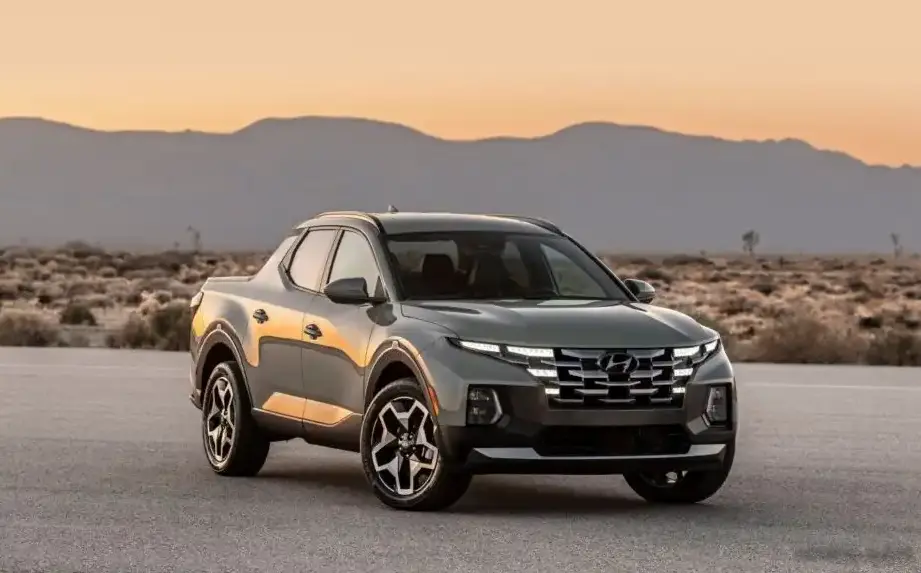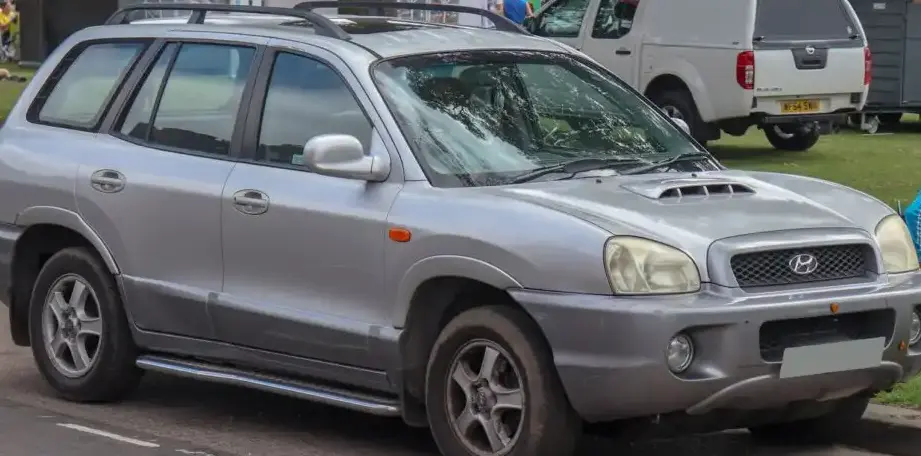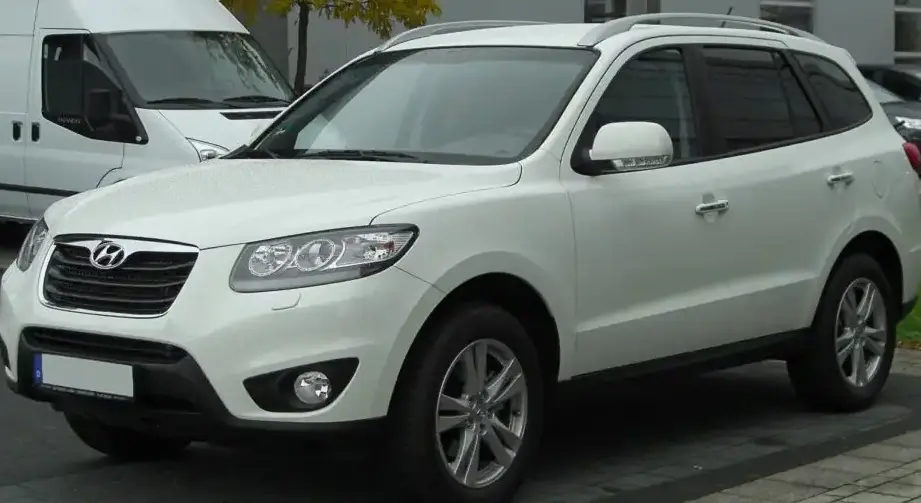
The Hyundai Santa Fe II (CM) facelift, specifically the 3.5-liter V6 model with an automatic transmission, represented a significant step forward for Hyundai in the American SUV market. Produced from 2009 to 2012, this variant occupied the premium position within the second-generation Santa Fe lineup, offering a blend of power, space, and features aimed at families seeking a comfortable and capable crossover. It built upon the success of the initial CM generation, addressing some criticisms and enhancing the overall driving experience. This model was primarily targeted at the North American market, where larger SUVs and V6 engines were highly favored.
Technical Specifications
| Brand | Hyundai |
| Model | Santa Fe |
| Generation | Santa Fe II (CM, facelift 2009) |
| Type (Engine) | 3.5 V6 (276 Hp) Automatic |
| Start of production | 2009 |
| End of production | 2012 |
| Powertrain Architecture | Internal Combustion engine |
| Body type | SUV |
| Seats | 5 |
| Doors | 5 |
| Fuel consumption (economy) – urban (EPA) | 11.8 l/100 km (19.9 US mpg) |
| Fuel consumption (economy) – extra urban (EPA) | 9 l/100 km (26.1 US mpg) |
| Fuel consumption (economy) – combined (EPA) | 10.2 l/100 km (23.1 US mpg) |
| Fuel Type | Petrol (Gasoline) |
| Emission standard | ULEV |
| Weight-to-power ratio | 6.4 kg/Hp, 155.9 Hp/tonne |
| Weight-to-torque ratio | 5.3 kg/Nm, 189.8 Nm/tonne |
| Power | 276 Hp @ 6300 rpm |
| Power per litre | 79.5 Hp/l |
| Torque | 336 Nm @ 5000 rpm (247.82 lb.-ft. @ 5000 rpm) |
| Engine layout | Front, Transverse |
| Engine Model/Code | Lambda II / G6DC |
| Engine displacement | 3470 cm3 (211.75 cu. in.) |
| Number of cylinders | 6 |
| Engine configuration | V-engine |
| Cylinder Bore | 92 mm (3.62 in.) |
| Piston Stroke | 87 mm (3.43 in.) |
| Compression ratio | 10.6:1 |
| Number of valves per cylinder | 4 |
| Fuel injection system | Multi-port manifold injection |
| Engine aspiration | Naturally aspirated engine |
| Valvetrain | DOHC, CVVT |
| Engine oil capacity | 5.7 l (6.02 US qt | 5.02 UK qt) |
| Coolant | 8.6 l (9.09 US qt | 7.57 UK qt) |
| Kerb Weight | 1770-1800 kg (3902.18 – 3968.32 lbs.) |
| Trunk (boot) space – minimum | 968 l (34.18 cu. ft.) |
| Trunk (boot) space – maximum | 2214 l (78.19 cu. ft.) |
| Fuel tank capacity | 68 l (17.96 US gal | 14.96 UK gal) |
| Permitted trailer load with brakes (12%) | 1588 kg (3500.94 lbs.) |
| Length | 4676 mm (184.09 in.) |
| Width | 1890 mm (74.41 in.) |
| Height | 1725 mm (67.91 in.) |
| Wheelbase | 2700 mm (106.3 in.) |
| Front track | 1615 mm (63.58 in.) |
| Rear (Back) track | 1620 mm (63.78 in.) |
| Minimum turning circle (turning diameter) | 10.8 m (35.43 ft.) |
| Drivetrain Architecture | The Internal combustion engine (ICE) drives the front wheels of the vehicle. |
| Drive wheel | Front wheel drive |
| Number of gears and type of gearbox | 6 gears, automatic transmission |
| Front suspension | Independent, type McPherson with coil spring and anti-roll bar |
| Rear suspension | Independent multi-link spring suspension with stabilizer |
| Front brakes | Ventilated discs |
| Rear brakes | Disc |
| Assisting systems | ABS (Anti-lock braking system) |
| Steering type | Steering rack and pinion |
| Power steering | Hydraulic Steering |
| Tires size | 235/60 R18 |
| Wheel rims size | 7J x 18 |
Powertrain & Engine Architecture
The heart of this Santa Fe variant is the Hyundai Lambda II 3.5-liter V6 engine, designated as the G6DC. This engine is a naturally aspirated, 60-degree V6 featuring dual overhead camshafts (DOHC) and continuously variable valve timing (CVVT) on both intake and exhaust valves. The multi-port fuel injection system delivers fuel directly to the intake ports, optimizing combustion efficiency. The engine produces 276 horsepower at 6300 rpm and 247.82 lb-ft of torque at 5000 rpm. The engine’s architecture prioritized smooth power delivery over outright performance, making it well-suited for everyday driving and towing. Paired with the engine is a six-speed automatic transmission. This transmission was designed for smooth shifts and efficient operation, with gear ratios tuned for both fuel economy and responsiveness. While not a sport-tuned transmission, it provided adequate performance for the vehicle’s weight and intended use.
Driving Characteristics
The 3.5L V6 automatic Santa Fe offered a comfortable and refined driving experience. Acceleration was brisk, though not particularly sporty, with the engine providing ample power for merging onto highways and passing other vehicles. The automatic transmission generally shifted smoothly, although some drivers noted a slight hesitation during quick acceleration. The front-wheel-drive configuration contributed to predictable handling, but it lacked the all-weather capability of all-wheel-drive models. Compared to the base 2.4L four-cylinder engine, the V6 provided a significant boost in performance, but at the cost of fuel economy. Compared to potential upgrades like a turbo-charged engine, this V6 offered a more linear power delivery, making it easier to modulate for everyday driving situations.
Equipment & Trim Levels
The 3.5L V6 Santa Fe typically came well-equipped, often representing the highest trim level available. Standard features generally included air conditioning, power windows and locks, a premium audio system, alloy wheels, and keyless entry. Higher-end trims added features like leather upholstery, a sunroof, heated front seats, and a navigation system. Optional extras included a backup camera, automatic climate control, and a power liftgate. Interior materials were generally of good quality for the price point, with a focus on comfort and durability.
Chassis & Braking
The Santa Fe II utilized a front independent McPherson strut suspension and a rear independent multi-link suspension. This setup provided a comfortable ride quality, absorbing bumps and irregularities in the road effectively. A stabilizer bar was included on both axles to reduce body roll during cornering. Braking duties were handled by ventilated discs up front and solid discs in the rear. Anti-lock braking system (ABS) was standard, enhancing safety and control during emergency braking situations. The suspension was tuned for comfort rather than sporty handling, prioritizing a smooth and stable ride.
Market Reception & Comparison
The 3.5L V6 Santa Fe was generally well-received by critics and consumers alike. It was praised for its spacious interior, comfortable ride, and strong engine. However, some reviewers noted that the fuel economy was relatively poor compared to competitors. Compared to other V6-powered crossovers in its class, such as the Toyota Highlander and Honda Pilot, the Santa Fe offered a competitive price point and a generous level of standard features. The 2.4L four-cylinder models offered better fuel economy but lacked the power and refinement of the V6. The V6 was the preferred choice for buyers who prioritized performance and towing capacity.
Legacy
The Hyundai Santa Fe II 3.5L V6 has proven to be a relatively reliable vehicle, with many examples still on the road today. The Lambda II V6 engine is known for its durability, although regular maintenance is essential to prevent issues. Common maintenance items include oil changes, timing belt replacements (depending on mileage), and inspection of the cooling system. In the used car market, these Santa Fes represent a good value for buyers seeking a spacious, comfortable, and capable crossover. While not as fuel-efficient as some newer models, the 3.5L V6 Santa Fe remains a popular choice for families and individuals who appreciate its blend of practicality and performance.