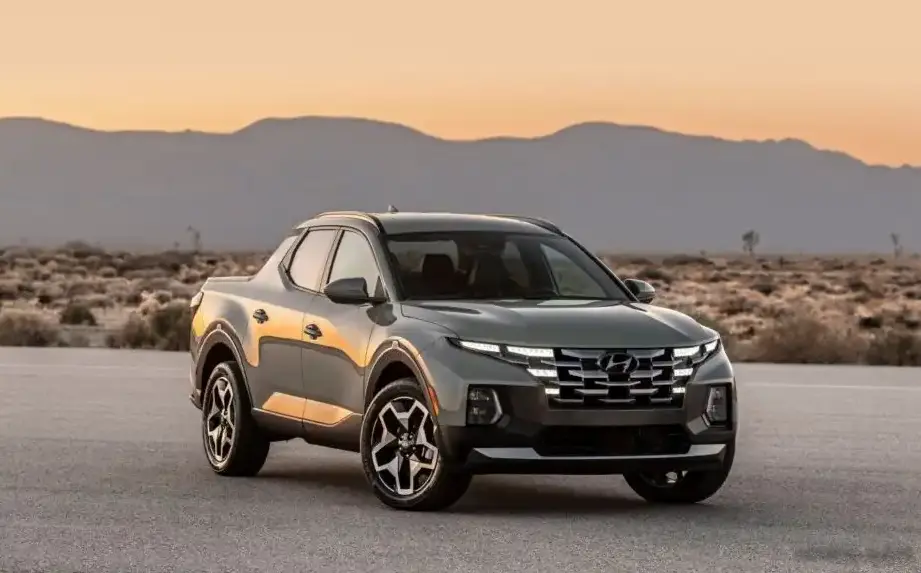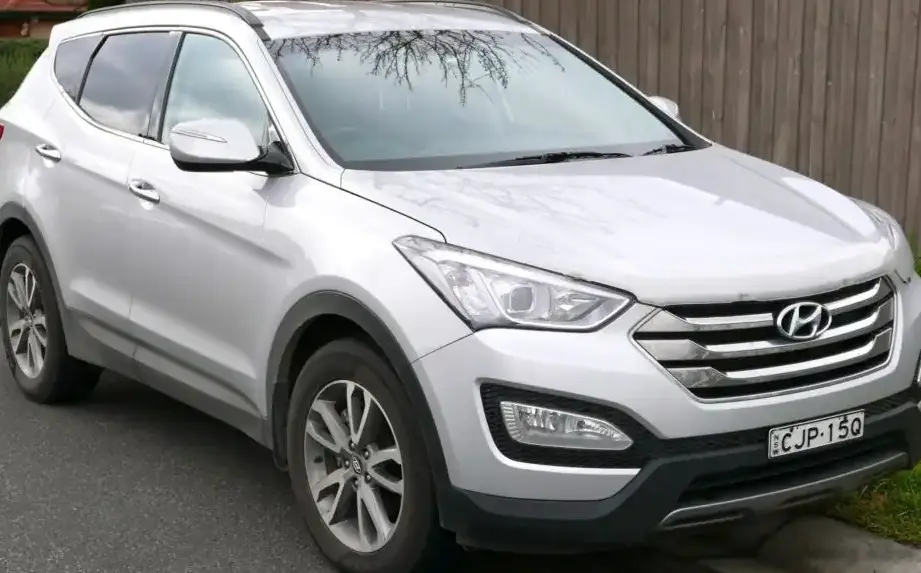
The Hyundai Santa Fe III (DM) 2.2 CRDi 4WD Automatic, produced from 2013 to 2015, represents a significant step forward for Hyundai in the mid-size crossover SUV segment. Positioned as a premium offering within the DM generation Santa Fe lineup, this variant combined a powerful diesel engine with the convenience of an automatic transmission and the added capability of all-wheel drive. It was primarily marketed towards families and individuals seeking a versatile vehicle with good fuel economy and a comfortable ride. The DM Santa Fe was a crucial model for Hyundai, helping to establish the brand as a serious competitor to established Japanese and European automakers in the North American and European markets.
Technical Specifications
| Brand | Hyundai |
| Model | Santa Fe |
| Generation | Santa Fe III (DM) |
| Type (Engine) | 2.2 CRDi (197 Hp) 4WD Automatic |
| Start of production | 2013 |
| End of production | 2015 |
| Powertrain Architecture | Internal Combustion engine |
| Body type | SUV |
| Seats | 7 |
| Doors | 5 |
| Fuel consumption (economy) – urban | 8.8 l/100 km (26.7 US mpg, 32.1 UK mpg, 11.4 km/l) |
| Fuel consumption (economy) – extra urban | 5.4 l/100 km (43.6 US mpg, 52.3 UK mpg, 18.5 km/l) |
| Fuel consumption (economy) – combined | 6.7 l/100 km (35.1 US mpg, 42.2 UK mpg, 14.9 km/l) |
| Fuel Type | Diesel |
| Acceleration 0 – 100 km/h | 10.1 sec |
| Acceleration 0 – 62 mph | 10.1 sec |
| Acceleration 0 – 60 mph | 9.6 sec |
| Maximum speed | 190 km/h (118.06 mph) |
| Emission standard | Euro 5 |
| Weight-to-power ratio | 9.2 kg/Hp, 109 Hp/tonne |
| Weight-to-torque ratio | 4.1 kg/Nm, 241.3 Nm/tonne |
| Power | 197 Hp @ 3800 rpm |
| Power per litre | 89.6 Hp/l |
| Torque | 436 Nm @ 1800-2500 rpm (321.58 lb.-ft. @ 1800-2500 rpm) |
| Engine layout | Front, Transverse |
| Engine Model/Code | R II / D4HB |
| Engine displacement | 2199 cm3 (134.19 cu. in.) |
| Number of cylinders | 4 |
| Engine configuration | Inline |
| Cylinder Bore | 85.4 mm (3.36 in.) |
| Piston Stroke | 96 mm (3.78 in.) |
| Compression ratio | 16:1 |
| Number of valves per cylinder | 4 |
| Fuel injection system | Diesel Commonrail |
| Engine aspiration | Turbocharger, Intercooler |
| Valvetrain | DOHC |
| Engine oil capacity | 6.7 l (7.08 US qt | 5.9 UK qt) |
| Coolant | 9.1 l (9.62 US qt | 8.01 UK qt) |
| Kerb Weight | 1807 kg (3983.75 lbs.) |
| Max. weight | 2510 kg (5533.6 lbs.) |
| Max load | 703 kg (1549.85 lbs.) |
| Trunk (boot) space – minimum | 585 l (20.66 cu. ft.) |
| Trunk (boot) space – maximum | 1570 l (55.44 cu. ft.) |
| Fuel tank capacity | 64 l (16.91 US gal | 14.08 UK gal) |
| Length | 4690 mm (184.65 in.) |
| Width | 1880 mm (74.02 in.) |
| Height | 1680 mm (66.14 in.) |
| Wheelbase | 2700 mm (106.3 in.) |
| Front track | 1633 mm (64.29 in.) |
| Rear (Back) track | 1644 mm (64.72 in.) |
| Minimum turning circle | 10.9 m (35.76 ft.) |
| Drive wheel | All wheel drive (4×4) |
| Number of gears and type of gearbox | 6 gears, automatic transmission |
| Front suspension | Independent type McPherson |
| Rear suspension | Independent coil spring |
| Front brakes | Ventilated discs |
| Rear brakes | Disc |
| Assisting systems | ABS (Anti-lock braking system) |
| Steering type | Steering rack and pinion |
| Power steering | Electric Steering |
| Tires size | 235/65 R17; 235/60 R18; 235/55 R19 |
| Wheel rims size | 7.0J x 17; 7.5J x 18; 7.5J x 19 |
Powertrain & Engine Architecture
The heart of the Santa Fe 2.2 CRDi is the Hyundai R II series diesel engine, specifically the D4HB code. This is a four-cylinder, inline engine displacing 2.2 liters. It utilizes a common-rail direct injection system, delivering fuel at extremely high pressure for optimized combustion. The D4HB engine features a variable geometry turbocharger (VGT) and an intercooler, enhancing both power and efficiency. The engine also employs a double overhead camshaft (DOHC) valvetrain with four valves per cylinder, contributing to its strong torque output. The six-speed automatic transmission, sourced from Hyundai’s own development, was designed to handle the engine’s substantial torque. It features a torque converter and electronically controlled gear shifts for smooth operation.
Driving Characteristics
The 2.2 CRDi Automatic Santa Fe offered a compelling blend of performance and comfort. While not a sports SUV, the 197 horsepower and 321 lb-ft of torque provided ample power for everyday driving and highway cruising. Acceleration from 0-60 mph took around 9.6 seconds, which was competitive for its class. The automatic transmission, while smooth, wasn’t particularly quick to downshift, meaning overtaking maneuvers required a bit of planning. Compared to the base 2.0L gasoline engine, the 2.2 CRDi offered significantly more torque, making it better suited for towing and carrying a full load of passengers. The all-wheel-drive system provided enhanced traction in inclement weather, but it wasn’t designed for serious off-roading.
Equipment & Trim Levels
The 2.2 CRDi 4WD Automatic typically came well-equipped, often representing the higher trim levels of the Santa Fe range. Standard features generally included leather upholstery, heated front seats, a touchscreen infotainment system with navigation, a rearview camera, and automatic climate control. Optional extras could include a panoramic sunroof, premium sound system, and advanced safety features like lane departure warning and blind-spot monitoring. Interior materials were of good quality for the price point, and the cabin offered ample space for passengers and cargo.
Chassis & Braking
The Santa Fe DM utilized a McPherson strut front suspension and an independent coil spring rear suspension. This setup provided a comfortable ride, absorbing bumps and imperfections in the road effectively. The 2.2 CRDi models typically featured larger brakes than the base models, with ventilated discs up front and solid discs at the rear. Anti-lock braking system (ABS) was standard. The steering was electrically assisted, providing a light and easy feel, although it lacked the feedback of a hydraulic system. Stabilizer bars were fitted front and rear to reduce body roll during cornering.
Market Reception & Comparison
The Hyundai Santa Fe 2.2 CRDi 4WD Automatic was generally well-received by automotive critics. It was praised for its spacious interior, comfortable ride, and strong diesel engine. Fuel economy was a major selling point, with combined figures around 35 mpg. Compared to competitors like the Toyota RAV4 and Honda CR-V, the Santa Fe offered a more powerful engine and a more luxurious interior at a similar price point. However, some critics noted that the automatic transmission could be slow to respond, and the handling wasn’t as sporty as some rivals. Reliability proved to be generally good, although some owners reported issues with the diesel particulate filter (DPF) system.
Legacy
The Hyundai Santa Fe DM 2.2 CRDi 4WD Automatic has proven to be a relatively reliable vehicle in the used car market. The R II diesel engine, while requiring regular maintenance (including DPF regeneration), is known for its durability. These models continue to be sought after by buyers looking for a spacious, fuel-efficient, and well-equipped SUV. The DM generation Santa Fe played a key role in establishing Hyundai as a major player in the global automotive market, and the 2.2 CRDi variant remains a popular choice for those seeking a capable and comfortable family vehicle.