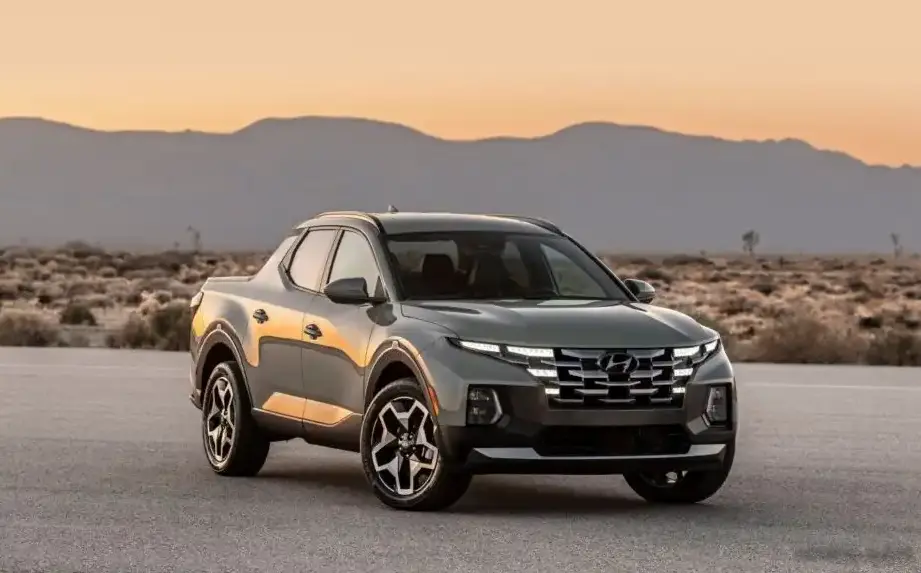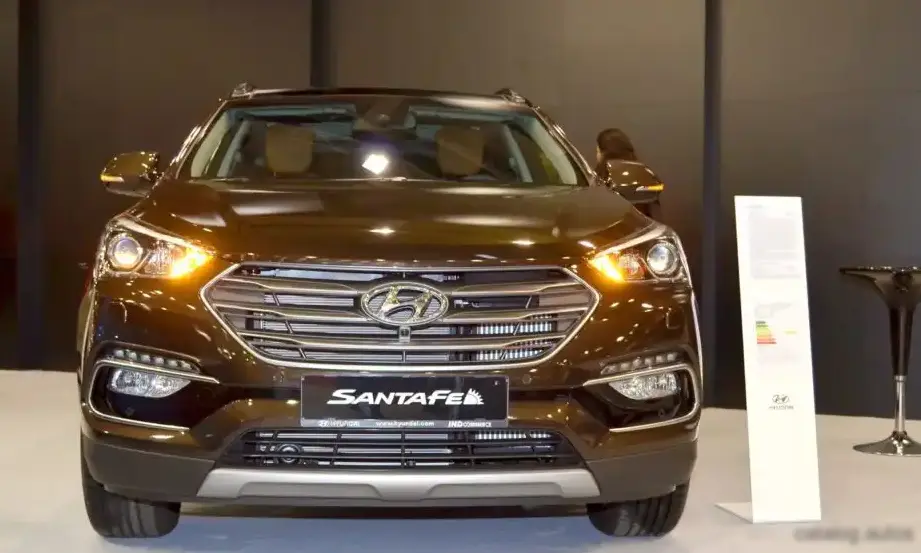
The Hyundai Santa Fe III (DM, facelift 2015) 2.2 CRDi 4WD Automatic represents a significant iteration of Hyundai’s popular mid-size SUV, produced from 2015 to 2018. This variant, positioned as a higher-trim level within the DM facelift range, combined a potent 2.2-liter diesel engine with a six-speed automatic transmission and Hyundai’s all-wheel-drive system. It was primarily marketed towards families and drivers seeking a comfortable, well-equipped, and capable SUV with enhanced fuel efficiency compared to gasoline alternatives. The facelift brought styling updates, improved interior materials, and enhanced safety features, solidifying the Santa Fe’s position as a competitive offering in the crowded SUV segment.
Technical Specifications
| Brand | Hyundai |
| Model | Santa Fe |
| Generation | Santa Fe III (DM, facelift 2015) |
| Type (Engine) | 2.2 CRDi (200 Hp) 4WD Automatic |
| Start of production | 2015 |
| End of production | 2018 |
| Powertrain Architecture | Internal Combustion engine |
| Body type | SUV |
| Seats | 5 |
| Doors | 5 |
| Fuel consumption (urban) | 7.8 l/100 km (30.2 US mpg, 36.2 UK mpg, 12.8 km/l) |
| Fuel consumption (extra urban) | 5.9 l/100 km (39.9 US mpg, 47.9 UK mpg, 16.9 km/l) |
| Fuel consumption (combined) | 6.6 l/100 km (35.6 US mpg, 42.8 UK mpg, 15.2 km/l) |
| CO2 emissions | 174 g/km |
| Fuel Type | Diesel |
| Acceleration 0 – 100 km/h | 9.6 sec |
| Acceleration 0 – 62 mph | 9.6 sec |
| Acceleration 0 – 60 mph | 9.1 sec |
| Maximum speed | 203 km/h (126.14 mph) |
| Emission standard | Euro 6 |
| Weight-to-power ratio | 9.2 kg/Hp, 109.2 Hp/tonne |
| Weight-to-torque ratio | 4.2 kg/Nm, 240.2 Nm/tonne |
| Power | 200 Hp @ 3800 rpm |
| Power per litre | 91 Hp/l |
| Torque | 440 Nm @ 1750-2750 rpm (324.53 lb.-ft. @ 1750-2750 rpm) |
| Engine layout | Front, Transverse |
| Engine Model/Code | R II / D4HB |
| Engine displacement | 2199 cm3 (134.19 cu. in.) |
| Number of cylinders | 4 |
| Engine configuration | Inline |
| Cylinder Bore | 85.4 mm (3.36 in.) |
| Piston Stroke | 96 mm (3.78 in.) |
| Compression ratio | 16:1 |
| Number of valves per cylinder | 4 |
| Fuel injection system | Diesel Commonrail |
| Engine aspiration | Turbocharger, Intercooler |
| Engine oil capacity | 6.3 l (6.66 US qt | 5.54 UK qt) |
| Coolant | 9.1 l (9.62 US qt | 8.01 UK qt) |
| Kerb Weight | 1832-1965 kg (4038.87 – 4332.08 lbs.) |
| Max. weight | 2510 kg (5533.6 lbs.) |
| Max load | 545-678 kg (1201.52 – 1494.73 lbs.) |
| Trunk (boot) space – minimum | 585 l (20.66 cu. ft.) |
| Trunk (boot) space – maximum | 1680 l (59.33 cu. ft.) |
| Fuel tank capacity | 64 l (16.91 US gal | 14.08 UK gal) |
| Max. roof load | 100 kg (220.46 lbs.) |
| Permitted trailer load with brakes (12%) | 2500 kg (5511.56 lbs.) |
| Permitted trailer load without brakes | 750 kg (1653.47 lbs.) |
| Permitted towbar download | 100 kg (220.46 lbs.) |
| Length | 4690 mm (184.65 in.) |
| Width | 1880 mm (74.02 in.) |
| Height | 1680 mm (66.14 in.) |
| Wheelbase | 2700 mm (106.3 in.) |
| Front track | 1628-1633 mm (64.09 – 64.29 in.) |
| Rear (Back) track | 1639-1644 mm (64.53 – 64.72 in.) |
| Front overhang | 935 mm (36.81 in.) |
| Rear overhang | 1055 mm (41.54 in.) |
| Ride height (ground clearance) | 185 mm (7.28 in.) |
| Minimum turning circle (turning diameter) | 10.9 m (35.76 ft.) |
| Drivetrain Architecture | The Internal combustion engine (ICE) drives the front wheels permanently, and the rear wheels are driven through an electrically or mechanically operated clutch if necessary. |
| Drive wheel | All wheel drive (4×4) |
| Number of gears and type of gearbox | 6 gears, automatic transmission |
| Front suspension | Independent type McPherson |
| Rear suspension | Independent multi-link suspension |
| Front brakes | Ventilated discs |
| Rear brakes | Disc |
| Assisting systems | ABS (Anti-lock braking system) |
| Steering type | Steering rack and pinion |
| Power steering | Electric Steering |
| Tires size | 235/60 R18 |
| Wheel rims size | 7.5J x 18 |
INTRODUCTION
The Hyundai Santa Fe III, launched in 2012 and facelifted in 2015, represented a significant step forward for the Korean automaker in the competitive mid-size SUV market. The 2.2 CRDi 4WD Automatic variant, produced from 2015-2018, was a key offering, designed to appeal to buyers prioritizing fuel efficiency, all-weather capability, and a comfortable driving experience. Built on the Hyundai-Kia Y6 platform (internally designated DM), the facelift brought revised front and rear styling, upgraded interior materials, and enhanced safety technology. This version aimed to bridge the gap between more affordable trims and the luxury-focused Santa Fe Limited, offering a compelling balance of features and performance.
Powertrain & Engine Architecture
At the heart of the Santa Fe 2.2 CRDi is Hyundai’s R II series diesel engine, specifically the D4HB code. This 2.2-liter inline-four cylinder engine utilizes a common-rail direct injection system, delivering fuel at extremely high pressure for optimized combustion. A variable geometry turbocharger (VGT) with an intercooler further enhances performance and efficiency. The engine produces 200 horsepower at 3800 rpm and a substantial 440 Nm (324.53 lb-ft) of torque between 1750 and 2750 rpm. This broad torque curve provides strong pulling power for everyday driving and towing. The engine also incorporates a diesel particulate filter (DPF) and a start/stop system to reduce emissions. Paired with the engine is a six-speed automatic transmission, providing smooth and convenient gear changes. This transmission is known for its reliability and responsiveness, although it isn’t as sporty as some dual-clutch transmissions found in competitors.
Driving Characteristics
The 2.2 CRDi Automatic Santa Fe delivers a comfortable and composed driving experience. The engine’s ample torque makes for effortless acceleration, particularly in everyday driving situations. While not a sports SUV, the 9.6-second 0-60 mph acceleration is respectable for its class. The automatic transmission is well-tuned, providing smooth shifts and generally selecting the appropriate gear for the driving conditions. Compared to the base 2.0-liter gasoline engine, the 2.2 CRDi offers significantly more power and torque, resulting in a more confident and relaxed driving experience, especially when fully loaded or towing. Compared to a manual transmission version, the automatic sacrifices some driver engagement but gains convenience. The all-wheel-drive system provides enhanced traction in slippery conditions, making it a capable vehicle for all-weather driving.
Equipment & Trim Levels
The 2.2 CRDi 4WD Automatic trim typically included a generous array of standard features. These commonly included leather upholstery, heated front seats, a touchscreen infotainment system with navigation, a rearview camera, automatic climate control, and keyless entry. Optional extras often included a panoramic sunroof, upgraded sound system, and advanced safety features such as blind-spot monitoring and lane departure warning. The interior design was generally considered modern and well-appointed, with a focus on practicality and comfort. The overall trim level aimed to provide a premium feel without the higher price tag of the top-tier Limited model.
Chassis & Braking
The Santa Fe III utilizes a McPherson strut front suspension and a multi-link rear suspension, providing a comfortable ride and predictable handling. Stabilizer bars are fitted to both the front and rear axles to reduce body roll during cornering. Braking duties are handled by ventilated discs at the front and solid discs at the rear, equipped with an Anti-lock Braking System (ABS). The steering is electrically assisted, providing a light and responsive feel. The all-wheel-drive system operates primarily as front-wheel drive, engaging the rear wheels automatically when traction is lost. The suspension tuning is geared towards comfort rather than outright sportiness, prioritizing a smooth ride over sharp handling.
Market Reception & Comparison
The Hyundai Santa Fe III 2.2 CRDi 4WD Automatic was generally well-received by automotive critics. It was praised for its spacious interior, comfortable ride, strong diesel engine, and competitive pricing. Fuel economy was a particular highlight, with combined figures around 35.6 US mpg. Compared to rivals like the Toyota RAV4 and Honda CR-V, the Santa Fe offered a more powerful engine and a more luxurious interior at a similar price point. However, some critics noted that the interior materials weren’t quite as premium as those found in some European competitors. Reliability proved to be generally good, although some owners reported minor issues with the DPF system.
Legacy
The Hyundai Santa Fe III 2.2 CRDi 4WD Automatic has proven to be a reliable and durable SUV in the used car market. The R II diesel engine, while requiring regular maintenance (including DPF regeneration), is known for its longevity. These models continue to be popular choices for buyers seeking a practical, fuel-efficient, and well-equipped SUV. The availability of parts and relatively affordable maintenance costs contribute to its ongoing appeal. While newer Santa Fe generations have brought further advancements in technology and design, the DM facelift remains a solid and capable vehicle that offers good value for money.