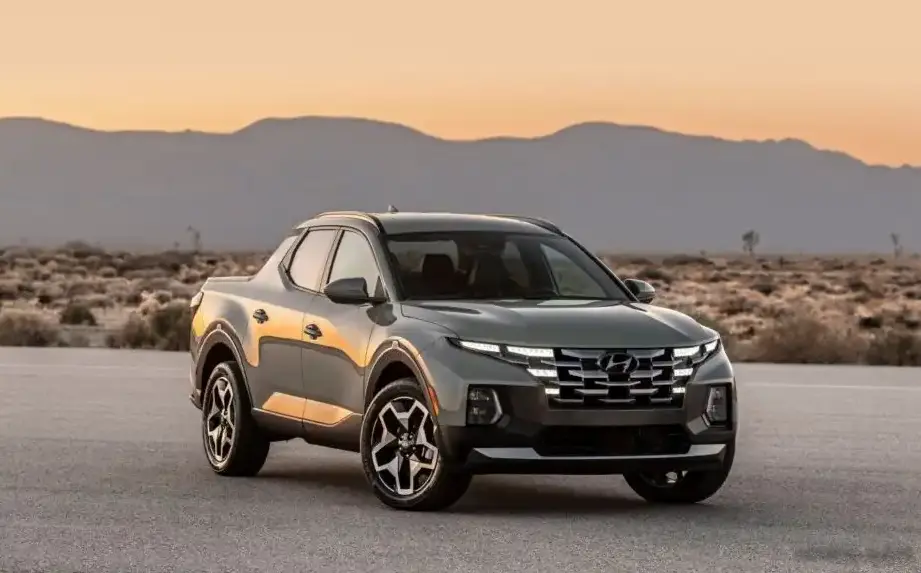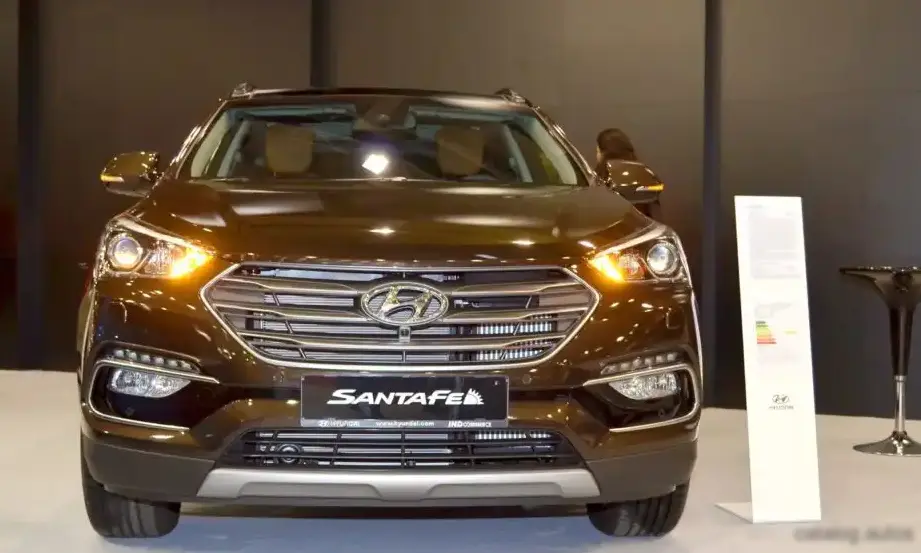
The Hyundai Santa Fe III (DM) facelift, specifically the 2.4 GDI variant introduced in 2015 and continuing through 2018, represents a significant iteration of Hyundai’s popular mid-size crossover SUV. Positioned as a mainstream offering within the Santa Fe lineup, this version aimed to balance fuel efficiency, family practicality, and a reasonable level of performance. The facelift brought updated styling, improved interior materials, and refinements to the powertrain. This particular configuration – the 2.4-liter gasoline direct injection engine paired with a six-speed automatic transmission and seven-passenger seating – was a key volume seller in markets where larger engines were less favored or subject to higher taxation.
Technical Specifications
| Brand | Hyundai |
| Model | Santa Fe |
| Generation | Santa Fe III (DM, facelift 2015) |
| Type (Engine) | 2.4 GDI (188 Hp) Automatic 7 Seat |
| Start of production | 2015 |
| End of production | 2018 |
| Powertrain Architecture | Internal Combustion engine |
| Body type | SUV |
| Seats | 7 |
| Doors | 5 |
| Fuel consumption (urban) | 12.9 l/100 km (18.2 US mpg, 21.9 UK mpg, 7.8 km/l) |
| Fuel consumption (extra urban) | 7.3 l/100 km (32.2 US mpg, 38.7 UK mpg, 13.7 km/l) |
| Fuel consumption (combined) | 9.4 l/100 km (25 US mpg, 30.1 UK mpg, 10.6 km/l) |
| CO2 emissions | 218 g/km |
| Fuel Type | Petrol (Gasoline) |
| Acceleration 0 – 100 km/h | 9.9 sec |
| Acceleration 0 – 62 mph | 9.9 sec |
| Acceleration 0 – 60 mph | 9.4 sec |
| Maximum speed | 202 km/h (125.52 mph) |
| Emission standard | Euro 6 |
| Power | 188 Hp @ 6000 rpm |
| Power per litre | 79.7 Hp/l |
| Torque | 241 Nm @ 4000 rpm (177.75 lb.-ft. @ 4000 rpm) |
| Engine layout | Front, Transverse |
| Engine Model/Code | Theta II / G4KJ |
| Engine displacement | 2359 cm3 (143.96 cu. in.) |
| Number of cylinders | 4 |
| Engine configuration | Inline |
| Cylinder Bore | 88 mm (3.46 in.) |
| Piston Stroke | 97 mm (3.82 in.) |
| Compression ratio | 11.3:1 |
| Number of valves per cylinder | 4 |
| Fuel injection system | Direct injection |
| Engine aspiration | Naturally aspirated engine |
| Valvetrain | DOHC |
| Engine oil capacity | 4.8 l (5.07 US qt | 4.22 UK qt) |
| Coolant capacity | 7.1 l (7.5 US qt | 6.25 UK qt) |
| Trunk (boot) space – minimum | 516 l (18.22 cu. ft.) |
| Trunk (boot) space – maximum | 1615 l (57.03 cu. ft.) |
| Fuel tank capacity | 64 l (16.91 US gal | 14.08 UK gal) |
| Length | 4690 mm (184.65 in.) |
| Width | 1880 mm (74.02 in.) |
| Height | 1680 mm (66.14 in.) |
| Wheelbase | 2700 mm (106.3 in.) |
| Front track | 1628-1633 mm (64.09 – 64.29 in.) |
| Rear track | 1639-1644 mm (64.53 – 64.72 in.) |
| Front overhang | 935 mm (36.81 in.) |
| Rear overhang | 1055 mm (41.54 in.) |
| Ride height (ground clearance) | 185 mm (7.28 in.) |
| Minimum turning circle | 10.9 m (35.76 ft.) |
| Approach angle | 16.5° |
| Departure angle | 21.2° |
| Ramp-over angle | 16.6° |
| Drivetrain Architecture | Front wheel drive |
| Number of gears | 6 |
| Gearbox type | Automatic transmission |
| Front suspension | Independent type McPherson |
| Rear suspension | Independent multi-link suspension |
| Front brakes | Ventilated discs |
| Rear brakes | Disc |
| Assisting systems | ABS (Anti-lock braking system) |
| Steering type | Steering rack and pinion |
| Power steering | Electric Steering |
| Tires size | 235/65 R17; 235/60 R18; 235/55 R19 |
| Wheel rims size | 7.0J x 17; 7.5J x 18; 7.5J x 19 |
INTRODUCTION
The Hyundai Santa Fe III, launched in 2012 and receiving a significant facelift in 2015, quickly became a cornerstone of Hyundai’s success in the global SUV market. The 2.4 GDI Automatic 7-Seat variant, produced from 2015 to 2018, was specifically tailored for buyers seeking a practical, family-oriented vehicle with a focus on fuel economy and affordability. It slotted into the middle of the Santa Fe range, offering a step up from the base 2.0-liter engine while remaining more accessible than the more powerful 3.3-liter V6 option. Built on the Hyundai-Kia D-platform (also known as the 1HX0/A3 platform), the Santa Fe aimed to provide a compelling alternative to established competitors like the Honda CR-V, Toyota RAV4, and Nissan Pathfinder.
Powertrain & Engine Architecture
At the heart of this Santa Fe variant lies the Hyundai Theta II 2.4-liter inline-four cylinder engine, designated G4KJ. This engine utilizes Gasoline Direct Injection (GDI) technology, injecting fuel directly into the combustion chamber for improved efficiency and power output. The GDI system, coupled with a relatively high 11.3:1 compression ratio, contributes to the engine’s 188 horsepower at 6000 rpm and 241 Nm (177.75 lb-ft) of torque at 4000 rpm. The engine features a double overhead camshaft (DOHC) valvetrain with four valves per cylinder, optimizing airflow for enhanced performance. The engine is transversely mounted in the front of the vehicle. Paired with the engine is a six-speed automatic transmission, chosen for its smooth operation and fuel efficiency. This transmission features a torque converter and electronically controlled shifting, providing a balance between responsiveness and comfort. While not a sport-tuned transmission, it was generally well-regarded for its reliability.
Driving Characteristics
The 2.4 GDI automatic Santa Fe delivers adequate, though not exhilarating, performance. Acceleration from 0 to 60 mph takes approximately 9.4 seconds, making it competitive within its class. The automatic transmission is programmed for fuel efficiency, resulting in relatively conservative gear ratios. This means that while the engine doesn’t feel strained during normal driving, aggressive acceleration requires a significant downshift. Compared to the available V6 engine, the 2.4 GDI offers noticeably less power, particularly when fully loaded with passengers and cargo. However, the 2.4L engine provides better fuel economy. The front-wheel-drive configuration contributes to a comfortable ride, but it lacks the all-weather capability of the available all-wheel-drive system. Steering is light and precise, making it easy to maneuver in urban environments.
Equipment & Trim Levels
The 2.4 GDI Automatic 7-Seat Santa Fe typically came standard with a respectable array of features. These included air conditioning, power windows and locks, a touchscreen infotainment system with Bluetooth connectivity, a rearview camera, and basic safety features like ABS and stability control. Higher trim levels added features such as leather upholstery, heated front seats, a panoramic sunroof, a premium audio system, and advanced safety technologies like blind-spot monitoring and rear cross-traffic alert. Interior materials were generally considered to be of good quality for the price point, with a focus on durability and practicality. The seven-passenger configuration offered a versatile seating arrangement, although the third-row seats were best suited for children or shorter adults.
Chassis & Braking
The Santa Fe III utilizes an independent McPherson strut suspension in the front and an independent multi-link suspension in the rear. This setup provides a comfortable ride and good handling characteristics. Stabilizer bars are fitted to both the front and rear axles to reduce body roll during cornering. Braking duties are handled by ventilated discs at the front and solid discs at the rear. The ABS system provides enhanced braking control in emergency situations. The suspension tuning is geared towards comfort rather than sporty handling, prioritizing a smooth ride over sharp responsiveness. The steering is rack-and-pinion with electric power assist, offering a light and easy steering feel.
Market Reception & Comparison
The 2.4 GDI Automatic Santa Fe was generally well-received by automotive critics. It was praised for its spacious interior, comfortable ride, and good value for money. However, some reviewers noted that the engine could feel underpowered when fully loaded or when tackling steep hills. Fuel economy was considered to be competitive within its class, averaging around 25 mpg in combined driving. Compared to the V6-powered Santa Fe, the 2.4 GDI offered a more affordable entry point and better fuel efficiency, but at the expense of performance. Compared to rivals like the Honda CR-V and Toyota RAV4, the Santa Fe offered a more generous warranty and a more spacious interior, but its brand reputation was not as strong.
Legacy
The Hyundai Santa Fe III 2.4 GDI Automatic 7-Seat has proven to be a relatively reliable vehicle in the used car market. The Theta II engine, while not without its issues (some early versions experienced oil consumption problems), has generally been durable when properly maintained. The six-speed automatic transmission is also known for its reliability. Today, these Santa Fes represent a good value for buyers seeking a spacious, practical, and affordable SUV. Regular maintenance, including oil changes and timing belt replacements (if applicable), is crucial to ensure long-term reliability. The 2.4 GDI variant remains a popular choice for families and commuters alike, offering a compelling blend of practicality, affordability, and dependability.