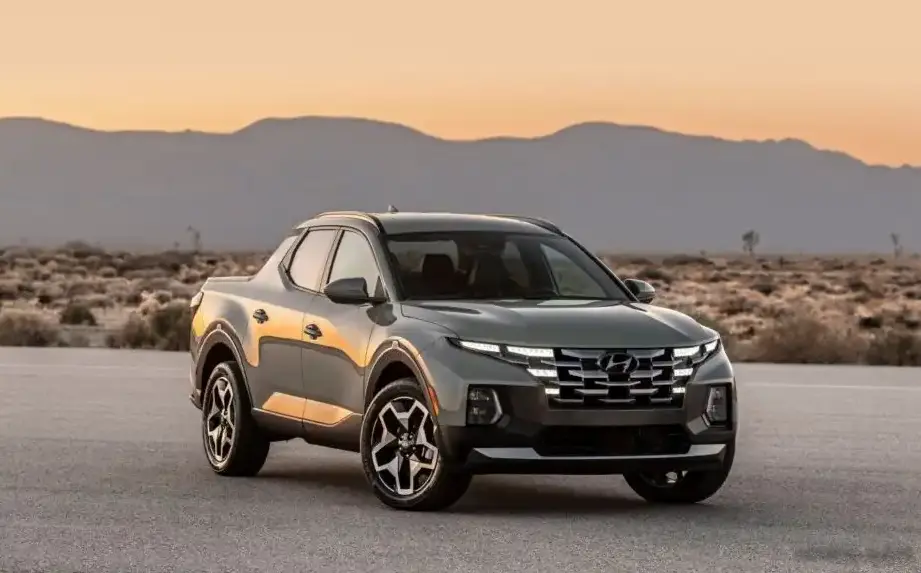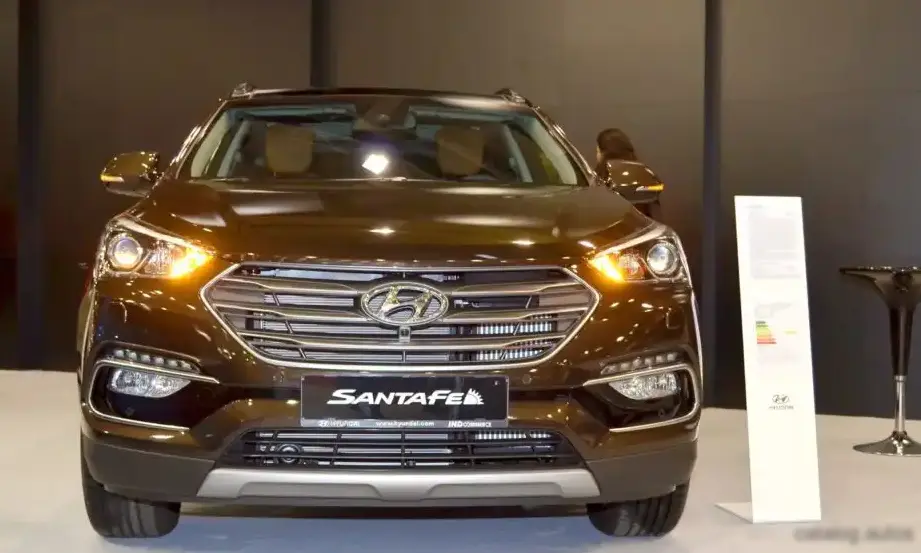
The Hyundai Santa Fe III (DM) facelift, specifically the 2.4 MPI variant producing 172 horsepower, represents a significant iteration of Hyundai’s popular mid-size SUV. Introduced for the 2017 and 2018 model years, this version of the Santa Fe aimed to balance affordability with practicality, offering a comfortable and spacious family vehicle. It sat within the broader DM generation, which received a substantial refresh in 2015, incorporating updated styling, improved safety features, and revised powertrain options. The 2.4 MPI model served as a core offering in the lineup, positioned as a step up from the base engine while remaining more accessible than the higher-output turbocharged options.
Technical Specifications
| Brand | Hyundai |
| Model | Santa Fe |
| Generation | Santa Fe III (DM, facelift 2015) |
| Type (Engine) | 2.4 MPI (172 Hp) |
| Start of production | 2017 year |
| End of production | 2018 year |
| Powertrain Architecture | Internal Combustion engine |
| Body type | SUV |
| Seats | 5-7 |
| Doors | 5 |
| Fuel consumption (economy) – urban (NEDC) | 13.7 l/100 km (17.2 US mpg, 20.6 UK mpg, 7.3 km/l) |
| Fuel consumption (economy) – extra urban (NEDC) | 7 l/100 km (33.6 US mpg, 40.4 UK mpg, 14.3 km/l) |
| Fuel consumption (economy) – combined (NEDC) | 9.5 l/100 km (24.8 US mpg, 29.7 UK mpg, 10.5 km/l) |
| CO2 emissions (NEDC) | 220 g/km |
| Fuel Type | Petrol (Gasoline) |
| Acceleration 0 – 100 km/h | 10.5 sec |
| Acceleration 0 – 62 mph | 10.5 sec |
| Acceleration 0 – 60 mph | 10 sec |
| Maximum speed | 190 km/h (118.06 mph) |
| Weight-to-power ratio | 9.3 kg/Hp, 107 Hp/tonne |
| Weight-to-torque ratio | 7.1 kg/Nm, 139.9 Nm/tonne |
| Power | 172 Hp @ 6000 rpm |
| Power per litre | 72.9 Hp/l |
| Torque | 225 Nm @ 4000 rpm (165.95 lb.-ft. @ 4000 rpm) |
| Engine layout | Front, Transverse |
| Engine Model/Code | Theta II / G4KE |
| Engine displacement | 2359 cm3 (143.96 cu. in.) |
| Number of cylinders | 4 |
| Engine configuration | Inline |
| Cylinder Bore | 88 mm (3.46 in.) |
| Piston Stroke | 97 mm (3.82 in.) |
| Number of valves per cylinder | 4 |
| Fuel injection system | Multi-port manifold injection |
| Engine aspiration | Naturally aspirated engine |
| Valvetrain | DOHC |
| Engine oil capacity | 4.8 l (5.07 US qt | 4.22 UK qt) |
| Coolant | 7.1 l (7.5 US qt | 6.25 UK qt) |
| Kerb Weight | 1608 kg (3545.03 lbs.) |
| Max. weight | 1734 kg (3822.82 lbs.) |
| Max load | 126 kg (277.78 lbs.) |
| Trunk (boot) space – maximum | 1680 l (59.33 cu. ft.) |
| Fuel tank capacity | 64 l (16.91 US gal | 14.08 UK gal) |
| Length | 4700 mm (185.04 in.) |
| Width | 1880 mm (74.02 in.) |
| Width including mirrors | 2179 mm (85.79 in.) |
| Height | 1690 mm (66.54 in.) |
| Wheelbase | 2700 mm (106.3 in.) |
| Front track | 1628-1633 mm (64.09 – 64.29 in.) |
| Rear (Back) track | 1639-1644 mm (64.53 – 64.72 in.) |
| Front overhang | 940 mm (37.01 in.) |
| Rear overhang | 1060 mm (41.73 in.) |
| Drivetrain Architecture | The Internal combustion engine (ICE) drives the front wheels of the vehicle. |
| Drive wheel | Front wheel drive |
| Number of gears and type of gearbox | 6 gears, manual transmission |
| Front suspension | Independent type McPherson |
| Rear suspension | Independent multi-link suspension |
| Front brakes | Ventilated discs |
| Rear brakes | Disc |
| Assisting systems | ABS (Anti-lock braking system) |
| Steering type | Steering rack and pinion |
| Power steering | Electric Steering |
| Tires size | 235/65 R17; 235/60 R18; 235/55 R19 |
| Wheel rims size | 7.0J x 17; 7.5J x 18; 7.5J x 19 |
Powertrain & Engine Architecture
The heart of this Santa Fe variant is the Hyundai Theta II 2.4-liter inline-four cylinder engine, designated G4KE. This engine utilizes multi-port fuel injection (MPI) and a double overhead camshaft (DOHC) valvetrain with four valves per cylinder. The Theta II family was known for its relatively simple design, contributing to its overall reliability. The engine produces 172 horsepower at 6000 rpm and 225 Nm (165.95 lb-ft) of torque at 4000 rpm. The engine’s design prioritized smooth operation and fuel efficiency over outright performance. The 6-speed manual transmission was standard, offering a direct connection to the engine. While an automatic transmission was available in other Santa Fe trims, it wasn’t offered with the 2.4 MPI engine in the US market.
Driving Characteristics
The 2.4 MPI-equipped Santa Fe delivers adequate, but not exhilarating, performance. Acceleration from 0 to 60 mph takes around 10 seconds. The engine feels most comfortable in the mid-range, providing sufficient power for everyday driving situations like merging onto highways and passing slower vehicles. The manual transmission allows for greater driver control, but the engine’s limited torque output means frequent downshifts are necessary when tackling hills or carrying a full load. Compared to the available turbocharged 2.0-liter engine, the 2.4 MPI lacks the same level of responsiveness and overall power. However, it offers a smoother and more predictable power delivery, which some drivers may prefer.
Equipment & Trim Levels
The 2.4 MPI Santa Fe typically came standard with features such as air conditioning, power windows and locks, a basic audio system, and cloth upholstery. Higher trim levels added features like leather seats, a touchscreen infotainment system, a rearview camera, and advanced safety technologies. Optional extras included a panoramic sunroof, navigation system, and premium audio upgrades. The interior design was functional and well-built, prioritizing comfort and practicality over luxury. The 2.4 MPI trim often served as a base for buyers who wanted a well-equipped SUV without the higher price tag of the more powerful engine options.
Chassis & Braking
The Santa Fe III utilizes a front-wheel-drive platform with independent suspension at all four corners. The front suspension employs a McPherson strut design, while the rear features a multi-link setup. This configuration provides a comfortable ride quality and decent handling characteristics. Braking duties are handled by ventilated discs at the front and solid discs at the rear, equipped with an Anti-lock Braking System (ABS). The steering is rack-and-pinion with electric power assistance, offering a light and responsive feel.
Market Reception & Comparison
The 2.4 MPI Santa Fe was generally well-received by critics as a practical and affordable family SUV. It was praised for its spacious interior, comfortable ride, and long warranty. However, some reviewers noted its lack of power compared to competitors and the absence of an automatic transmission option in the US market. Fuel economy was considered average for its class. Compared to the turbocharged 2.0-liter Santa Fe, the 2.4 MPI offered a lower purchase price but sacrificed performance. Against competitors like the Honda CR-V and Toyota RAV4, the Santa Fe offered a compelling value proposition with its generous standard features and spacious interior.
Legacy
The Hyundai Santa Fe III 2.4 MPI has proven to be a relatively reliable vehicle in the used car market. The Theta II engine, while not without its issues (some early versions experienced oil consumption problems), is generally considered durable and long-lasting. Regular maintenance, including oil changes and timing belt replacements, is crucial for ensuring its longevity. Today, these Santa Fes represent an affordable and practical option for buyers seeking a used mid-size SUV with a proven track record. Their simplicity and relatively low maintenance costs make them an attractive choice for budget-conscious consumers.