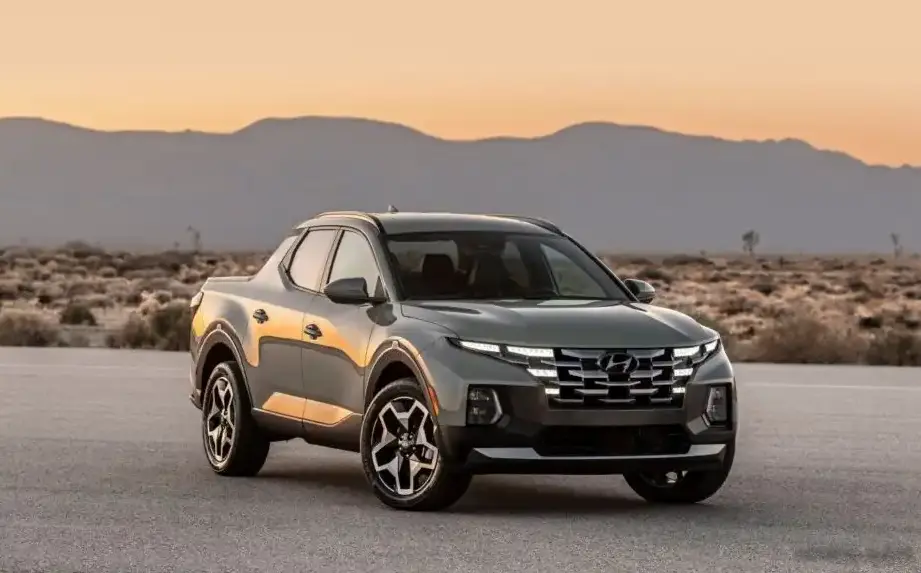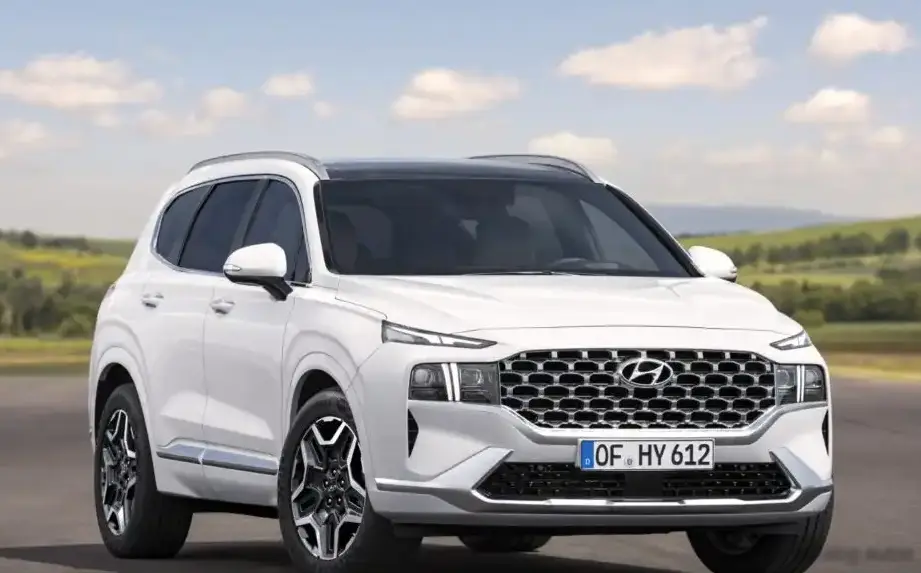
The Hyundai Santa Fe IV, specifically the 1.6 T-GDI (230 Hp) Hybrid Automatic variant produced from November 2020 to August 2023, represents a significant step in Hyundai’s push towards electrified SUVs in the European and global markets. This model, part of the TM facelift generation, positioned itself as a mid-range offering within the Santa Fe lineup, bridging the gap between more affordable trims and the fully-loaded premium versions. It combined a turbocharged gasoline engine with a 48V mild-hybrid system, aiming to deliver a balance of performance, fuel efficiency, and reduced emissions. The Santa Fe IV generation, and this variant in particular, were designed to appeal to families seeking a spacious, technologically advanced, and relatively economical SUV.
Technical Specifications
| Brand | Hyundai |
| Model | Santa Fe |
| Generation | Santa Fe IV (TM, facelift 2020) |
| Type (Engine) | 1.6 T-GDI (230 Hp) Hybrid Automatic |
| Start of production | November, 2020 |
| End of production | August, 2023 |
| Powertrain Architecture | FHEV (Full Hybrid Electric Vehicle) |
| Body type | SUV |
| Seats | 5 |
| Doors | 5 |
| Combined fuel consumption (WLTP) | 6.9 l/100 km (34.1 US mpg, 40.9 UK mpg, 14.5 km/l) |
| CO2 emissions (WLTP) | 157 g/km |
| Fuel consumption (urban) | 5.5 l/100 km (42.8 US mpg, 51.4 UK mpg, 18.2 km/l) |
| Fuel consumption (extra urban) | 5.5 l/100 km (42.8 US mpg, 51.4 UK mpg, 18.2 km/l) |
| Fuel consumption (combined) | 5.5 l/100 km (42.8 US mpg, 51.4 UK mpg, 18.2 km/l) |
| CO2 emissions (NEDC) | 126 g/km |
| Fuel Type | Petrol (Gasoline) |
| Acceleration 0 – 100 km/h | 8.9 sec |
| Acceleration 0 – 62 mph | 8.9 sec |
| Acceleration 0 – 60 mph | 8.5 sec |
| Maximum speed | 187 km/h (116.2 mph) |
| Emission standard | Euro 6d |
| Weight-to-power ratio | 7.5 kg/Hp, 132.6 Hp/tonne |
| Weight-to-torque ratio | 5 kg/Nm, 201.8 Nm/tonne |
| Gross battery capacity | 1.49 kWh |
| Battery technology | Lithium-polymer (LiPo) |
| Electric motor power | 60 Hp |
| Electric motor Torque | 264 Nm (194.72 lb.-ft.) |
| Electric motor type | Synchronous |
| System power | 230 Hp |
| System torque | 350 Nm (258.15 lb.-ft.) |
| Engine Power | 180 Hp @ 5500 rpm |
| Engine Torque | 265 Nm @ 1500-4500 rpm (195.45 lb.-ft. @ 1500-4500 rpm) |
| Engine layout | Front, Transverse |
| Engine Model/Code | Smartstream / G4FP |
| Engine displacement | 1598 cm3 (97.52 cu. in.) |
| Number of cylinders | 4 |
| Engine configuration | Inline |
| Cylinder Bore | 75.6 mm (2.98 in.) |
| Piston Stroke | 89 mm (3.5 in.) |
| Number of valves per cylinder | 4 |
| Fuel injection system | Direct injection |
| Engine aspiration | Turbocharger, Intercooler |
| Engine oil capacity | 4.8 l (5.07 US qt | 4.22 UK qt) |
| Coolant capacity | 4.69 l (4.96 US qt | 4.13 UK qt) |
| Kerb Weight | 1734-1857 kg (3822.82 – 4093.98 lbs.) |
| Max. weight | 2580 kg (5687.93 lbs.) |
| Max load | 723-846 kg (1593.94 – 1865.11 lbs.) |
| Trunk (boot) space – minimum | 634-831 l (22.39 – 29.35 cu. ft.) |
| Trunk (boot) space – maximum | 1704 l (60.18 cu. ft.) |
| Fuel tank capacity | 67 l (17.7 US gal | 14.74 UK gal) |
| Max. roof load | 100 kg (220.46 lbs.) |
| Permitted trailer load (braked) | 1650 kg (3637.63 lbs.) |
| Permitted trailer load (unbraked) | 750 kg (1653.47 lbs.) |
| Permitted towbar download | 100 kg (220.46 lbs.) |
| Length | 4785 mm (188.39 in.) |
| Width | 1900 mm (74.8 in.) |
| Height | 1685 mm (66.34 in.) |
| Wheelbase | 2765 mm (108.86 in.) |
| Front track | 1651 mm (65 in.) |
| Rear track | 1661 mm (65.39 in.) |
| Ride height (ground clearance) | 176 mm (6.93 in.) |
| Drivetrain | Front wheel drive. FHEV. |
| Number of gears | 6 |
| Gearbox type | Automatic transmission |
| Front brakes | Ventilated discs |
| Rear brakes | Disc |
| Tires size | 235/65 R17 |
| Wheel rims size | 7.0J x 17 |
INTRODUCTION
The Hyundai Santa Fe IV (TM) facelift, introduced in late 2020, represented a mid-cycle refresh of the fourth-generation Santa Fe. The 1.6 T-GDI Hybrid Automatic variant was a key component of this update, designed to appeal to buyers seeking a more fuel-efficient and environmentally conscious SUV. This version utilized Hyundai’s Smartstream engine family and a 48V mild-hybrid system, offering a blend of performance and economy. Positioned within the Santa Fe range, it sat above the base gasoline models and below the more expensive diesel and plug-in hybrid options. The TM generation Santa Fe aimed to elevate Hyundai’s presence in the competitive mid-size SUV segment, offering a compelling package of features, space, and value.
Powertrain & Engine Architecture
At the heart of the Santa Fe 1.6 T-GDI Hybrid Automatic lies Hyundai’s Smartstream G4FP 1.6-liter turbocharged four-cylinder gasoline engine. This engine produces 180 horsepower at 5500 rpm and 265 Nm (195.45 lb-ft) of torque between 1500 and 4500 rpm. The engine features direct injection and a twin-scroll turbocharger, contributing to its responsive performance. The “Smartstream” designation indicates Hyundai’s latest engine technology, focusing on improved thermal efficiency and reduced friction. The 48V mild-hybrid system incorporates a 1.49 kWh lithium-polymer battery and a 60 hp electric motor. This system allows for features like regenerative braking and engine start-stop functionality, enhancing fuel economy. The electric motor assists the gasoline engine during acceleration, providing a combined system output of 230 horsepower and 350 Nm (258.15 lb-ft) of torque. Power is delivered to the front wheels via a six-speed automatic transmission, specifically tuned to work in conjunction with the hybrid powertrain.
Driving Characteristics
The 1.6 T-GDI Hybrid Automatic Santa Fe offers a comfortable and refined driving experience. While not overtly sporty, the combined output of the engine and electric motor provides adequate acceleration, achieving 0-60 mph in approximately 8.5 seconds. The six-speed automatic transmission shifts smoothly, and the hybrid system seamlessly blends the power delivery from the gasoline engine and electric motor. Compared to the higher-output 2.5-liter gasoline engine or the 2.2-liter diesel options, this variant feels less powerful, particularly during overtaking maneuvers. However, the electric motor assistance helps to mitigate this, providing a noticeable boost in low-speed acceleration. The steering is light and precise, making it easy to maneuver in urban environments. The suspension is tuned for comfort, absorbing bumps and imperfections in the road well. The hybrid system’s regenerative braking feels natural and contributes to improved fuel economy.
Equipment & Trim Levels
The 1.6 T-GDI Hybrid Automatic Santa Fe typically came well-equipped, even in its base trim levels. Standard features often included automatic climate control, a touchscreen infotainment system with Apple CarPlay and Android Auto compatibility, a rearview camera, and a suite of safety features such as lane-keeping assist, forward collision avoidance assist, and automatic emergency braking. Higher trim levels added features like leather upholstery, a panoramic sunroof, a premium sound system, and adaptive cruise control. Interior upholstery was typically cloth in lower trims, upgrading to leather in higher specifications. Dashboard configurations were generally consistent across the range, featuring a modern and user-friendly design. Optional extras included navigation, heated and ventilated seats, and a head-up display.
Chassis & Braking
The Santa Fe IV utilizes a front-wheel-drive platform with independent suspension at all four corners. The front suspension consists of MacPherson struts, while the rear features a multi-link setup. This configuration provides a good balance of ride comfort and handling. Braking duties are handled by ventilated discs at the front and solid discs at the rear. Anti-lock braking system (ABS) and electronic stability control (ESC) are standard features. The Santa Fe’s chassis is designed to provide a stable and secure driving experience, with minimal body roll during cornering. Stabilizer bars are fitted to both the front and rear axles to further enhance handling. The suspension tuning is geared towards comfort, prioritizing a smooth ride over sporty handling.
Market Reception & Comparison
The Hyundai Santa Fe 1.6 T-GDI Hybrid Automatic was generally well-received by automotive critics. Reviewers praised its fuel efficiency, comfortable ride, and spacious interior. However, some noted that its performance was not as engaging as some of its competitors. Compared to the diesel-powered Santa Fe models, the hybrid variant offered lower emissions and improved fuel economy in urban driving conditions, but it lacked the diesel’s low-end torque and long-distance cruising ability. Against gasoline-only Santa Fe trims, the hybrid offered a noticeable improvement in fuel economy, albeit at a slightly higher purchase price. The hybrid’s real-world fuel consumption of around 6.9 l/100 km (34.1 US mpg) was competitive with other hybrid SUVs in its class.
Legacy
The 1.6 T-GDI Hybrid powertrain in the Santa Fe IV has proven to be relatively reliable, with few widespread issues reported. The Smartstream engine and 48V hybrid system have demonstrated good durability. In the used car market, this variant holds its value reasonably well, appealing to buyers seeking a fuel-efficient and well-equipped SUV. The Santa Fe IV, and this specific powertrain, helped to establish Hyundai as a serious contender in the mid-size SUV segment, showcasing the brand’s commitment to innovation and quality. The combination of a turbocharged engine, mild-hybrid technology, and a comfortable driving experience continues to make this Santa Fe variant a popular choice among used car buyers.