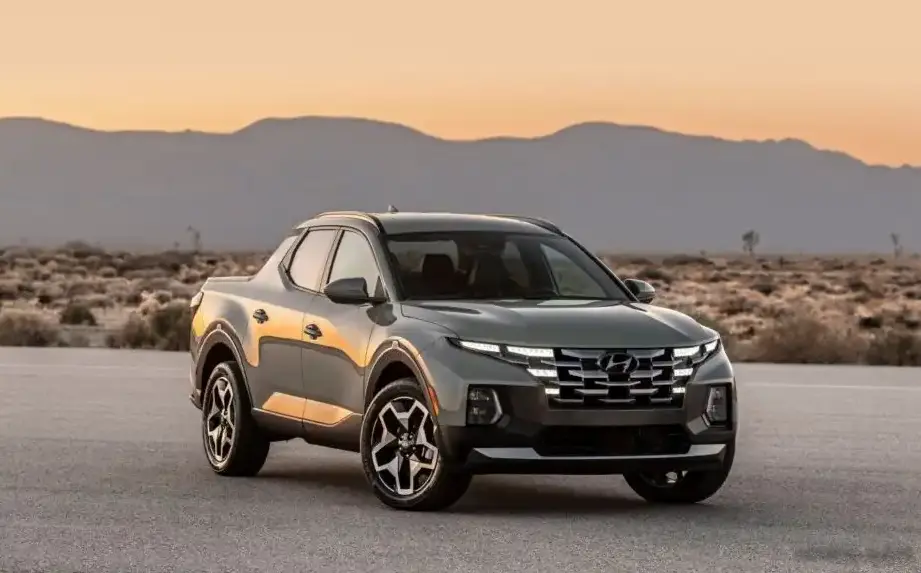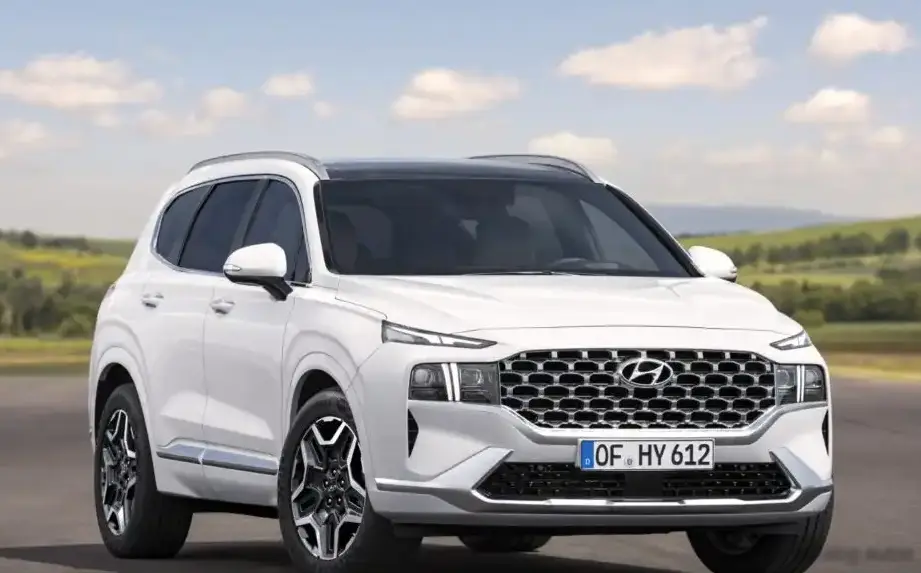
The Hyundai Santa Fe IV, specifically the 1.6 T-GDi Plug-in Hybrid 4WD Automatic 7-Seat variant, represents a significant step in Hyundai’s commitment to electrified powertrains and family-focused SUVs. Introduced in March 2021 as part of the facelifted TM generation (2020-2023), this model aimed to provide a balance of fuel efficiency, practicality, and all-weather capability. It occupied a mid-to-upper position within the Santa Fe lineup, offering a more premium and environmentally conscious alternative to the standard gasoline-powered models.
Technical Specifications
| Brand | Hyundai |
| Model | Santa Fe |
| Generation | Santa Fe IV (TM, facelift 2020) |
| Type (Engine) | 1.6 T-GDi (265 Hp) Plug-in Hybrid 4WD Automatic 7 Seat |
| Start of production | March, 2021 |
| End of production | August, 2023 |
| Powertrain Architecture | PHEV (Plug-in Hybrid Electric Vehicle) |
| Body type | SUV |
| Seats | 7 |
| Doors | 5 |
| Combined fuel consumption (WLTP) | 1.6 l/100 km (147 US mpg, 176.6 UK mpg, 62.5 km/l) |
| CO2 emissions (WLTP) | 37 g/km |
| Fuel consumption (NEDC) – combined | 1.5 l/100 km (156.8 US mpg, 188.3 UK mpg, 66.7 km/l) |
| CO2 emissions (NEDC) | 34 g/km |
| Fuel Type | Petrol / electricity |
| Acceleration 0 – 100 km/h | 8.8 sec |
| Acceleration 0 – 62 mph | 8.8 sec |
| Acceleration 0 – 60 mph | 8.4 sec |
| Maximum speed | 187 km/h (116.2 mph) |
| Emission standard | Euro 6d |
| Weight-to-power ratio | 7.6 kg/Hp, 132.2 Hp/tonne |
| Weight-to-torque ratio | 5.7 kg/Nm, 174.6 Nm/tonne |
| Gross battery capacity | 13.8 kWh |
| Battery voltage | 360 V |
| Battery technology | Lithium-polymer (LiPo) |
| Battery location | Below the floor, under the front seats |
| All-electric range (WLTP) | 58 km (36.04 mi) |
| Average Energy consumption (WLTP) | 18.1 kWh/100 km (29.13 kWh/100 mi, 116 MPGe, 5.5 km/kWh, 3.4 mi/kWh) |
| Average Energy consumption (NEDC) | 16.3 kWh/100 km (26.23 kWh/100 mi, 128 MPGe, 6.1 km/kWh, 3.8 mi/kWh) |
| Electric motor power | 91 Hp |
| Electric motor Torque | 304 Nm (224.22 lb.-ft.) |
| Electric motor location | Between the combustion engine and the transmission |
| System power | 265 Hp @ 5500 rpm |
| System torque | 350 Nm @ 1500-4500 rpm (258.15 lb.-ft. @ 1500-4500 rpm) |
| Power | 180 Hp @ 5500 rpm |
| Torque | 265 Nm @ 1500-4000 rpm (195.45 lb.-ft. @ 1500-4000 rpm) |
| Engine layout | Front, Transverse |
| Engine Model/Code | Smartstream / G4FP |
| Engine displacement | 1598 cm3 (97.52 cu. in.) |
| Number of cylinders | 4 |
| Engine configuration | Inline |
| Cylinder Bore | 75.6 mm (2.98 in.) |
| Piston Stroke | 89 mm (3.5 in.) |
| Compression ratio | 10.5:1 |
| Number of valves per cylinder | 4 |
| Fuel injection system | Direct injection |
| Engine aspiration | Turbocharger, Intercooler |
| Valvetrain | DOHC |
| Engine oil capacity | 4.8 l (5.07 US qt | 4.22 UK qt) |
| Coolant | 4.69 l (4.96 US qt | 4.13 UK qt) |
| Kerb Weight | 2005-2112 kg (4420.27 – 4656.16 lbs.) |
| Max. weight | 2690 kg (5930.43 lbs.) |
| Max load | 578-685 kg (1274.27 – 1510.17 lbs.) |
| Trunk (boot) space – minimum | 571 l (20.16 cu. ft.) |
| Trunk (boot) space – maximum | 1649 l (58.23 cu. ft.) |
| Fuel tank capacity | 47 l (12.42 US gal | 10.34 UK gal) |
| Max. roof load | 100 kg (220.46 lbs.) |
| Permitted trailer load with brakes (12%) | 1350 kg (2976.24 lbs.) |
| Permitted trailer load without brakes | 750 kg (1653.47 lbs.) |
| Permitted towbar download | 100 kg (220.46 lbs.) |
| Length | 4785 mm (188.39 in.) |
| Width | 1900 mm (74.8 in.) |
| Width including mirrors | 2145 mm (84.45 in.) |
| Height | 1685 mm (66.34 in.) |
| Wheelbase | 2765 mm (108.86 in.) |
| Front track | 1646 mm (64.8 in.) |
| Rear (Back) track | 1656 mm (65.2 in.) |
| Ride height (ground clearance) | 176 mm (6.93 in.) |
| Minimum turning circle (turning diameter) | 11.4 m (37.4 ft.) |
| Drivetrain Architecture | The Internal combustion engine (ICE) and the electric motor permanently drive the front wheels of the vehicle, capable of running in full electric or mixed mode, and if necessary through the electrically or mechanically controlled clutch, the rear wheels are driven. |
| Drive wheel | All wheel drive (4×4) |
| Number of gears and type of gearbox | 6 gears, automatic transmission |
| Front suspension | Independent type McPherson |
| Rear suspension | Independent multi-link suspension |
| Front brakes | Disc |
| Rear brakes | Disc |
| Assisting systems | ABS (Anti-lock braking system) |
| Steering type | Steering rack and pinion |
| Power steering | Electric Steering |
| Tires size | 235/55 R19 |
| Wheel rims size | 7.5J x 19 |
Powertrain & Engine Architecture
At the heart of this Santa Fe variant lies Hyundai’s Smartstream 1.6 T-GDi engine (G4FP code). This is a turbocharged, direct-injection four-cylinder engine producing 180 horsepower. The engine utilizes a twin-scroll turbocharger for improved responsiveness and reduced turbo lag. It’s paired with a 91 hp electric motor, integrated between the engine and the six-speed automatic transmission. The combined system output reaches 265 horsepower and 350 Nm (258 lb-ft) of torque. The 13.8 kWh lithium-polymer battery pack, positioned under the front seats, provides an all-electric range of approximately 58 km (36 miles) under WLTP testing. The transmission is a conventional six-speed automatic, optimized for smooth operation and efficiency in hybrid mode. The powertrain operates in various modes, including electric-only, hybrid, and sport, allowing the driver to prioritize fuel economy or performance.
Driving Characteristics
The 1.6 T-GDi Plug-in Hybrid delivers a refined driving experience. In electric mode, it offers near-silent acceleration and sufficient power for urban driving. When the gasoline engine engages, the transition is generally seamless. The combined output provides adequate acceleration, with a 0-60 mph time of around 8.4 seconds. Compared to the standard 2.5L gasoline engine Santa Fe, the plug-in hybrid offers quicker acceleration and significantly improved fuel economy. However, it doesn’t match the outright performance of the higher-output 2.0T models. The automatic transmission is well-tuned, providing smooth gear changes, but it can sometimes feel hesitant during quick overtaking maneuvers. The all-wheel-drive system provides confident traction in various weather conditions.
Equipment & Trim Levels
The 1.6 T-GDi Plug-in Hybrid typically came well-equipped, often representing a higher trim level within the Santa Fe range. Standard features generally included leather upholstery, heated and ventilated front seats, a panoramic sunroof, a premium audio system, and a suite of advanced driver-assistance systems (ADAS) such as adaptive cruise control, lane-keeping assist, and automatic emergency braking. Optional extras could include a head-up display, a surround-view monitor, and upgraded interior trim materials. The interior design featured a modern and spacious cabin with a focus on comfort and convenience.
Chassis & Braking
The Santa Fe IV utilizes a robust chassis with independent suspension all around – McPherson struts at the front and a multi-link setup at the rear. This configuration provides a comfortable ride and good handling characteristics. The plug-in hybrid variant, due to the added weight of the battery pack, often featured slightly stiffer suspension tuning to maintain stability. Braking duties are handled by disc brakes on all four wheels, coupled with ABS, electronic stability control, and traction control. The brake system is also integrated with the regenerative braking system, which helps to recapture energy during deceleration and recharge the battery.
Market Reception & Comparison
The Hyundai Santa Fe Plug-in Hybrid was generally well-received by critics for its fuel efficiency, spacious interior, and comprehensive feature set. It offered a compelling alternative to other plug-in hybrid SUVs in its class, such as the Toyota RAV4 Prime and the Mitsubishi Outlander PHEV. Compared to the standard gasoline Santa Fe, the plug-in hybrid commanded a higher price but offered significantly lower running costs, especially for drivers who frequently commute short distances and can take advantage of electric-only driving. Some reviewers noted that the all-electric range was competitive but not class-leading.
Legacy
The 1.6 T-GDi Plug-in Hybrid Santa Fe represents a pivotal moment in Hyundai’s transition towards electrification. While production ended in August 2023, these models continue to appear on the used car market. The Smartstream engine and hybrid powertrain have proven to be relatively reliable, although regular maintenance is crucial. The battery pack is expected to maintain a significant portion of its capacity for many years, but its long-term durability will depend on usage patterns and charging habits. The Santa Fe Plug-in Hybrid remains a practical and efficient choice for families seeking a versatile and environmentally conscious SUV.