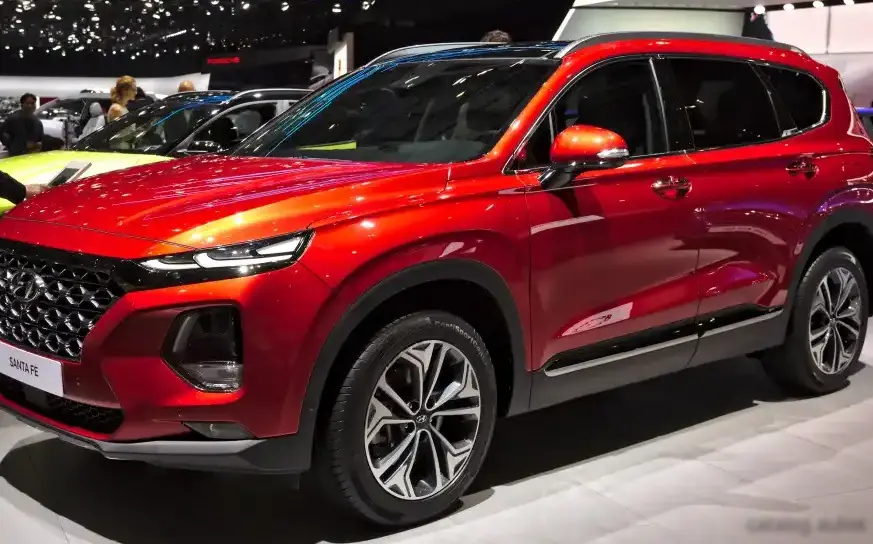
The Hyundai Santa Fe TM, produced from 2018 to 2020, represented the fourth generation of Hyundai’s popular mid-size SUV. Within the TM range, the 2.0 CRDi 150 hp 4WD variant occupied a significant position, offering a balance between fuel efficiency, all-weather capability, and a relatively accessible price point. This model was primarily aimed at families and individuals seeking a practical and reliable SUV for everyday use, particularly in markets where diesel engines and all-wheel drive were highly valued. It served as a stepping stone within the lineup, positioned below the more powerful 2.2 CRDi models and offering a more economical alternative to gasoline-powered versions.
Technical Specifications
| Brand | Hyundai |
| Model | Santa Fe |
| Generation | Santa Fe IV (TM) |
| Type (Engine) | R 2.0 CRDi (150 Hp) 4WD |
| Start of production | 2018 |
| End of production | 2020 |
| Powertrain Architecture | Internal Combustion engine |
| Body type | SUV |
| Seats | 5 |
| Doors | 5 |
| Fuel Type | Diesel |
| Emission standard | Euro 6 |
| Power | 150 Hp @ 4000 rpm |
| Power per litre | 75.2 Hp/l |
| Torque | 397 Nm @ 1750 rpm / 292.81 lb.-ft. @ 1750 rpm |
| Engine layout | Front, Transverse |
| Engine Model/Code | R II / D4HA |
| Engine displacement | 1995 cm3 / 121.74 cu. in. |
| Number of cylinders | 4 |
| Engine configuration | Inline |
| Cylinder Bore | 84 mm / 3.31 in. |
| Piston Stroke | 90 mm / 3.54 in. |
| Compression ratio | 10.6:1 |
| Number of valves per cylinder | 4 |
| Fuel injection system | Diesel Commonrail |
| Engine aspiration | Turbocharger, Intercooler |
| Valvetrain | DOHC |
| Engine oil capacity | 6.5 l / 6.87 US qt | 5.72 UK qt |
| Coolant | 8.8 l / 9.3 US qt | 7.74 UK qt |
| Trunk (boot) space – minimum | 625 l / 22.07 cu. ft. |
| Length | 4770 mm / 187.8 in. |
| Width | 1890 mm / 74.41 in. |
| Height | 1680 mm / 66.14 in. |
| Wheelbase | 2765 mm / 108.86 in. |
| Front overhang | 940 mm / 37.01 in. |
| Rear overhang | 1065 mm / 41.93 in. |
| Ride height (ground clearance) | 185 mm / 7.28 in. |
| Drive wheel | All wheel drive (4×4) |
| Number of gears and type of gearbox | 6 gears, manual transmission |
| Front brakes | Ventilated discs |
| Rear brakes | Disc |
| Assisting systems | ABS (Anti-lock braking system) |
| Steering type | Steering rack and pinion |
| Power steering | Electric Steering |
| Tires size | 235/65 R17; 235/60 R18; 235/55 R19 |
| Wheel rims size | 17; 18; 19 |
Powertrain & Engine Architecture
The heart of the Santa Fe 2.0 CRDi was the Hyundai R II series diesel engine, specifically the D4HA variant. This 1995cc inline-four cylinder engine utilized a second-generation common-rail direct injection system, delivering fuel at extremely high pressures for optimized combustion. A turbocharger with an intercooler was employed to boost power output and improve torque across a wider rev range. The engine featured a double overhead camshaft (DOHC) valvetrain with four valves per cylinder, contributing to its efficiency and responsiveness. The 6-speed manual transmission was standard, providing drivers with direct control over gear selection. The engine was designed to meet stringent Euro 6 emissions standards, incorporating a diesel particulate filter (DPF) to reduce harmful emissions.
Driving Characteristics
The 150 hp and 397 Nm (292.81 lb-ft) of torque provided by the 2.0 CRDi engine delivered adequate performance for everyday driving. While not particularly sporty, the engine offered sufficient power for highway cruising and overtaking maneuvers. The manual transmission allowed for precise gear changes, and the all-wheel-drive system provided enhanced traction in slippery conditions. Compared to the more powerful 2.2 CRDi variants, the 2.0 CRDi felt less urgent in its acceleration, but it offered a more relaxed and fuel-efficient driving experience. The gear ratios were tuned for a balance between fuel economy and usability, with a focus on maximizing torque at lower engine speeds. The all-wheel drive system operated primarily as front-wheel drive, engaging the rear wheels automatically when slip was detected, enhancing stability and control.
Equipment & Trim Levels
The Santa Fe 2.0 CRDi 4WD typically came with a respectable level of standard equipment. This included air conditioning, power windows and mirrors, a touchscreen infotainment system with Bluetooth connectivity, and a suite of safety features such as ABS, electronic stability control, and multiple airbags. Higher trim levels offered upgrades such as leather upholstery, heated front seats, a panoramic sunroof, and advanced driver-assistance systems like lane departure warning and automatic emergency braking. Interior upholstery was generally cloth on base models, with leather options available on higher trims. Dashboard configurations were consistent across the range, featuring a modern and functional design.
Chassis & Braking
The Santa Fe TM utilized a front-wheel-drive based platform with independent suspension at the front (typically MacPherson struts) and a multi-link suspension at the rear. The all-wheel-drive system added a rear differential and driveshaft to distribute power to all four wheels. Braking duties were handled by ventilated discs at the front and solid discs at the rear. The suspension was tuned for comfort, providing a relatively smooth ride quality. Stabilizer bars were fitted to both the front and rear axles to reduce body roll during cornering. The steering system was an electrically assisted rack and pinion setup, offering light and precise steering feel.
Market Reception & Comparison
The Hyundai Santa Fe 2.0 CRDi 4WD was generally well-received by automotive critics. It was praised for its spacious interior, comfortable ride, and good value for money. The diesel engine was noted for its fuel efficiency and strong low-end torque. However, some reviewers found the engine to be somewhat noisy and lacking in refinement compared to some of its competitors. Compared to the 2.2 CRDi models, the 2.0 CRDi offered better fuel economy but less outright performance. Against competitors like the Kia Sorento and Nissan X-Trail, the Santa Fe offered a compelling package with a strong warranty and a competitive price point.
Legacy
The Hyundai Santa Fe TM 2.0 CRDi 4WD has proven to be a relatively reliable vehicle in the used car market. The R II diesel engine, while requiring regular maintenance (including DPF regeneration), is generally robust and long-lasting. Common issues reported include occasional problems with the DPF and fuel injectors. The all-wheel-drive system has also proven to be durable. Today, these Santa Fes represent a practical and affordable option for buyers seeking a spacious and capable SUV. Their fuel efficiency and all-weather capability continue to make them a popular choice, particularly in regions where diesel fuel is readily available and winter driving conditions are prevalent.