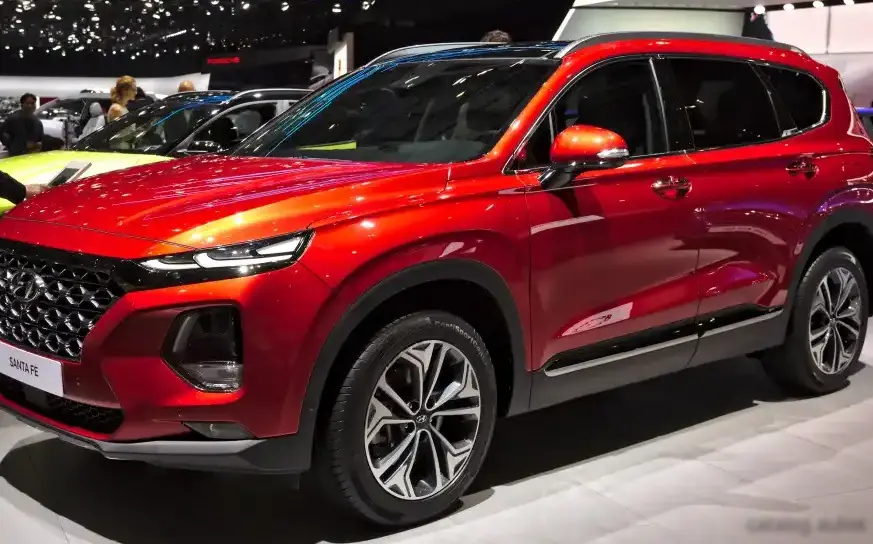
The Hyundai Santa Fe IV (TM) R 2.0 CRDi, producing 182 horsepower, was a key variant in the fourth generation of Hyundai’s popular mid-size SUV. Introduced for the 2018 model year and continuing through 2020, this version played a significant role in establishing the Santa Fe as a competitive offering in the European and Asian markets, particularly for buyers seeking a balance between fuel efficiency, practicality, and reasonable performance. It sat within the TM generation, built on the platform designated as the 1HX0, and offered a diesel-powered option alongside gasoline engines.
Technical Specifications
| Brand | Hyundai |
| Model | Santa Fe |
| Generation | Santa Fe IV (TM) |
| Type (Engine) | R 2.0 CRDi (182 Hp) |
| Start of production | 2018 year |
| End of production | 2020 year |
| Powertrain Architecture | Internal Combustion engine |
| Body type | SUV |
| Seats | 5 |
| Doors | 5 |
| Fuel Type | Diesel |
| Emission standard | Euro 6 |
| Power | 182 Hp @ 4000 rpm |
| Power per litre | 91.2 Hp/l |
| Torque | 397 Nm @ 1750 rpm / 292.81 lb.-ft. @ 1750 rpm |
| Engine layout | Front, Transverse |
| Engine Model/Code | R II / D4HA |
| Engine displacement | 1995 cm3 / 121.74 cu. in. |
| Number of cylinders | 4 |
| Engine configuration | Inline |
| Cylinder Bore | 84 mm / 3.31 in. |
| Piston Stroke | 90 mm / 3.54 in. |
| Compression ratio | 10.6:1 |
| Number of valves per cylinder | 4 |
| Fuel injection system | Diesel Commonrail |
| Engine aspiration | Turbocharger, Intercooler |
| Valvetrain | DOHC |
| Engine oil capacity | 6.5 l / 6.87 US qt | 5.72 UK qt |
| Coolant | 8.8 l / 9.3 US qt | 7.74 UK qt |
| Trunk (boot) space – minimum | 625 l / 22.07 cu. ft. |
| Length | 4770 mm / 187.8 in. |
| Width | 1890 mm / 74.41 in. |
| Height | 1680 mm / 66.14 in. |
| Wheelbase | 2765 mm / 108.86 in. |
| Front overhang | 940 mm / 37.01 in. |
| Rear overhang | 1065 mm / 41.93 in. |
| Ride height (ground clearance) | 185 mm / 7.28 in. |
| Drivetrain Architecture | The Internal combustion engine (ICE) drives the front wheels of the vehicle. |
| Drive wheel | Front wheel drive |
| Number of gears and type of gearbox | 6 gears, manual transmission |
| Front brakes | Ventilated discs |
| Rear brakes | Disc |
| Assisting systems | ABS (Anti-lock braking system) |
| Steering type | Steering rack and pinion |
| Power steering | Electric Steering |
| Tires size | 235/65 R17; 235/60 R18; 235/55 R19 |
| Wheel rims size | 17; 18; 19 |
Powertrain & Engine Architecture
The heart of the Santa Fe IV R 2.0 CRDi is the Hyundai R II series diesel engine, specifically the D4HA code. This is a four-cylinder, inline engine displacing 1995cc. It utilizes a second-generation common rail direct injection system, delivering fuel at extremely high pressures for optimized combustion. The engine is turbocharged and intercooled, enhancing power output and efficiency. The DOHC (Double Overhead Camshaft) valvetrain, with four valves per cylinder, further contributes to the engine’s breathing and overall performance. The 182 hp output is achieved at 4000 rpm, while the substantial 397 Nm (292.81 lb-ft) of torque is readily available from 1750 rpm, providing strong low-end and mid-range acceleration. This particular variant was typically paired with a six-speed manual transmission, although an automatic transmission was also offered as an option in some markets.
Driving Characteristics
The 182 hp 2.0 CRDi engine, coupled with the six-speed manual transmission, provided a reasonably engaging driving experience. While not a sports SUV, the engine’s torque output ensured brisk acceleration in everyday driving situations. The manual gearbox allowed for greater driver control, and the gear ratios were well-matched to the engine’s powerband. Compared to the higher-output gasoline engines available in the Santa Fe IV range, the diesel offered superior fuel economy and a more relaxed cruising experience. However, it lacked the immediate responsiveness of the gasoline counterparts. Against other diesel variants, such as those with higher horsepower ratings, this 182 hp version represented a balance between performance and efficiency, making it suitable for drivers prioritizing fuel costs and long-distance comfort.
Equipment & Trim Levels
The Santa Fe IV R 2.0 CRDi (182 hp) was typically offered in mid-range trim levels. Standard equipment generally included air conditioning, a touchscreen infotainment system with Apple CarPlay and Android Auto compatibility, Bluetooth connectivity, rear parking sensors, and a suite of safety features such as ABS, ESC (Electronic Stability Control), and multiple airbags. Higher trim levels added features like leather upholstery, a panoramic sunroof, heated and ventilated front seats, a premium sound system, and advanced driver-assistance systems (ADAS) such as lane departure warning, blind-spot monitoring, and adaptive cruise control. Interior upholstery was often a combination of cloth and leatherette, with dashboard materials varying depending on the trim level.
Chassis & Braking
The Santa Fe IV utilized a front-wheel-drive platform, with all-wheel drive available as an option. The suspension consisted of MacPherson struts at the front and a multi-link setup at the rear, providing a comfortable ride quality. The braking system featured ventilated discs at the front and solid discs at the rear, offering adequate stopping power for the vehicle’s weight. ABS (Anti-lock Braking System) was standard, enhancing braking performance in emergency situations. Stabilizer bars were fitted to both the front and rear axles to reduce body roll during cornering.
Market Reception & Comparison
The Hyundai Santa Fe IV R 2.0 CRDi (182 hp) was generally well-received by automotive critics. It was praised for its fuel efficiency, spacious interior, comfortable ride, and comprehensive equipment list. However, some reviewers noted that the engine could be somewhat noisy under hard acceleration. Compared to competitors like the Kia Sorento, Nissan X-Trail, and Volkswagen Tiguan, the Santa Fe offered a compelling value proposition, with a generous warranty and a competitive price point. Fuel economy figures typically ranged from 45 to 55 mpg (combined cycle) depending on driving conditions and wheel size. Reliability reports indicated that the R II diesel engine was generally robust, although regular maintenance was crucial to prevent issues with the diesel particulate filter (DPF).
Legacy
The Hyundai Santa Fe IV R 2.0 CRDi (182 hp) remains a popular choice in the used car market. The R II diesel engine, when properly maintained, has proven to be relatively reliable. However, potential buyers should be aware of the potential for DPF issues, particularly if the vehicle has primarily been used for short journeys. The availability of spare parts is generally good, and the Santa Fe’s relatively simple mechanical design makes it relatively easy to repair. This variant continues to be valued for its blend of practicality, fuel efficiency, and affordability, making it a sensible option for families and individuals seeking a versatile mid-size SUV.