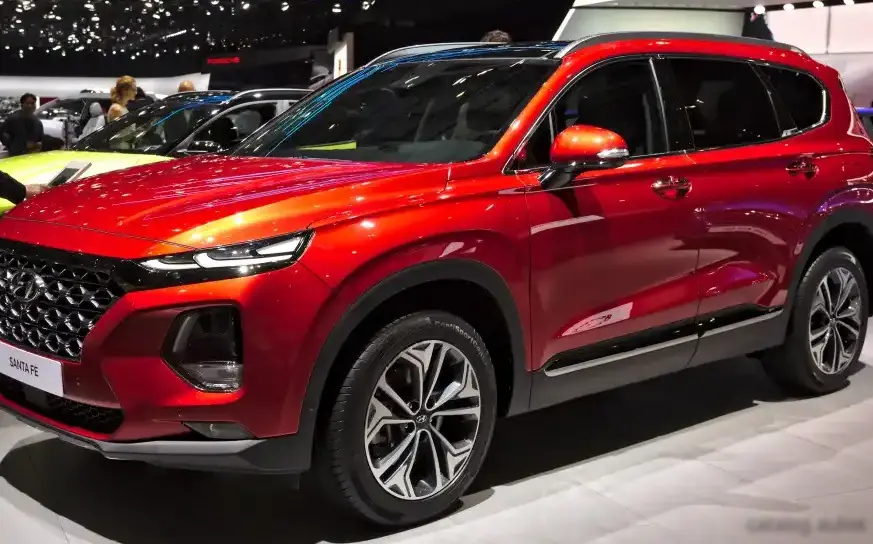
The Hyundai Santa Fe TM, produced from 2018 to 2020, represented the fourth generation of Hyundai’s popular mid-size SUV. Within the TM range, the R 2.2 CRDi variant, equipped with a 2.2-liter turbocharged diesel engine and an eight-speed automatic transmission, served as a higher-trim level option, positioned above the base engine choices but below potential future performance-oriented trims. This configuration was primarily aimed at buyers seeking a balance of fuel efficiency, comfortable highway cruising, and sufficient power for everyday driving needs, particularly in European and Asian markets where diesel engines remained prevalent. The Santa Fe TM aimed to elevate Hyundai’s presence in the competitive mid-size SUV segment, offering a more refined and feature-rich package than its predecessors.
Technical Specifications
| Brand | Hyundai |
| Model | Santa Fe |
| Generation | Santa Fe IV (TM) |
| Type (Engine) | R 2.2 CRDi (197 Hp) Automatic |
| Start of production | 2018 |
| End of production | 2020 |
| Powertrain Architecture | Internal Combustion engine |
| Body type | SUV |
| Seats | 5 |
| Doors | 5 |
| Fuel Type | Diesel |
| Emission standard | Euro 6 |
| Power | 197 Hp @ 3800 rpm |
| Power per litre | 89.6 Hp/l |
| Torque | 436 Nm @ 1750 rpm / 321.58 lb.-ft. @ 1750 rpm |
| Engine layout | Front, Transverse |
| Engine Model/Code | R II / D4HB |
| Engine displacement | 2199 cm3 / 134.19 cu. in. |
| Number of cylinders | 4 |
| Engine configuration | Inline |
| Cylinder Bore | 85.4 mm / 3.36 in. |
| Piston Stroke | 96 mm / 3.78 in. |
| Compression ratio | 16:1 |
| Number of valves per cylinder | 4 |
| Fuel injection system | Diesel Commonrail |
| Engine aspiration | Turbocharger, Intercooler |
| Valvetrain | DOHC |
| Engine oil capacity | 6.5 l / 6.87 US qt | 5.72 UK qt |
| Coolant | 8.8 l / 9.3 US qt | 7.74 UK qt |
| Trunk (boot) space – minimum | 625 l / 22.07 cu. ft. |
| Length | 4770 mm / 187.8 in. |
| Width | 1890 mm / 74.41 in. |
| Height | 1680 mm / 66.14 in. |
| Wheelbase | 2765 mm / 108.86 in. |
| Front overhang | 940 mm / 37.01 in. |
| Rear overhang | 1065 mm / 41.93 in. |
| Ride height (ground clearance) | 185 mm / 7.28 in. |
| Drivetrain Architecture | The Internal combustion engine (ICE) drives the front wheels of the vehicle. |
| Drive wheel | Front wheel drive |
| Number of gears and type of gearbox | 8 gears, automatic transmission |
| Front brakes | Ventilated discs |
| Rear brakes | Disc |
| Assisting systems | ABS (Anti-lock braking system) |
| Steering type | Steering rack and pinion |
| Power steering | Electric Steering |
| Tires size | 235/65 R17; 235/60 R18; 235/55 R19 |
| Wheel rims size | 17; 18; 19 |
Powertrain & Engine Architecture
The heart of the Santa Fe R 2.2 CRDi is the Hyundai R II series diesel engine, specifically the D4HB code. This is a four-cylinder, inline engine displacing 2199cc. It utilizes a common-rail direct injection system, delivering fuel at extremely high pressures for optimized combustion. The engine is turbocharged with an intercooler, enhancing power output and efficiency. The DOHC (Double Overhead Camshaft) valvetrain, with four valves per cylinder, contributes to improved breathing and overall engine performance. The 16:1 compression ratio is typical for a diesel engine, maximizing thermal efficiency. The eight-speed automatic transmission, sourced from Hyundai’s own development, was designed to provide smooth and efficient gear changes, optimizing fuel economy and driveability. This transmission featured a wide gear ratio spread, allowing the engine to operate within its optimal power band across a variety of driving conditions.
Driving Characteristics
The 197 horsepower and 321.58 lb-ft of torque produced by the 2.2 CRDi engine provided the Santa Fe with adequate performance for most driving scenarios. While not a sports SUV, the engine delivered strong low-end torque, making it responsive in city driving and capable when overtaking on the highway. The eight-speed automatic transmission contributed to a relaxed driving experience, with well-spaced gear ratios minimizing engine strain. Compared to lower-powered gasoline engine options, the diesel offered significantly more torque, resulting in better acceleration and towing capacity. However, it wasn’t as rev-happy as some gasoline alternatives. Compared to potential higher-output diesel variants (if offered in some markets), this version prioritized fuel economy and refinement over outright performance.
Equipment & Trim Levels
The R 2.2 CRDi trim typically included a generous level of standard equipment. Features commonly found in this variant included automatic climate control, a touchscreen infotainment system with Apple CarPlay and Android Auto compatibility, rear parking sensors, and a rearview camera. Higher trim levels within the R 2.2 CRDi range often added features such as leather upholstery, a panoramic sunroof, heated and ventilated front seats, and advanced driver-assistance systems (ADAS) like adaptive cruise control, lane keeping assist, and automatic emergency braking. Optional extras could include a premium sound system and navigation system.
Chassis & Braking
The Santa Fe TM utilized a front-wheel-drive platform, although all-wheel drive was available as an option. The suspension consisted of MacPherson struts at the front and a multi-link setup at the rear, providing a comfortable ride quality. Braking duties were handled by ventilated discs at the front and solid discs at the rear, equipped with ABS (Anti-lock Braking System). The steering system employed an electric power steering rack and pinion, offering a balance of light steering effort and responsive handling. Stabilizer bars were fitted to both the front and rear axles to reduce body roll during cornering.
Market Reception & Comparison
The Hyundai Santa Fe R 2.2 CRDi was generally well-received by automotive critics. It was praised for its spacious interior, comfortable ride, and generous equipment levels. The diesel engine was noted for its fuel efficiency and strong torque output. However, some reviewers found the engine to be somewhat noisy compared to gasoline alternatives. Compared to competitors like the Kia Sorento and Nissan X-Trail, the Santa Fe offered a compelling value proposition, with a similar level of features at a competitive price point. The diesel variant typically achieved better fuel economy than comparable gasoline models, making it an attractive option for drivers who covered long distances.
Legacy
The Hyundai Santa Fe TM R 2.2 CRDi powertrain has proven to be relatively reliable in the long term, with few widespread mechanical issues reported. The R II diesel engine is known for its durability, and the eight-speed automatic transmission has also demonstrated good reliability. In the used car market, these models continue to be sought after by buyers looking for a spacious, comfortable, and fuel-efficient SUV. However, potential buyers should be aware of the potential for diesel particulate filter (DPF) issues, particularly if the vehicle has been primarily used for short trips. Regular maintenance and the use of high-quality diesel fuel are essential for ensuring the longevity of this powertrain.