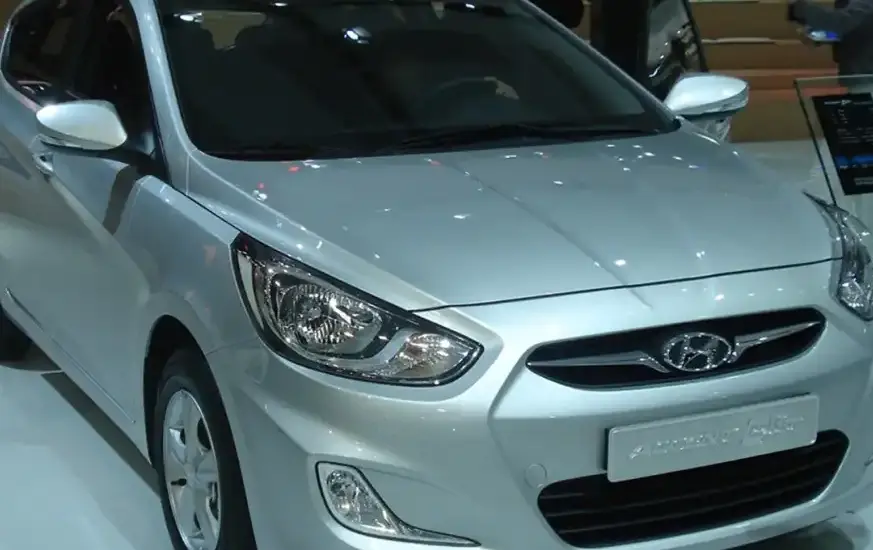
The Hyundai Solaris, specifically the first generation facelift model produced from 2014 to 2016, represented a significant step for Hyundai in the subcompact car segment, particularly within the Russian and Eastern European markets. Designed as an affordable and reliable vehicle, the Solaris aimed to compete directly with established players like the Skoda Rapid, Volkswagen Polo, and Renault Logan. The 1.6 MPI (123 hp) variant, equipped with a six-speed manual transmission, occupied a central position in the Solaris lineup, offering a balance between performance, fuel efficiency, and price. It was positioned as a step up from the base models, appealing to buyers seeking a more refined driving experience without the added cost of the optional automatic transmission or higher trim levels.
Technical Specifications
| Brand | Hyundai |
| Model | Solaris |
| Generation | Solaris I (facelift 2014) |
| Type (Engine) | 1.6 MPI (123 Hp) |
| Start of production | 2014 |
| End of production | 2016 |
| Powertrain Architecture | Internal Combustion engine |
| Body type | Hatchback |
| Seats | 5 |
| Doors | 5 |
| Fuel consumption (urban) | 8.1 l/100 km (29 US mpg, 34.9 UK mpg, 12.3 km/l) |
| Fuel consumption (extra urban) | 4.9 l/100 km (48 US mpg, 57.6 UK mpg, 20.4 km/l) |
| Fuel consumption (combined) | 6.1 l/100 km (38.6 US mpg, 46.3 UK mpg, 16.4 km/l) |
| Fuel Type | Petrol (Gasoline) |
| Acceleration 0 – 100 km/h | 10.3 sec |
| Acceleration 0 – 62 mph | 10.3 sec |
| Acceleration 0 – 60 mph | 9.8 sec |
| Maximum speed | 190 km/h (118.06 mph) |
| Emission standard | Euro 4 |
| Weight-to-power ratio | 10 kg/Hp, 100.3 Hp/tonne |
| Weight-to-torque ratio | 7.9 kg/Nm, 126.4 Nm/tonne |
| Power | 123 Hp @ 6300 rpm |
| Power per litre | 77.3 Hp/l |
| Torque | 155 Nm @ 4200 rpm (114.32 lb.-ft. @ 4200 rpm) |
| Engine layout | Front, Transverse |
| Engine displacement | 1591 cm3 (97.09 cu. in.) |
| Number of cylinders | 4 |
| Engine configuration | Inline |
| Number of valves per cylinder | 4 |
| Fuel injection system | Multi-port manifold injection |
| Engine aspiration | Naturally aspirated engine |
| Engine oil capacity | 3.6 l (3.8 US qt, 3.17 UK qt) |
| Coolant capacity | 5.3 l (5.6 US qt, 4.66 UK qt) |
| Kerb Weight | 1226 kg (2702.87 lbs.) |
| Max. weight | 1565 kg (3450.23 lbs.) |
| Max load | 339 kg (747.37 lbs.) |
| Trunk (boot) space – minimum | 370 l (13.07 cu. ft.) |
| Trunk (boot) space – maximum | 1043 l (36.83 cu. ft.) |
| Fuel tank capacity | 43 l (11.36 US gal, 9.46 UK gal) |
| Permitted trailer load with brakes (12%) | 1000 kg (2204.62 lbs.) |
| Permitted trailer load without brakes | 450 kg (992.08 lbs.) |
| Length | 4120 mm (162.2 in.) |
| Width | 1700 mm (66.93 in.) |
| Height | 1470 mm (57.87 in.) |
| Wheelbase | 2570 mm (101.18 in.) |
| Front track | 1495 mm (58.86 in.) |
| Rear (Back) track | 1502 mm (59.13 in.) |
| Ride height (ground clearance) | 160 mm (6.3 in.) |
| Minimum turning circle | 10.4 m (34.12 ft.) |
| Drivetrain Architecture | Front wheel drive |
| Number of gears and type of gearbox | 6 gears, manual transmission |
| Front suspension | Independent, type McPherson with coil spring and anti-roll bar |
| Rear suspension | Semi-independent, coil spring |
| Front brakes | Ventilated discs |
| Rear brakes | Disc |
| Assisting systems | ABS (Anti-lock braking system) |
| Steering type | Steering rack and pinion |
| Tires size | 185/65 R15; 195/55 R16 |
| Wheel rims size | 6.0J x 15; 6.0J x 16 |
Powertrain & Engine Architecture
The heart of this Solaris variant is the Hyundai G4FA 1.6-liter inline-four cylinder engine. This engine, a member of Hyundai’s Gamma family, utilizes a multi-point fuel injection system and a dual overhead camshaft (DOHC) valvetrain with four valves per cylinder. The engine’s design prioritizes fuel efficiency and reliability over outright performance. The 123 horsepower output at 6300 rpm and 155 Nm (114 lb-ft) of torque at 4200 rpm are respectable for its displacement and intended application. The six-speed manual transmission offered precise shifts and contributed to the car’s relatively engaging driving experience. The transmission’s gear ratios were tuned for a balance of acceleration and fuel economy, with a relatively tall sixth gear for highway cruising.
Driving Characteristics
The 1.6 MPI with a manual transmission provided a reasonably lively driving experience for a subcompact car. Acceleration from 0 to 60 mph took approximately 9.8 seconds, making it adequate for everyday driving and merging onto highways. While not a sports car, the engine felt responsive enough for most situations, and the manual transmission allowed drivers to maintain control over the power delivery. Compared to the automatic transmission version, the manual offered better acceleration and fuel economy. It also provided a more connected feel to the driving experience. Compared to potential upgrades like a 1.6 GDI engine, this MPI version lacked the direct injection’s added punch, but it was known for its smoother operation and potentially lower long-term maintenance costs.
Equipment & Trim Levels
The 1.6 MPI variant typically came equipped with standard features such as air conditioning, power windows, central locking, and a basic audio system. Higher trim levels added features like alloy wheels, fog lights, a more advanced audio system with Bluetooth connectivity, and a multi-function steering wheel. Interior upholstery was typically cloth, with a focus on durability rather than luxury. Optional extras included a rear parking sensor, heated front seats, and an upgraded infotainment system.
Chassis & Braking
The Solaris utilized a McPherson strut front suspension and a semi-independent coil spring rear suspension. This setup provided a comfortable ride quality, absorbing bumps and imperfections in the road reasonably well. The front brakes were ventilated discs, while the rear brakes were solid discs, providing adequate stopping power for the car’s weight and performance. ABS (Anti-lock Braking System) was standard, enhancing safety during emergency braking situations. The steering was a rack and pinion system, offering precise and responsive handling.
Market Reception & Comparison
The Hyundai Solaris 1.6 MPI was generally well-received by automotive critics and consumers alike. It was praised for its affordability, reliability, and fuel efficiency. Compared to its competitors, the Solaris offered a compelling value proposition, providing a good level of equipment and performance for its price. Fuel economy figures of around 38.6 US mpg combined were competitive within its class. However, some critics noted that the interior materials felt somewhat basic and that the engine lacked the refinement of some of its rivals. The manual transmission version was favored by drivers who appreciated its engaging driving experience and improved fuel economy.
Legacy
The Hyundai Solaris, and specifically the 1.6 MPI variant, established Hyundai as a serious contender in the subcompact car market. The engine proved to be remarkably durable and reliable, with many examples still on the road today. In the used car market, these Solaris models are often sought after for their affordability and low running costs. While not a particularly exciting car, the 1.6 MPI Solaris offered a practical and dependable transportation solution for a wide range of buyers, cementing its place as a popular choice in its segment.