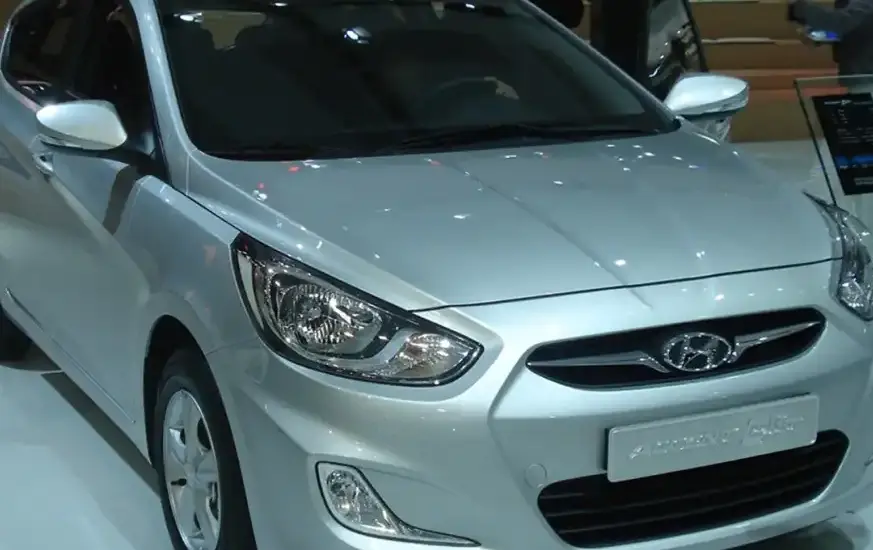
The Hyundai Solaris II Sedan 1.6 MPI (123 Hp) Automatic, launched in 2017, represents a significant iteration of Hyundai’s compact sedan designed primarily for the Russian and CIS markets. Positioned as a mainstream offering within the Solaris II generation (internally designated as the LB), this variant aimed to provide a balance of affordability, practicality, and modern features. It served as a key volume seller, bridging the gap between more basic trims and the slightly more upscale options available. The Solaris II built upon the success of the first-generation model, offering improved styling, interior refinement, and a more comprehensive suite of technology. This specific 1.6L engine and six-speed automatic transmission combination was a popular choice for buyers prioritizing ease of use and convenience over outright performance.
Technical Specifications
| Brand | Hyundai |
| Model | Solaris |
| Generation | Solaris II Sedan |
| Type (Engine) | 1.6 MPI (123 Hp) Automatic |
| Start of production | 2017 year |
| Powertrain Architecture | Internal Combustion engine |
| Body type | Sedan |
| Seats | 5 |
| Doors | 4 |
| Fuel consumption (urban) | 8.9 l/100 km (26.4 US mpg, 31.7 UK mpg, 11.2 km/l) |
| Fuel consumption (extra urban) | 5.3 l/100 km (44.4 US mpg, 53.3 UK mpg, 18.9 km/l) |
| Fuel consumption (combined) | 6.6 l/100 km (35.6 US mpg, 42.8 UK mpg, 15.2 km/l) |
| CO2 emissions | 153 g/km |
| Fuel Type | Petrol (Gasoline) |
| Acceleration 0 – 100 km/h | 11.2 sec |
| Acceleration 0 – 62 mph | 11.2 sec |
| Acceleration 0 – 60 mph | 10.6 sec |
| Maximum speed | 192 km/h (119.3 mph) |
| Emission standard | Euro 5 |
| Weight-to-power ratio | 9.7 kg/Hp, 102.7 Hp/tonne |
| Weight-to-torque ratio | 7.9 kg/Nm, 126 Nm/tonne |
| Power | 123 Hp @ 6300 rpm |
| Power per litre | 77.3 Hp/l |
| Torque | 151 Nm @ 4850 rpm (111.37 lb.-ft. @ 4850 rpm) |
| Engine layout | Front, Transverse |
| Engine displacement | 1591 cm3 (97.09 cu. in.) |
| Number of cylinders | 4 |
| Engine configuration | Inline |
| Number of valves per cylinder | 4 |
| Fuel injection system | Multi-port manifold injection |
| Engine aspiration | Naturally aspirated engine |
| Engine oil capacity | 3.6 l (3.8 US qt | 3.17 UK qt) |
| Coolant capacity | 5.6 l (5.92 US qt | 4.93 UK qt) |
| Kerb Weight | 1198 kg (2641.14 lbs.) |
| Max. weight | 1610 kg (3549.44 lbs.) |
| Max load | 412 kg (908.3 lbs.) |
| Trunk (boot) space – minimum | 480 l (16.95 cu. ft.) |
| Fuel tank capacity | 50 l (13.21 US gal | 11 UK gal) |
| Permitted trailer load with brakes (12%) | 800 kg (1763.7 lbs.) |
| Permitted trailer load without brakes | 450 kg (992.08 lbs.) |
| Length | 4405 mm (173.43 in.) |
| Width | 1729 mm (68.07 in.) |
| Height | 1469 mm (57.83 in.) |
| Wheelbase | 2600 mm (102.36 in.) |
| Front track | 1516-1510 mm (59.69 – 59.45 in.) |
| Rear (Back) track | 1524-1518 mm (60 – 59.76 in.) |
| Front overhang | 830 mm (32.68 in.) |
| Rear overhang | 975 mm (38.39 in.) |
| Ride height (ground clearance) | 160 mm (6.3 in.) |
| Drivetrain Architecture | The Internal combustion engine (ICE) drives the front wheels of the vehicle. |
| Drive wheel | Front wheel drive |
| Number of gears and type of gearbox | 6 gears, automatic transmission |
| Front suspension | Independent, type McPherson with coil spring and anti-roll bar |
| Rear suspension | Semi-independent, coil spring |
| Front brakes | Ventilated discs |
| Rear brakes | Disc |
| Assisting systems | ABS (Anti-lock braking system) |
| Steering type | Steering rack and pinion |
| Tires size | 185/65 R15; 195/55 R16 |
| Wheel rims size | 15; 16 |
Powertrain & Engine Architecture
The heart of this Solaris variant is the Hyundai G4FA 1.6-liter inline-four cylinder engine. This engine, a member of Hyundai’s Gamma family, utilizes a multi-point fuel injection (MPI) system. The G4FA is a naturally aspirated engine, meaning it doesn’t employ turbocharging or supercharging. It features a dual overhead camshaft (DOHC) valvetrain with four valves per cylinder, contributing to its relatively efficient breathing. The engine’s block is constructed from cast iron, while the cylinder head is made of aluminum. Paired with this engine is a six-speed automatic transmission, offering smooth shifts and convenience. This transmission is a conventional torque-converter automatic, prioritizing comfort and ease of use over the more aggressive shift patterns found in some dual-clutch transmissions. The transmission’s gear ratios are tuned for fuel efficiency and everyday drivability, rather than outright acceleration.
Driving Characteristics
The 1.6L MPI Automatic Solaris delivers a comfortable and predictable driving experience. With 123 horsepower and 151 Nm (111 lb-ft) of torque, acceleration is adequate for typical urban and highway driving, but it’s not particularly sporty. The 0-60 mph time of around 10.6 seconds reflects this. The automatic transmission contributes to a relaxed driving style, with smooth gear changes. However, it can sometimes feel hesitant during quick overtaking maneuvers. Compared to the manual transmission version of the same engine, the automatic sacrifices some responsiveness. The Solaris isn’t designed for spirited driving; instead, it prioritizes fuel economy and ease of operation. The steering is light and easy to use, making it well-suited for city driving.
Equipment & Trim Levels
The 1.6 MPI Automatic trim typically included standard features such as air conditioning, power windows, power door locks, and a basic audio system with USB connectivity. Higher trim levels, often denoted by “Comfort” or “Elegance” packages, added features like alloy wheels, fog lights, a more advanced audio system with Bluetooth, and a rear parking sensor. Interior upholstery was typically cloth, with options for upgraded materials on higher trims. Safety features included dual front airbags, ABS, and electronic stability control. The dashboard layout was functional and straightforward, prioritizing usability over aesthetic flair.
Chassis & Braking
The Solaris II utilizes a front-wheel-drive layout with an independent McPherson strut suspension in the front and a semi-independent torsion beam suspension in the rear. This suspension setup provides a comfortable ride quality, absorbing bumps and imperfections in the road surface effectively. The front brakes are ventilated discs, providing adequate stopping power, while the rear brakes are solid discs. ABS (Anti-lock Braking System) is standard, enhancing safety during emergency braking situations. The steering system employs a rack-and-pinion setup, offering precise and predictable handling.
Market Reception & Comparison
The Hyundai Solaris II 1.6 MPI Automatic was well-received in its target markets, particularly Russia and the CIS countries. Critics praised its affordability, reliability, and comfortable ride. However, some reviewers noted its lack of dynamic flair and relatively modest engine performance. Compared to other trims in the Solaris lineup, such as those equipped with manual transmissions, the automatic version offered less engaging driving experience but greater convenience. Fuel economy was generally considered good for its class, averaging around 6.6 l/100 km (35.6 US mpg). Its main competitors included the Skoda Rapid, Volkswagen Polo, and Renault Logan.
Legacy
The Hyundai Solaris II 1.6 MPI Automatic has proven to be a reliable and durable vehicle, with many examples still on the road today. The G4FA engine is known for its longevity and relatively low maintenance costs. While not a performance icon, this variant has earned a reputation as a practical and dependable family car. In the used car market, these Solaris models remain popular due to their affordability and proven track record. Common maintenance items include regular oil changes, air filter replacements, and occasional spark plug replacements. The automatic transmission, if properly maintained, is generally considered reliable.