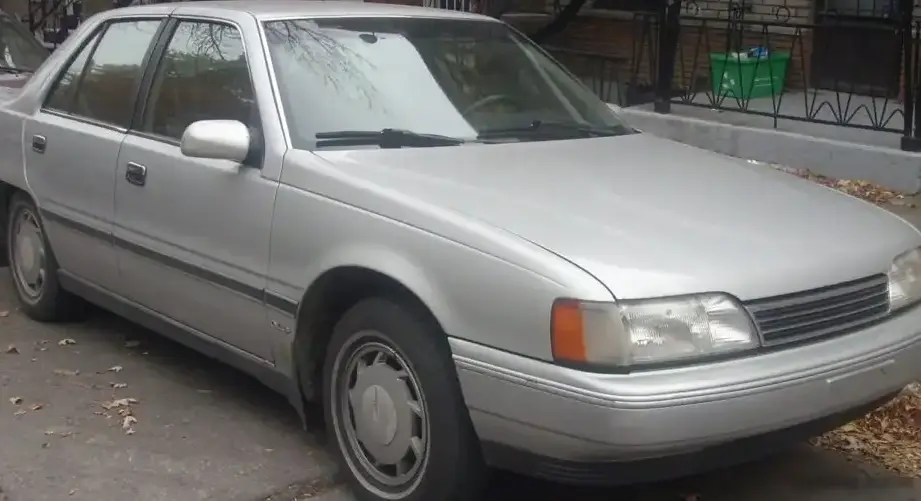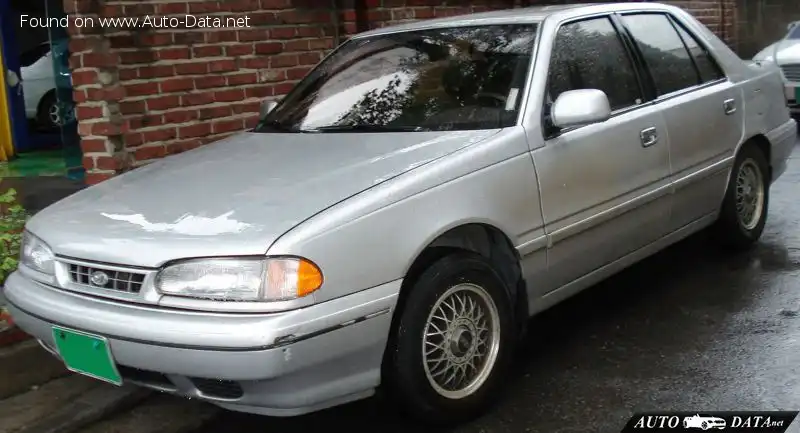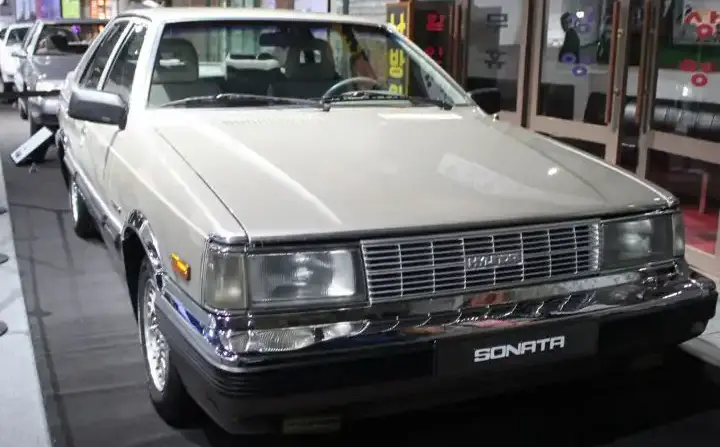
The Hyundai Sonata I (Y) 1.8i, produced between 1985 and 1987, represented a significant step for the South Korean automaker as it aimed to establish a presence in the mid-size sedan market. This initial Sonata generation, designated the Y platform, was a crucial model for Hyundai, marking its ambition to move beyond smaller, economy-focused vehicles. The 1.8i variant, powered by the G4BM engine, served as the entry point into the Sonata lineup, offering a balance of affordability and practicality for Korean and emerging export markets. It was positioned as a competitor to established Japanese sedans like the Toyota Corolla and Nissan Sentra, though with a distinctly Korean design aesthetic.
Technical Specifications
| Brand | Hyundai |
| Model | Sonata |
| Generation | Sonata I (Y) |
| Type (Engine) | 1.8i (100 Hp) |
| Start of production | 1985 |
| End of production | 1987 |
| Powertrain Architecture | Internal Combustion engine |
| Body type | Sedan |
| Seats | 5 |
| Doors | 4 |
| Fuel Type | Petrol (Gasoline) |
| Power | 100 Hp @ 5500 rpm |
| Power per litre | 55.7 Hp/l |
| Torque | 147 Nm @ 3500 rpm |
| Torque (lb-ft) | 108.42 lb.-ft. @ 3500 rpm |
| Engine Model/Code | G4BM |
| Engine displacement | 1795 cm3 |
| Engine displacement (cu. in.) | 109.54 cu. in. |
| Number of cylinders | 4 |
| Engine configuration | Inline |
| Number of valves per cylinder | 2 |
| Fuel injection system | Multi-port manifold injection |
| Engine aspiration | Naturally aspirated engine |
| Valvetrain | SOHC |
| Fuel tank capacity | 60 l |
| Fuel tank capacity (US gal) | 15.85 US gal |
| Fuel tank capacity (UK gal) | 13.2 UK gal |
| Length | 4578 mm |
| Length (in.) | 180.24 in. |
| Width | 1755 mm |
| Width (in.) | 69.09 in. |
| Height | 1381 mm |
| Height (in.) | 54.37 in. |
| Wheelbase | 2579 mm |
| Wheelbase (in.) | 101.54 in. |
| Front track | 1445 mm |
| Front track (in.) | 56.89 in. |
| Rear track | 1425 mm |
| Rear track (in.) | 56.1 in. |
| Drivetrain Architecture | Rear wheel drive |
| Drive wheel | Rear wheel drive |
| Number of gears | 5 |
| Gearbox type | Manual transmission |
| Tires size | 185/70 R14 |
| Wheel rims size | 5.5J x 14 |
Powertrain & Engine Architecture
The heart of the Sonata 1.8i was the G4BM engine, a 1.8-liter (1795 cc) inline-four cylinder gasoline engine. This engine featured a single overhead camshaft (SOHC) valvetrain with two valves per cylinder. The G4BM utilized a multi-port fuel injection system, a relatively modern feature for the mid-1980s, contributing to improved fuel efficiency and smoother operation compared to carbureted engines. While not a powerhouse, the engine produced 100 horsepower at 5500 rpm and 147 Nm (108.42 lb-ft) of torque at 3500 rpm. The engine was designed for reliability and ease of maintenance, reflecting Hyundai’s engineering philosophy at the time. The standard transmission was a five-speed manual, providing drivers with a reasonable degree of control over the engine’s power band.
Driving Characteristics
The 1.8i Sonata, equipped with the five-speed manual transmission, offered adequate, though not exhilarating, performance. Acceleration was modest, with a focus on fuel economy rather than outright speed. The engine’s torque peak at 3500 rpm meant that it felt reasonably responsive in everyday driving situations, such as merging onto highways or passing slower vehicles. The manual gearbox allowed drivers to maximize the available power, but the engine lacked the high-end punch of larger displacement engines. Compared to potential future upgrades or larger engine options within the Sonata range, the 1.8i prioritized efficiency and affordability. The rear-wheel-drive configuration provided a balanced feel, though handling was not particularly sporty.
Equipment & Trim Levels
The 1.8i Sonata was typically offered with a fairly basic level of equipment, reflecting its position as the entry-level model. Standard features generally included cloth upholstery, a basic AM/FM radio, and manual windows and door locks. Air conditioning was often an optional extra, as were features like a rear window defroster and upgraded interior trim. The dashboard layout was functional and straightforward, prioritizing usability over aesthetic flair. The interior space was a key selling point, offering comfortable seating for five passengers and a reasonably sized trunk. Trim levels were limited, with most variations stemming from the addition of optional packages.
Chassis & Braking
The Sonata I (Y) utilized a conventional rear-wheel-drive chassis with a MacPherson strut front suspension and a leaf spring rear suspension. This setup was common for sedans of this era and prioritized ride comfort over sporty handling. Braking was typically accomplished with disc brakes on the front wheels and drum brakes on the rear. Steering was unassisted, requiring more effort at low speeds. The suspension was tuned for a comfortable ride, absorbing bumps and imperfections in the road reasonably well. Stabilizer bars were not typically standard equipment on the base 1.8i model, further emphasizing the focus on comfort rather than performance.
Market Reception & Comparison
The Hyundai Sonata 1.8i received mixed reviews upon its introduction. Critics generally praised its spacious interior and competitive pricing, but noted that its performance and refinement were not on par with established Japanese competitors. Fuel economy was considered to be good for its class. Compared to other trims within the Sonata lineup, the 1.8i offered the most affordable entry point, appealing to budget-conscious buyers. However, it lacked the power and features of higher-spec models. The 1.8i’s reliability was generally considered to be acceptable, though it did not have the reputation for bulletproof dependability that some Japanese brands enjoyed at the time.
Legacy
The Hyundai Sonata I (Y) 1.8i played a vital role in establishing Hyundai as a credible automaker in the global market. While not a groundbreaking vehicle in terms of technology or performance, it offered a compelling value proposition and demonstrated Hyundai’s commitment to building reliable and affordable cars. The G4BM engine proved to be reasonably durable, and many examples of the 1.8i Sonata are still found on the road today, albeit often as classic or collector vehicles. The 1.8i variant, while often overlooked in favor of higher-spec models, represents an important chapter in Hyundai’s history, showcasing the company’s early efforts to compete in the fiercely competitive mid-size sedan segment. Its simplicity and relative affordability have made it a popular choice for restoration projects and a nostalgic reminder of Hyundai’s early ambitions.