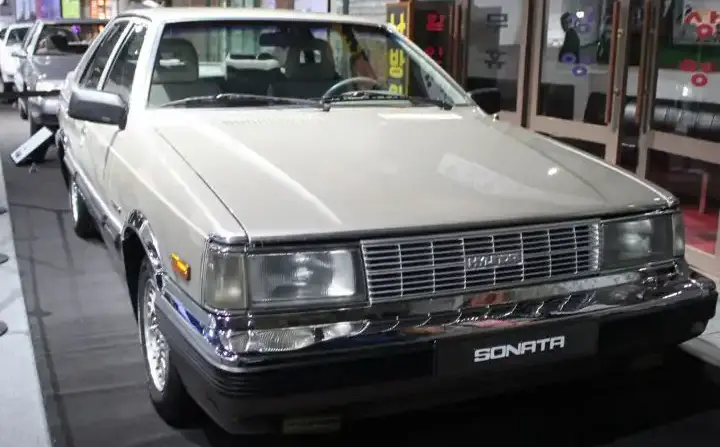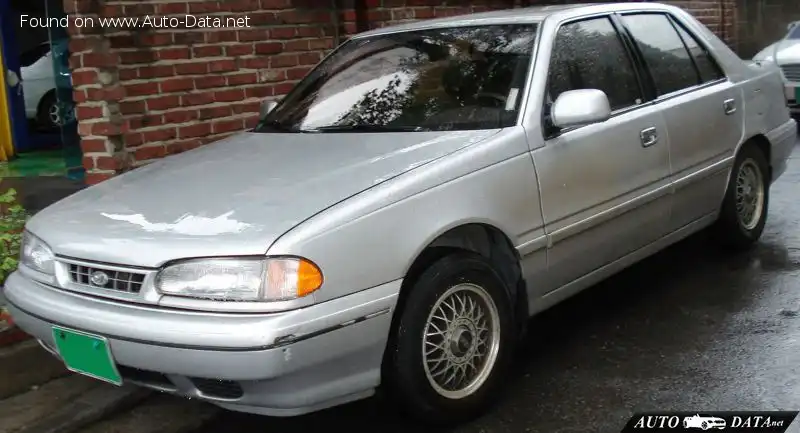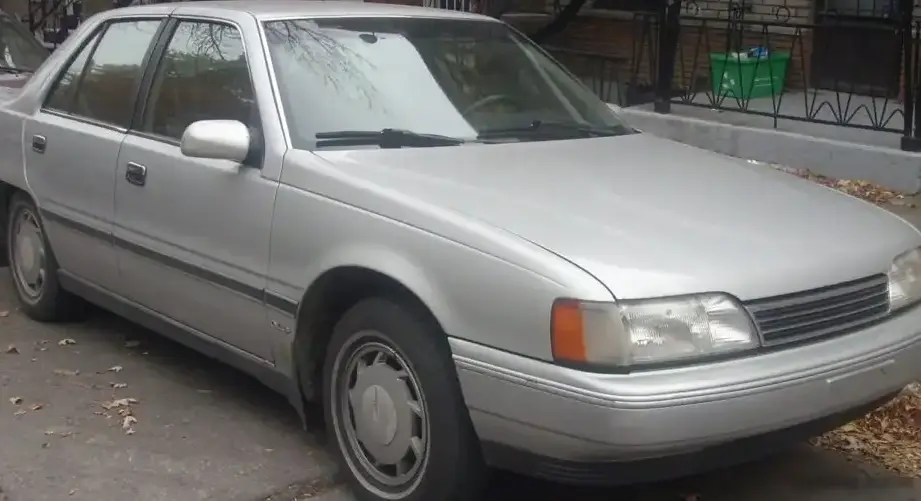
The Hyundai Sonata II (Y2), specifically the 3.0 V6 variant with an automatic transmission, was produced from 1990 to 1991. This model represented a significant step forward for Hyundai in the mid-size sedan segment, particularly as the company aimed to establish a stronger foothold in international markets. Positioned as a more upscale offering within the Y2 generation, the 3.0 V6 Automatic provided a blend of performance and convenience not found in the base models. It was a key component of Hyundai’s strategy to be recognized as a manufacturer capable of producing vehicles competitive with established Japanese and American brands.
Technical Specifications
| Brand | Hyundai |
| Model | Sonata |
| Generation | Sonata II (Y2) |
| Type (Engine) | 3.0 V6 (146 Hp) Automatic |
| Start of production | 1990 |
| End of production | 1991 |
| Powertrain Architecture | Internal Combustion engine |
| Body type | Sedan |
| Seats | 5 |
| Doors | 4 |
| Fuel consumption (urban) | 13.3 l/100 km (17.7 US mpg, 21.2 UK mpg, 7.5 km/l) |
| Fuel consumption (extra urban) | 7.8 l/100 km (30.2 US mpg, 36.2 UK mpg, 12.8 km/l) |
| Fuel consumption (combined) | 10.2 l/100 km (23.1 US mpg, 27.7 UK mpg, 9.8 km/l) |
| Fuel Type | Petrol (Gasoline) |
| Acceleration 0 – 100 km/h | 12.5 sec |
| Acceleration 0 – 62 mph | 12.5 sec |
| Acceleration 0 – 60 mph | 11.9 sec |
| Maximum speed | 183 km/h (113.71 mph) |
| Weight-to-power ratio | 8.8 kg/Hp, 113.6 Hp/tonne |
| Weight-to-torque ratio | 5.6 kg/Nm, 179 Nm/tonne |
| Power | 146 Hp @ 5000 rpm |
| Power per litre | 49.1 Hp/l |
| Torque | 230 Nm @ 2500 rpm (169.64 lb.-ft. @ 2500 rpm) |
| Engine layout | Front, Transverse |
| Engine displacement | 2972 cm3 (181.36 cu. in.) |
| Number of cylinders | 6 |
| Engine configuration | V-engine |
| Cylinder Bore | 91.1 mm (3.59 in.) |
| Piston Stroke | 76 mm (2.99 in.) |
| Compression ratio | 8.9:1 |
| Number of valves per cylinder | 2 |
| Fuel injection system | Multi-port manifold injection |
| Engine aspiration | Naturally aspirated engine |
| Valvetrain | SOHC |
| Kerb Weight | 1285 kg (2832.94 lbs.) |
| Trunk (boot) space – minimum | 473 l (16.7 cu. ft.) |
| Fuel tank capacity | 60 l (15.85 US gal | 13.2 UK gal) |
| Length | 4680 mm (184.25 in.) |
| Width | 1750 mm (68.9 in.) |
| Height | 1410 mm (55.51 in.) |
| Wheelbase | 2650 mm (104.33 in.) |
| Front track | 1455 mm (57.28 in.) |
| Rear (Back) track | 1440 mm (56.69 in.) |
| Drivetrain Architecture | The Internal combustion engine (ICE) drives the front wheels of the vehicle. |
| Drive wheel | Front wheel drive |
| Number of gears and type of gearbox | 4 gears, automatic transmission |
| Front suspension | Independent, type McPherson with coil spring and anti-roll bar |
| Rear suspension | Coil spring |
| Front brakes | Ventilated discs |
| Rear brakes | Disc |
| Assisting systems | ABS (Anti-lock braking system) |
| Steering type | Steering rack and pinion |
| Power steering | Hydraulic Steering |
| Tires size | 195/70 R14 |
| Wheel rims size | 14 |
INTRODUCTION
The Hyundai Sonata II (Y2) 3.0 V6 Automatic, produced between 1990 and 1991, represented a significant upgrade within the second-generation Sonata lineup. Building upon the foundation laid by the initial Y2 models, this variant aimed to offer a more refined and powerful driving experience. It was positioned as a step above the base 2.0-liter four-cylinder models, targeting buyers who desired a more premium feel and enhanced performance. The Y2 generation itself was a crucial model for Hyundai, as it marked the company’s increasing ambition to compete directly with established automotive manufacturers, particularly in the North American market.
Powertrain & Engine Architecture
At the heart of the Sonata II 3.0 V6 Automatic lies the 2.972-liter (181.36 cubic inches) V6 engine. This engine, internally designated with various codes depending on the specific market, produced 146 horsepower at 5000 rpm and 230 Nm (169.64 lb-ft) of torque at 2500 rpm. The engine featured a single overhead camshaft (SOHC) valvetrain with two valves per cylinder. Fuel delivery was managed by a multi-port fuel injection system, contributing to improved efficiency and responsiveness compared to earlier carbureted designs. The engine’s transverse mounting and front-wheel-drive configuration were typical for vehicles of this class during the early 1990s. The automatic transmission was a four-speed unit, designed to provide smooth and convenient gear changes. While not a particularly advanced transmission by modern standards, it was well-suited to the engine’s power characteristics and the intended market for the vehicle.
Driving Characteristics
The 3.0 V6 Automatic Sonata offered a noticeable performance improvement over the base four-cylinder models. Acceleration from 0 to 60 mph took approximately 11.9 seconds, and the car could reach a top speed of 183 km/h (113.71 mph). The automatic transmission, while providing ease of use, did result in some power loss compared to a manual transmission. Gear ratios were tuned for a balance between acceleration and fuel economy, prioritizing comfortable cruising over outright performance. The suspension, featuring McPherson struts in the front and coil springs in the rear, provided a reasonably comfortable ride, although it wasn’t particularly sporty. The steering, utilizing a rack and pinion system with hydraulic assistance, offered adequate feedback and ease of maneuverability.
Equipment & Trim Levels
The 3.0 V6 Automatic trim typically included features such as power steering, air conditioning, and an upgraded interior compared to the base models. Interior upholstery was often cloth, with options for upgraded materials available. The dashboard layout was functional and straightforward, with clearly labeled controls. Optional extras could include power windows, power locks, and a cassette stereo system. The level of standard equipment varied depending on the specific market and any packages selected by the buyer. Generally, this trim level aimed to provide a comfortable and well-equipped driving experience without the expense of a fully loaded luxury model.
Chassis & Braking
The Sonata II featured a front-wheel-drive chassis with independent McPherson strut suspension in the front and a coil spring setup in the rear. The front brakes were ventilated discs, providing good stopping power, while the rear brakes were solid discs. An anti-lock braking system (ABS) was included as standard equipment, enhancing safety and control during emergency braking situations. The chassis was designed to provide a balance between ride comfort and handling stability. Stabilizer bars were incorporated to reduce body roll during cornering, improving overall handling characteristics.
Market Reception & Comparison
The Hyundai Sonata II 3.0 V6 Automatic was generally well-received by critics as a competent and value-oriented mid-size sedan. It offered a compelling alternative to established Japanese and American competitors, particularly in terms of price. However, some reviewers noted that the automatic transmission slightly diminished the engine’s performance potential. Compared to the base four-cylinder models, the V6 Automatic provided a significant upgrade in power and refinement. Fuel economy, at 10.2 l/100 km (23.1 US mpg), was reasonable for a V6 engine of this era. Reliability was generally considered good, although some owners reported minor issues with the electrical system.
Legacy
The Hyundai Sonata II 3.0 V6 Automatic, while not a groundbreaking vehicle, played a crucial role in establishing Hyundai’s reputation as a manufacturer capable of producing competitive and reliable automobiles. The powertrain, while not known for exceptional longevity, proved to be reasonably durable with proper maintenance. Today, these vehicles are relatively rare and are often sought after by collectors and enthusiasts interested in classic Korean automobiles. The 3.0 V6 Automatic variant remains a testament to Hyundai’s ambition and progress during the early 1990s, marking a significant step in the company’s journey towards becoming a global automotive leader.