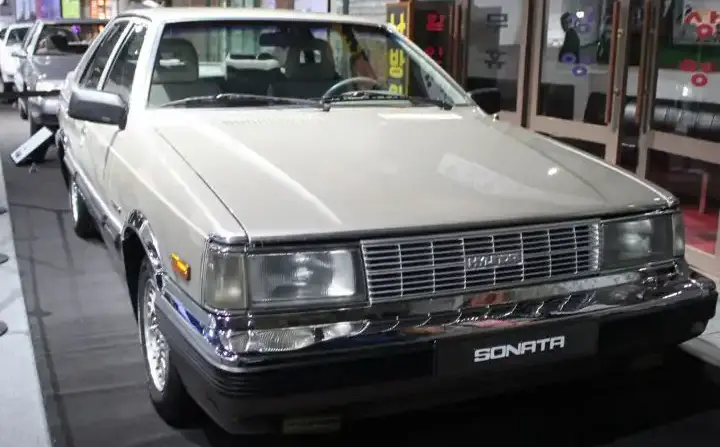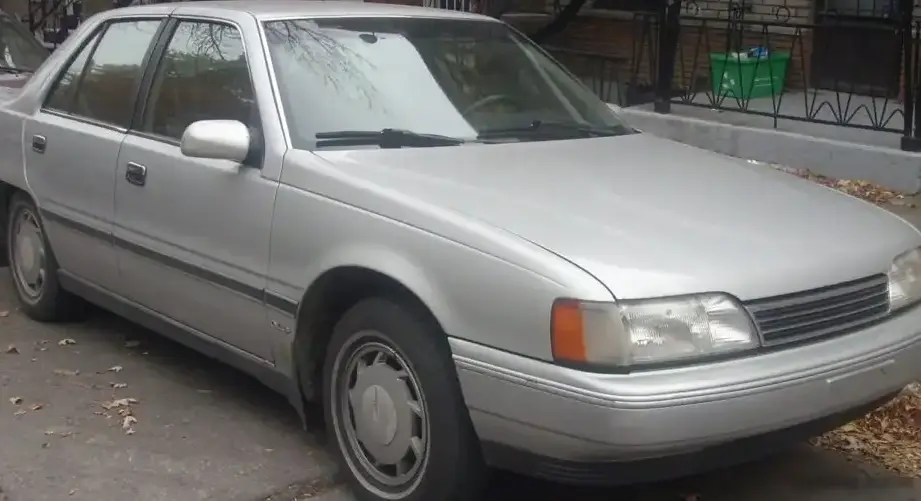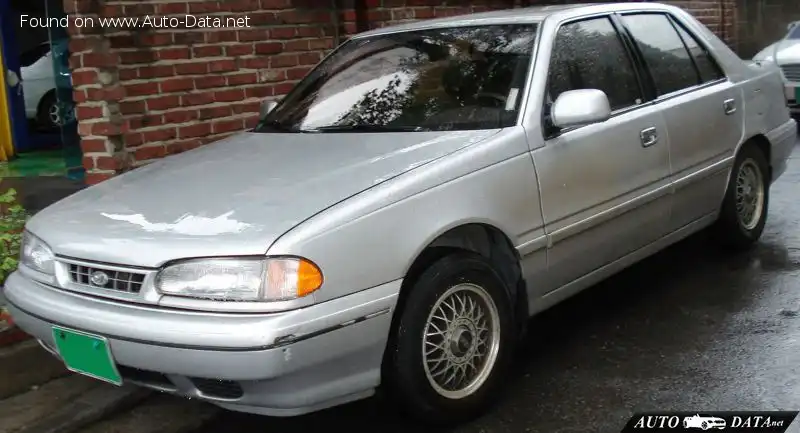
The Hyundai Sonata III (Y3), particularly the facelifted version introduced in 1996, marked a significant advancement for Hyundai as it sought to establish a stronger foothold in international automotive markets. Produced between 1996 and 1998, the Y3 Sonata aimed to deliver a compelling combination of affordability, practicality, and increasingly, modern features. The 2.0i 16V variant, generating 146 horsepower, occupied a mid-range position within the Sonata III lineup, sitting above the base models and below the more premium trims. This version was primarily targeted towards buyers desiring a balance between performance and fuel economy, offering a more refined driving experience than the lower-powered options available.
Technical Specifications
| Brand | Hyundai |
| Model | Sonata |
| Generation | Sonata III (Y3, facelift 1996) |
| Type (Engine) | 2.0i 16V (146 Hp) |
| Start of production | 1996 |
| End of production | 1998 |
| Powertrain Architecture | Internal Combustion engine |
| Body type | Sedan |
| Seats | 5 |
| Doors | 4 |
| Fuel Type | Petrol (Gasoline) |
| Weight-to-power ratio | 9.1 kg/Hp, 109.8 Hp/tonne |
| Weight-to-torque ratio | 7.1 kg/Nm, 141.4 Nm/tonne |
| Power | 146 Hp @ 6000 rpm |
| Power per litre | 73.1 Hp/l |
| Torque | 188 Nm @ 4000 rpm (138.66 lb.-ft. @ 4000 rpm) |
| Engine layout | Front, Transverse |
| Engine displacement | 1997 cm3 (121.86 cu. in.) |
| Number of cylinders | 4 |
| Engine configuration | Inline |
| Cylinder Bore | 85 mm (3.35 in.) |
| Piston Stroke | 88 mm (3.46 in.) |
| Compression ratio | 9:1 |
| Number of valves per cylinder | 4 |
| Fuel injection system | Multi-port manifold injection |
| Engine aspiration | Naturally aspirated engine |
| Valvetrain | DOHC |
| Kerb Weight | 1330 kg (2932.15 lbs.) |
| Trunk (boot) space – minimum | 373 l (13.17 cu. ft.) |
| Fuel tank capacity | 65 l (17.17 US gal | 14.3 UK gal) |
| Length | 4700 mm (185.04 in.) |
| Width | 1770 mm (69.69 in.) |
| Height | 1405 mm (55.31 in.) |
| Wheelbase | 2700 mm (106.3 in.) |
| Front track | 1520 mm (59.84 in.) |
| Rear (Back) track | 1510 mm (59.45 in.) |
| Ride height (ground clearance) | 170 mm (6.69 in.) |
| Drag coefficient (Cd) | 0.35 |
| Minimum turning circle (turning diameter) | 10.5 m (34.45 ft.) |
| Drivetrain Architecture | The Internal combustion engine (ICE) drives the front wheels of the vehicle. |
| Drive wheel | Front wheel drive |
| Number of gears and type of gearbox | 5 gears, manual transmission |
| Front suspension | Independent, type McPherson with coil spring and anti-roll bar |
| Rear suspension | Independent multi-link suspension |
| Front brakes | Ventilated discs |
| Rear brakes | Disc |
| Assisting systems | ABS (Anti-lock braking system) |
| Steering type | Steering rack and pinion |
| Power steering | Hydraulic Steering |
| Tires size | 195/70 R14 |
| Wheel rims size | 14 |
Powertrain & Engine Architecture
The Hyundai Sonata III 2.0i 16V was powered by a Hyundai-developed, naturally aspirated 2.0-liter inline-four cylinder engine. This engine, often identified by its internal engine code, featured a multi-port fuel injection system for precise fuel delivery. The 16-valve DOHC (Dual Overhead Camshaft) configuration enhanced engine breathing and allowed for higher engine speeds, contributing to the 146 horsepower output. A compression ratio of 9:1 was typical for the era, striking a balance between performance, fuel efficiency, and compatibility with the octane levels of available gasoline. The engine was mounted transversely at the front of the vehicle, powering the front wheels. A five-speed manual transmission was the standard transmission, giving drivers direct control over the engine’s powerband.
Driving Characteristics
The 2.0i 16V Sonata offered a noticeable improvement in performance compared to the base engine options. While not a performance-oriented sedan, the 146 hp engine provided sufficient power for everyday driving and highway cruising. The five-speed manual transmission allowed drivers to maintain the engine within its optimal power range, resulting in reasonably quick acceleration. The gear ratios were tuned to balance fuel economy and responsiveness. Compared to the lower-powered versions, the 2.0i felt more confident during overtaking maneuvers or when ascending hills. However, it lacked the outright acceleration of more powerful competitors or even higher-specification Sonata trims.
Equipment & Trim Levels
The 2.0i 16V trim generally included features such as power windows and locks, a basic audio system, and cloth upholstery. Air conditioning was frequently standard, although its availability could vary depending on the specific market. Optional extras included a sunroof, upgraded audio systems, and alloy wheels. The interior design was functional and straightforward, prioritizing practicality over luxury. The dashboard layout was characteristic of the mid-1990s, featuring clearly labeled controls and a relatively simple instrument cluster.
Chassis & Braking
The Sonata III employed an independent suspension system on all four wheels. The front suspension utilized a McPherson strut design with coil springs and an anti-roll bar, while the rear featured an independent multi-link suspension. This setup aimed to provide a comfortable ride while maintaining reasonable handling characteristics. Braking was provided by ventilated discs at the front and solid discs at the rear. An Anti-lock Braking System (ABS) was standard, enhancing safety by preventing wheel lockup during hard braking. The steering system was a rack-and-pinion setup with hydraulic power assistance, offering light and precise steering feel.
Market Reception & Comparison
The Hyundai Sonata III 2.0i 16V was generally well-received by automotive critics as a solid, value-oriented family sedan. It was praised for its spacious interior, comfortable ride, and competitive price point. Some reviewers noted that the engine lacked the refinement and power of its Japanese and European rivals. Fuel economy was considered respectable for the time, though not class-leading. Compared to other trims in the Sonata lineup, the 2.0i 16V offered a good balance between performance and affordability, making it a popular choice for buyers who didn’t require the extra power of the higher-spec models.
Legacy
The Hyundai Sonata III 2.0i 16V, while not a particularly rare or collectible vehicle today, represents a significant milestone in Hyundai’s history. It demonstrated the company’s growing capability to produce competitive, modern automobiles. The 2.0-liter engine proved to be relatively reliable, and many examples remain on the road today. In the used car market, these Sonatas are often sought after by budget-conscious buyers seeking a dependable and affordable transportation option. Maintenance is generally straightforward, and parts availability remains reasonable, contributing to the continued viability of these vehicles.