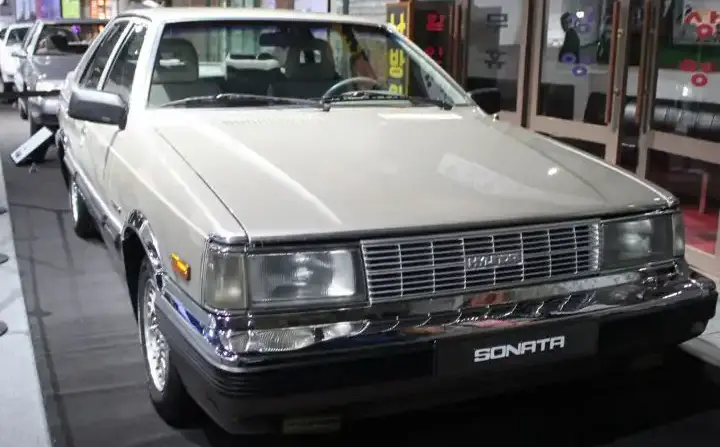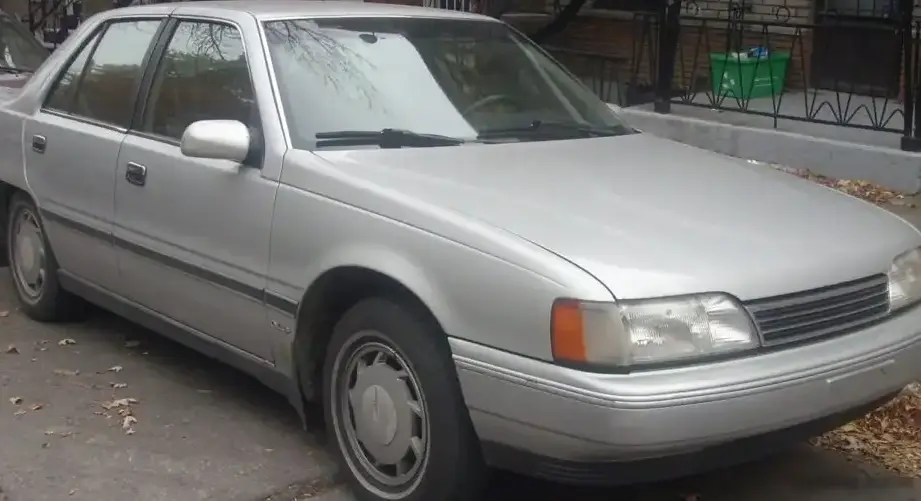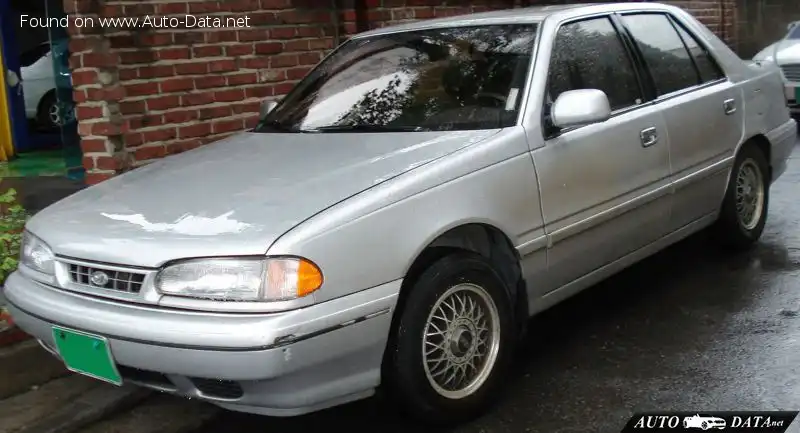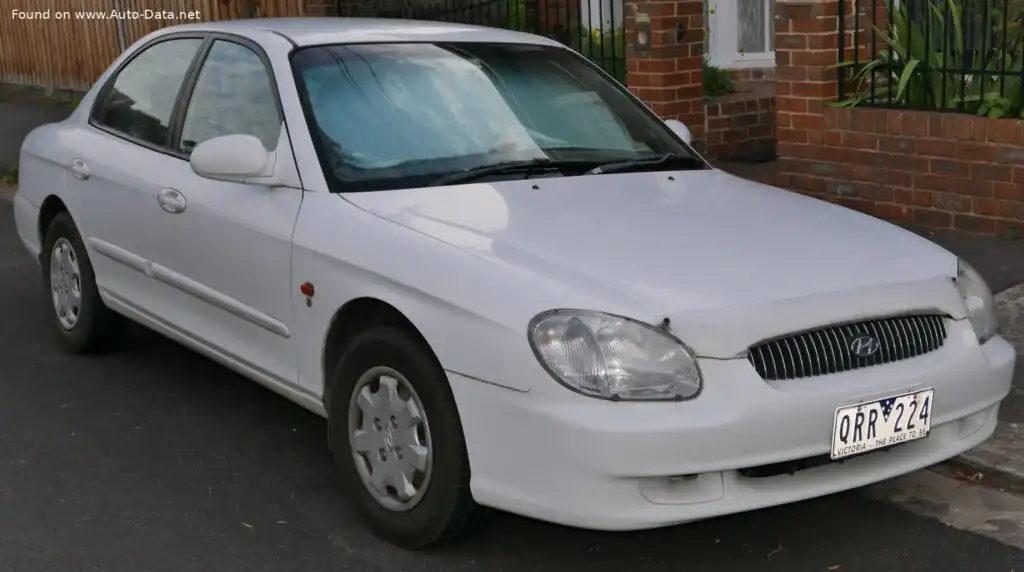
The Hyundai Sonata IV (EF) 2.0, equipped with a 136 horsepower engine and automatic transmission, was a significant model for Hyundai as it aimed to establish itself as a serious competitor in the mid-size sedan segment. Produced from 1998 to 2001, this variant occupied a middle ground within the EF Sonata lineup, offering a balance between affordability and convenience. It represented a step up from the base models, while remaining more accessible than the higher-specification trims. The EF generation, internally designated 1HX0, was a pivotal point for Hyundai, showcasing improved design, build quality, and features compared to its predecessors.
Technical Specifications
| Brand | Hyundai |
| Model | Sonata |
| Generation | Sonata IV (EF) |
| Type (Engine) | 2.0 (136 Hp) Automatic |
| Start of production | 1998 |
| End of production | 2001 |
| Powertrain Architecture | Internal Combustion engine |
| Body type | Sedan |
| Seats | 5 |
| Doors | 4 |
| Fuel consumption (urban) | 13.3 l/100 km (17.7 US mpg, 21.2 UK mpg, 7.5 km/l) |
| Fuel consumption (extra urban) | 7.1 l/100 km (33.1 US mpg, 39.8 UK mpg, 14.1 km/l) |
| Fuel consumption (combined) | 9.4 l/100 km (25 US mpg, 30.1 UK mpg, 10.6 km/l) |
| Fuel Type | Petrol (Gasoline) |
| Acceleration 0 – 100 km/h | 10.5 sec |
| Acceleration 0 – 62 mph | 10.5 sec |
| Acceleration 0 – 60 mph | 10 sec |
| Maximum speed | 190 km/h (118.06 mph) |
| Emission standard | Euro 2 |
| Weight-to-power ratio | 9.9 kg/Hp, 101.5 Hp/tonne |
| Weight-to-torque ratio | 7.4 kg/Nm, 134.3 Nm/tonne |
| Power | 136 Hp @ 5800 rpm |
| Power per litre | 68.1 Hp/l |
| Torque | 180 Nm @ 4600 rpm (132.76 lb.-ft. @ 4600 rpm) |
| Engine layout | Front, Transverse |
| Engine Model/Code | Sirius II / G4JP |
| Engine displacement | 1997 cm3 (121.86 cu. in.) |
| Number of cylinders | 4 |
| Engine configuration | Inline |
| Cylinder Bore | 85 mm (3.35 in.) |
| Piston Stroke | 88 mm (3.46 in.) |
| Compression ratio | 10:1 |
| Number of valves per cylinder | 4 |
| Fuel injection system | Multi-port manifold injection |
| Engine aspiration | Naturally aspirated engine |
| Valvetrain | DOHC |
| Engine oil capacity | 4 l (4.23 US qt | 3.52 UK qt) |
| Kerb Weight | 1340 kg (2954.19 lbs.) |
| Max. weight | 1910 kg (4210.83 lbs.) |
| Max load | 570 kg (1256.63 lbs.) |
| Trunk (boot) space – minimum | 396 l (13.98 cu. ft.) |
| Fuel tank capacity | 65 l (17.17 US gal | 14.3 UK gal) |
| Length | 4710 mm (185.43 in.) |
| Width | 1818 mm (71.57 in.) |
| Height | 1410 mm (55.51 in.) |
| Wheelbase | 2700 mm (106.3 in.) |
| Front track | 1540 mm (60.63 in.) |
| Rear (Back) track | 1520 mm (59.84 in.) |
| Drag coefficient (Cd) | 0.32 |
| Minimum turning circle | 10.5 m (34.45 ft.) |
| Drivetrain Architecture | The Internal combustion engine (ICE) drives the front wheels of the vehicle. |
| Drive wheel | Front wheel drive |
| Number of gears and type of gearbox | 4 gears, automatic transmission |
| Front suspension | Independent, type McPherson with coil spring and anti-roll bar |
| Rear suspension | Independent multi-link suspension |
| Front brakes | Ventilated discs |
| Rear brakes | Disc |
| Assisting systems | ABS (Anti-lock braking system) |
| Steering type | Steering rack and pinion |
| Power steering | Hydraulic Steering |
| Tires size | 205/60 R15 |
| Wheel rims size | 15 |
Powertrain & Engine Architecture
The heart of the Sonata 2.0 Automatic was the Hyundai Sirius II engine, designated G4JP. This 1.997-liter inline-four cylinder engine utilized a multi-port fuel injection system, delivering a respectable 136 horsepower at 5800 rpm and 180 Nm (132.76 lb-ft) of torque at 4600 rpm. The engine featured a double overhead camshaft (DOHC) valvetrain with four valves per cylinder, contributing to its relatively efficient operation. The automatic transmission was a conventional four-speed unit, chosen for its ease of use and appeal to a broader customer base. While not offering the sporty engagement of a manual transmission, it provided smooth shifts and convenient operation in urban environments.
Driving Characteristics
The 2.0-liter automatic Sonata offered a comfortable, if not particularly exhilarating, driving experience. Acceleration from 0 to 60 mph took around 10 seconds, and top speed was limited to 190 km/h (118 mph). Compared to the manual transmission versions of the same engine, the automatic suffered a slight performance penalty due to the inherent losses in the torque converter. However, the automatic’s gear ratios were tuned for everyday drivability, providing adequate power for merging onto highways and passing other vehicles. The suspension, tuned for comfort, absorbed bumps and imperfections in the road well, making it a pleasant cruiser.
Equipment & Trim Levels
The 2.0 Automatic trim typically included features such as air conditioning, power windows and locks, and an AM/FM radio with cassette player. Higher trim levels offered upgrades like alloy wheels, a sunroof, and upgraded interior upholstery. The interior generally featured a straightforward layout with durable materials. Optional extras included a CD player, cruise control, and upgraded sound systems. The Sonata aimed to provide a good value proposition, offering a reasonable level of equipment for its price point.
Chassis & Braking
The Sonata EF utilized an independent McPherson strut suspension in the front and an independent multi-link suspension in the rear, providing a comfortable ride and decent handling characteristics. Front brakes were ventilated discs, while rear brakes were solid discs. Anti-lock Braking System (ABS) was standard, enhancing safety by preventing wheel lockup during hard braking. The steering was rack and pinion with hydraulic power assistance, offering a responsive and easy-to-use feel. The 205/60 R15 tires provided adequate grip for most driving conditions.
Market Reception & Comparison
The Hyundai Sonata IV (EF) 2.0 Automatic was generally well-received by critics as a solid and reliable mid-size sedan. It offered a compelling alternative to established Japanese and American competitors, particularly in terms of value for money. Fuel economy was respectable, averaging around 25 mpg in combined driving. Compared to the higher-output V6 Sonata, the 2.0 Automatic was less powerful but more fuel-efficient and affordable. It also offered a smoother and more refined driving experience than the base 2.0 manual transmission models.
Legacy
The Hyundai Sonata EF 2.0 Automatic has proven to be a relatively reliable vehicle, with many examples still on the road today. The Sirius II engine is known for its durability, and the four-speed automatic transmission is generally dependable. However, like any vehicle of this age, regular maintenance is crucial to ensure longevity. Common issues include wear and tear on suspension components and potential for oil leaks. In the used car market, the EF Sonata 2.0 Automatic remains an affordable and practical option for those seeking a dependable mid-size sedan.