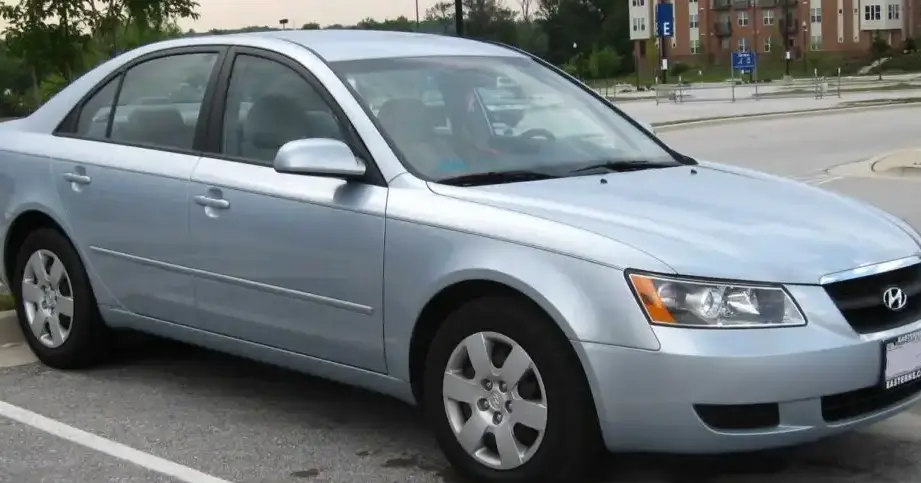
The Hyundai Sonata V (NF) 2.7i V6 Automatic, produced between 2006 and 2008, represented a significant step forward for Hyundai in the mid-size sedan segment. Part of the fifth generation Sonata (NF), this variant offered a blend of comfort, space, and a relatively powerful V6 engine paired with a four-speed automatic transmission. It aimed to appeal to buyers seeking a more refined and capable family sedan than Hyundai had previously offered, particularly in the North American market where the Sonata was gaining traction. This trim level positioned itself as a mid-range offering within the NF Sonata lineup, slotting above the base 2.4L models and below the more luxurious and often better-equipped Limited trims.
Technical Specifications
| Brand | Hyundai |
| Model | Sonata |
| Generation | Sonata V (NF) |
| Type (Engine) | 2.7i V6 (172 Hp) Automatic |
| Start of production | 2006 |
| End of production | 2008 |
| Powertrain Architecture | Internal Combustion engine |
| Body type | Sedan |
| Seats | 5 |
| Doors | 4 |
| Fuel Type | Petrol (Gasoline) |
| Acceleration 0 – 100 km/h | 9.7 sec |
| Acceleration 0 – 62 mph | 9.7 sec |
| Acceleration 0 – 60 mph | 9.2 sec |
| Maximum speed | 210 km/h (130.49 mph) |
| Weight-to-power ratio | 8.5 kg/Hp, 117.6 Hp/tonne |
| Weight-to-torque ratio | 5.9 kg/Nm, 170.9 Nm/tonne |
| Power | 172 Hp @ 6000 rpm |
| Power per litre | 64.8 Hp/l |
| Torque | 250 Nm @ 4000 rpm (184.39 lb.-ft. @ 4000 rpm) |
| Engine layout | Front, Transverse |
| Engine displacement | 2656 cm3 (162.08 cu. in.) |
| Number of cylinders | 6 |
| Engine configuration | V-engine |
| Cylinder Bore | 86.7 mm (3.41 in.) |
| Piston Stroke | 75 mm (2.95 in.) |
| Compression ratio | 10:1 |
| Number of valves per cylinder | 4 |
| Fuel injection system | Multi-port manifold injection |
| Engine aspiration | Naturally aspirated engine |
| Valvetrain | DOHC |
| Kerb Weight | 1463 kg (3225.36 lbs.) |
| Max. weight | 2030 kg (4475.38 lbs.) |
| Max load | 567 kg (1250.02 lbs.) |
| Trunk (boot) space – minimum | 523 l (18.47 cu. ft.) |
| Fuel tank capacity | 70 l (18.49 US gal | 15.4 UK gal) |
| Length | 4800 mm (188.98 in.) |
| Width | 1832 mm (72.13 in.) |
| Height | 1474 mm (58.03 in.) |
| Wheelbase | 2730 mm (107.48 in.) |
| Front track | 1565 mm (61.61 in.) |
| Rear (Back) track | 1550 mm (61.02 in.) |
| Drivetrain Architecture | The Internal combustion engine (ICE) drives the front wheels of the vehicle. |
| Drive wheel | Front wheel drive |
| Number of gears and type of gearbox | 4 gears, automatic transmission |
| Front suspension | Double wishbone |
| Rear suspension | Transverse stabilizer |
| Front brakes | Ventilated discs |
| Rear brakes | Disc |
| Steering type | Steering rack and pinion |
| Tires size | 215/60 R16 |
| Wheel rims size | 6.5 X 16 |
Powertrain & Engine Architecture
The heart of the Sonata V 2.7i was the Hyundai-developed 2.7-liter (2656 cc) DOHC 24-valve V6 engine. This engine, internally designated as the G27, featured multi-port fuel injection and a 10:1 compression ratio. While not a cutting-edge design by 2006 standards, it provided a respectable 172 horsepower at 6000 rpm and 250 Nm (184 lb-ft) of torque at 4000 rpm. The engine’s architecture was relatively conventional, prioritizing reliability and smooth operation over outright performance. The four-speed automatic transmission, while adequate, was beginning to show its age compared to newer transmissions with more gears. It was chosen for its cost-effectiveness and perceived smoothness, but it did impact fuel economy and acceleration compared to a manual transmission or a more modern automatic.
Driving Characteristics
The 2.7L V6 with the four-speed automatic delivered a comfortable and predictable driving experience. Acceleration to 60 mph took around 9.2-9.7 seconds, which was competitive for the class but noticeably slower than the 2.4L models equipped with a manual transmission. The automatic transmission’s gear ratios were tuned for fuel efficiency and smooth cruising, rather than aggressive acceleration. The engine provided sufficient power for everyday driving and highway merging, but lacked the responsiveness of the higher-output engines available in other Sonata trims. The front-wheel-drive configuration offered predictable handling, but wasn’t particularly sporty.
Equipment & Trim Levels
The 2.7i V6 Automatic trim typically included features such as air conditioning, power windows and locks, a CD player with an auxiliary input, and basic cloth upholstery. Optional extras often included a sunroof, upgraded audio system, alloy wheels, and cruise control. Safety features like anti-lock brakes (ABS) were standard, but side airbags and stability control were often optional, depending on the specific package selected. The interior design was functional and spacious, but the materials used were generally of average quality compared to some of its Japanese competitors.
Chassis & Braking
The Sonata V utilized a front double wishbone suspension and a rear transverse stabilizer setup. This configuration provided a comfortable ride, but wasn’t particularly focused on handling precision. The front brakes were ventilated discs, while the rear brakes were solid discs, providing adequate stopping power for the vehicle’s weight and performance. Steering was rack and pinion, offering reasonable feel and responsiveness. The standard tire size was 215/60 R16, mounted on 6.5 x 16 inch wheels.
Market Reception & Comparison
The Sonata V 2.7i V6 Automatic received generally positive reviews, with critics praising its spacious interior, comfortable ride, and value for money. However, the four-speed automatic transmission was often criticized for being outdated and impacting fuel economy. Compared to the base 2.4L models, the 2.7i offered a noticeable power increase, but at a higher price point. Compared to the more expensive Limited trims, it offered a similar level of equipment but lacked some of the luxury features. Fuel economy was rated around 19 mpg city and 28 mpg highway, which was typical for a V6 sedan of that era.
Legacy
The Hyundai Sonata V 2.7i V6 Automatic, while not a standout performer, played a crucial role in establishing Hyundai as a credible competitor in the mid-size sedan market. The G27 V6 engine proved to be relatively reliable, and many examples are still on the road today. However, the four-speed automatic transmission is a potential weak point, and finding one in good condition can be challenging. In the used car market, these Sonatas are often valued for their affordability and practicality, making them a popular choice for budget-conscious buyers. The NF Sonata generation, as a whole, is remembered as a turning point for Hyundai, demonstrating the brand’s commitment to improving quality and offering competitive vehicles.