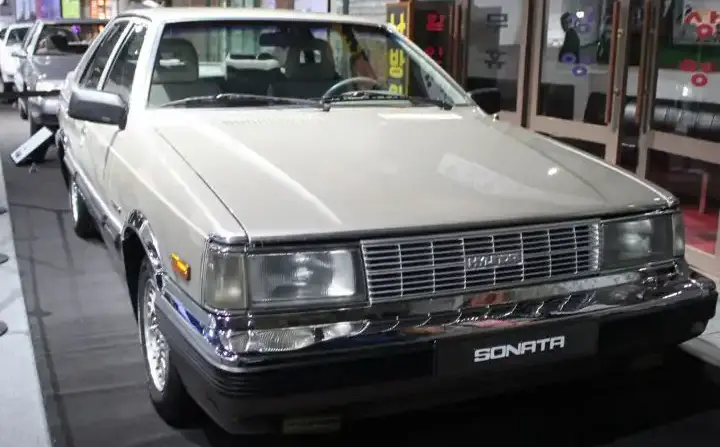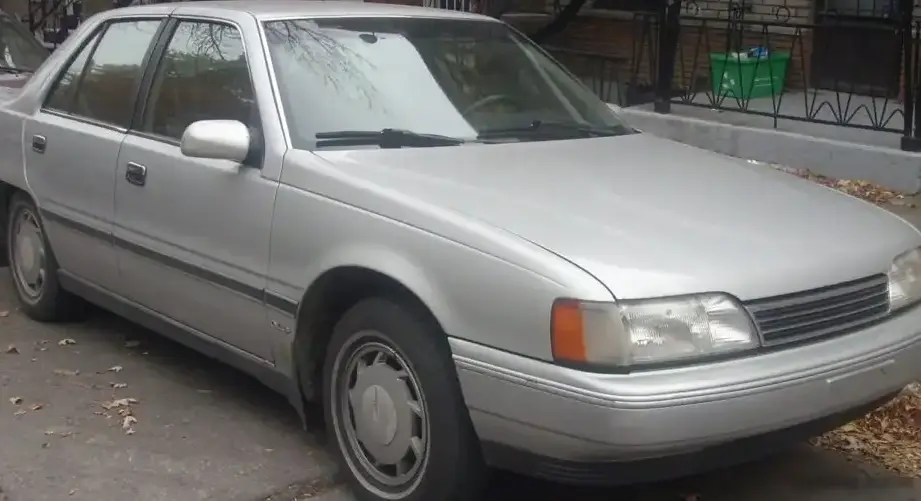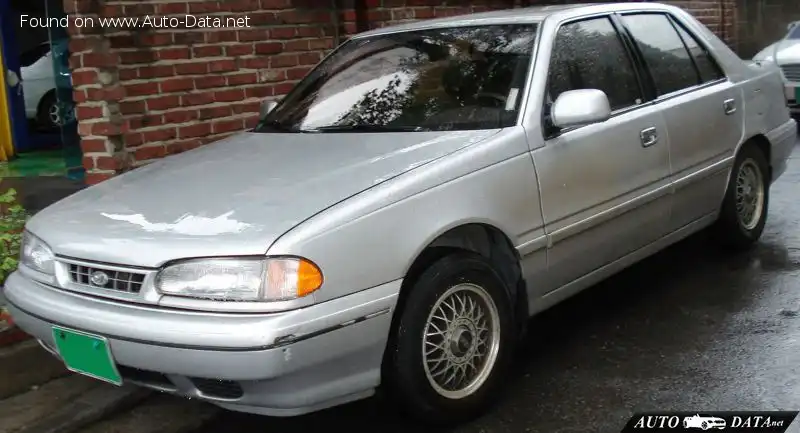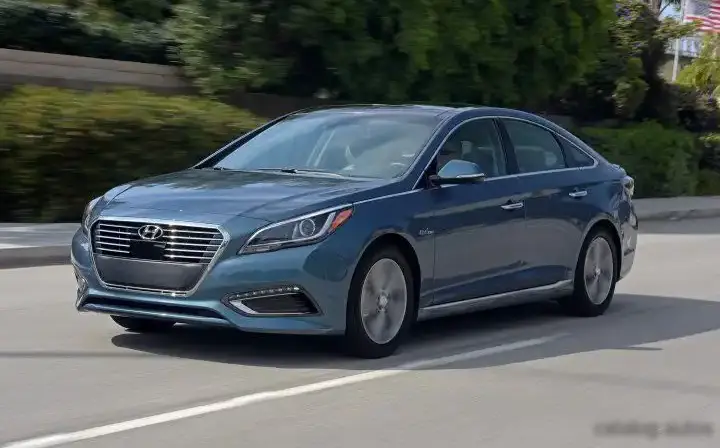
The Hyundai Sonata VII (LF) 1.6 T-GDi Eco, produced from 2014 to 2015, represented a significant step forward for Hyundai in the mid-size sedan segment. Positioned as an efficiency-focused variant within the broader LF Sonata lineup, this model aimed to deliver a balance of performance and fuel economy. It was primarily marketed in regions where fuel efficiency was a key purchasing factor, offering a turbocharged engine paired with a continuously variable transmission (CVT). The LF Sonata itself was a crucial model for Hyundai, representing a design and engineering overhaul intended to elevate the brand’s image and competitiveness against established rivals like the Toyota Camry and Honda Accord.
Technical Specifications
| Brand | Hyundai |
| Model | Sonata |
| Generation | Sonata VII (LF) |
| Type (Engine) | 1.6 T-GDi Eco (180 Hp) |
| Start of production | 2014 |
| End of production | 2015 |
| Powertrain Architecture | Internal Combustion engine |
| Body type | Sedan |
| Seats | 5 |
| Doors | 4 |
| Fuel consumption (combined) | 7.3 l/100 km (32.2 US mpg, 38.7 UK mpg, 13.7 km/l) |
| Fuel Type | Petrol (Gasoline) |
| Weight-to-power ratio | 8.2 kg/Hp, 122.1 Hp/tonne |
| Weight-to-torque ratio | 5.6 kg/Nm, 179.1 Nm/tonne |
| Power | 180 Hp @ 5500 rpm |
| Power per litre | 113.1 Hp/l |
| Torque | 264 Nm @ 1500-4500 rpm (194.72 lb.-ft. @ 1500-4500 rpm) |
| Engine layout | Front, Transverse |
| Engine Model/Code | Gamma II / G4FJ |
| Engine displacement | 1591 cm3 (97.09 cu. in.) |
| Number of cylinders | 4 |
| Engine configuration | Inline |
| Cylinder Bore | 77 mm (3.03 in.) |
| Piston Stroke | 85.4 mm (3.36 in.) |
| Compression ratio | 10.1:1 |
| Number of valves per cylinder | 4 |
| Fuel injection system | Direct injection |
| Engine aspiration | Turbocharger, Intercooler |
| Valvetrain | DOHC, CVVT |
| Engine oil capacity | 4.5 l (4.76 US qt | 3.96 UK qt) |
| Coolant | 7.1 l (7.5 US qt | 6.25 UK qt) |
| Kerb Weight | 1474 kg (3249.61 lbs.) |
| Max. weight | 1960 kg (4321.06 lbs.) |
| Max load | 486 kg (1071.45 lbs.) |
| Trunk (boot) space – maximum | 462 l (16.32 cu. ft.) |
| Fuel tank capacity | 70 l (18.49 US gal | 15.4 UK gal) |
| Length | 4855 mm (191.14 in.) |
| Width | 1865 mm (73.43 in.) |
| Height | 1475 mm (58.07 in.) |
| Wheelbase | 2805 mm (110.43 in.) |
| Front track | 1613 mm (63.5 in.) |
| Rear (Back) track | 1621 mm (63.82 in.) |
| Front overhang | 965 mm (37.99 in.) |
| Rear overhang | 1085 mm (42.72 in.) |
| Ride height (ground clearance) | 135 mm (5.31 in.) |
| Drag coefficient (Cd) | 0.27 |
| Minimum turning circle (turning diameter) | 10.9 m (35.76 ft.) |
| Drivetrain Architecture | The Internal combustion engine (ICE) drives the front wheels of the vehicle. |
| Drive wheel | Front wheel drive |
| Number of gears and type of gearbox | 7 gears, automatic transmission CVT |
| Front suspension | Independent type McPherson |
| Rear suspension | Independent multi-link suspension |
| Front brakes | Ventilated discs |
| Rear brakes | Disc |
| Assisting systems | ABS (Anti-lock braking system) |
| Steering type | Steering rack and pinion |
| Tires size | 205/65 R16 |
| Wheel rims size | 6.5J x 16 |
Powertrain & Engine Architecture
At the heart of the Sonata 1.6 T-GDi Eco lies the Hyundai Gamma II engine, specifically the G4FJ code. This 1.6-liter inline-four cylinder engine utilizes direct fuel injection and a single scroll turbocharger with an intercooler to boost power output. The engine employs a dual continuously variable valve timing (CVVT) system, optimizing valve timing for improved efficiency and performance across the rev range. The direct injection system allows for precise fuel delivery, contributing to both power and reduced emissions. The engine is transversely mounted in the front of the vehicle. Paired with this engine is a seven-speed continuously variable transmission (CVT). Unlike traditional automatic transmissions with fixed gear ratios, a CVT provides a virtually infinite number of gear ratios, allowing the engine to operate at its most efficient point at all times. This contributes significantly to the model’s fuel economy.
Driving Characteristics
The 180 horsepower and 194.72 lb-ft of torque delivered by the 1.6 T-GDi engine, combined with the CVT, resulted in a driving experience focused on smooth acceleration and fuel efficiency. While not as brisk as the higher-output 2.0T or 2.4L naturally aspirated versions of the Sonata, the 1.6 T-GDi offered adequate power for everyday driving situations. The CVT, while efficient, could sometimes feel less responsive than a traditional automatic transmission, exhibiting a slight “rubber band” effect during hard acceleration. The gear ratios were optimized for fuel economy, meaning the engine would often hold lower RPMs during cruising, prioritizing efficiency over immediate power delivery. Compared to the manual transmission options available on other Sonata trims, the CVT provided a more relaxed and convenient driving experience, appealing to a broader audience.
Equipment & Trim Levels
The 1.6 T-GDi Eco trim typically included standard features such as air conditioning, power windows and locks, a touchscreen infotainment system with Bluetooth connectivity, and a rearview camera. Interior upholstery was generally cloth, with options for upgraded leather seats available. Safety features included ABS, electronic stability control, and multiple airbags. Optional extras could include a sunroof, upgraded audio system, and advanced driver-assistance systems like lane departure warning and blind-spot monitoring. The trim level aimed to provide a good balance of features and affordability, making it an attractive option for budget-conscious buyers.
Chassis & Braking
The Sonata 1.6 T-GDi Eco utilized an independent McPherson strut suspension in the front and an independent multi-link suspension in the rear, providing a comfortable ride quality. The suspension was tuned for everyday driving, prioritizing comfort over sporty handling. Braking duties were handled by ventilated discs in the front and solid discs in the rear. ABS (Anti-lock Braking System) was standard, enhancing braking performance and stability. Stabilizer bars were included both front and rear to reduce body roll during cornering, though they were typically smaller in diameter compared to those found on higher-performance Sonata trims.
Market Reception & Comparison
The 1.6 T-GDi Eco variant of the Sonata received generally positive reviews for its fuel efficiency and comfortable ride. Critics noted that while the engine provided adequate power, it wasn’t as exciting as the larger engine options. The CVT transmission was a point of contention for some, with some reviewers finding it less engaging than a traditional automatic. Compared to the 2.0T Sonata, the 1.6 T-GDi offered significantly better fuel economy but less performance. Against the 2.4L naturally aspirated model, the 1.6 T-GDi provided similar fuel economy with a slight performance advantage thanks to the turbocharger. The 1.6 T-GDi Eco was positioned as the entry-level turbocharged option, appealing to buyers who prioritized fuel economy and value.
Legacy
The Hyundai Sonata 1.6 T-GDi Eco, while not the most powerful or sporty version of the LF Sonata, proved to be a reliable and fuel-efficient option. The Gamma II engine, when properly maintained, has demonstrated good long-term durability. The CVT transmission, while requiring regular fluid changes, has also proven to be relatively reliable. In the used car market, these models are often sought after by buyers looking for an affordable and economical mid-size sedan. The 1.6 T-GDi Eco played a role in establishing Hyundai as a serious contender in the mid-size sedan segment, demonstrating the brand’s ability to deliver both efficiency and modern technology.