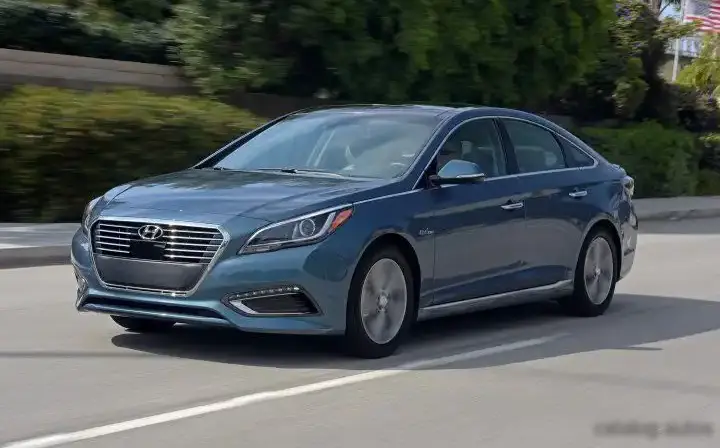
The Hyundai Sonata VII (LF), produced from 2014 to 2017, represented a significant step forward for the South Korean automaker in the mid-size sedan segment. Introduced as a replacement for the YF Sonata, the LF generation aimed to offer a more sophisticated driving experience, improved fuel efficiency, and a more refined interior. Within the LF lineup, the 2.0 T-GDi (Turbocharged Gasoline Direct Injection) variant, paired with a six-speed automatic transmission, occupied a position as the performance-oriented trim, bridging the gap between the base 2.4L engine and the more luxurious Sport models. This configuration was primarily marketed in North America and select international markets where consumers desired a balance of power and efficiency.
Technical Specifications
| Brand | Hyundai |
| Model | Sonata |
| Generation | Sonata VII (LF) |
| Type (Engine) | 2.0 T-GDi (248 Hp) Automatic |
| Start of production | 2014 |
| End of production | 2015 |
| Powertrain Architecture | Internal Combustion engine |
| Body type | Sedan |
| Seats | 5 |
| Doors | 4 |
| Fuel consumption (combined) | 9 l/100 km (26.1 US mpg, 31.4 UK mpg, 11.1 km/l) |
| Fuel Type | Petrol (Gasoline) |
| Weight-to-power ratio | 6.4 kg/Hp, 156 Hp/tonne |
| Weight-to-torque ratio | 4.5 kg/Nm, 222 Nm/tonne |
| Power | 248 Hp @ 6000 rpm |
| Power per litre | 124.1 Hp/l |
| Torque | 353 Nm @ 1350-4000 rpm (260.36 lb.-ft. @ 1350-4000 rpm) |
| Engine layout | Front, Transverse |
| Engine displacement | 1998 cm3 (121.93 cu. in.) |
| Number of cylinders | 4 |
| Engine configuration | Inline |
| Cylinder Bore | 86 mm (3.39 in.) |
| Piston Stroke | 86 mm (3.39 in.) |
| Compression ratio | 10:1 |
| Number of valves per cylinder | 4 |
| Fuel injection system | Direct injection |
| Engine aspiration | Turbocharger, Intercooler |
| Valvetrain | DOHC, CVVT |
| Engine oil capacity | 4.8 l (5.07 US qt | 4.22 UK qt) |
| Coolant | 7.5 l (7.93 US qt | 6.6 UK qt) |
| Kerb Weight | 1590 kg (3505.35 lbs.) |
| Max. weight | 2100 kg (4629.71 lbs.) |
| Max load | 510 kg (1124.36 lbs.) |
| Trunk (boot) space – maximum | 462 l (16.32 cu. ft.) |
| Fuel tank capacity | 70 l (18.49 US gal | 15.4 UK gal) |
| Length | 4855 mm (191.14 in.) |
| Width | 1865 mm (73.43 in.) |
| Height | 1476 mm (58.11 in.) |
| Wheelbase | 2805 mm (110.43 in.) |
| Front track | 1598 mm (62.91 in.) |
| Rear (Back) track | 1603 mm (63.11 in.) |
| Front overhang | 965 mm (37.99 in.) |
| Rear overhang | 1085 mm (42.72 in.) |
| Ride height (ground clearance) | 135 mm (5.31 in.) |
| Drag coefficient (Cd) | 0.27 |
| Minimum turning circle (turning diameter) | 10.9 m (35.76 ft.) |
| Drivetrain Architecture | The Internal combustion engine (ICE) drives the front wheels of the vehicle. |
| Drive wheel | Front wheel drive |
| Number of gears and type of gearbox | 6 gears, automatic transmission |
| Front suspension | Independent type McPherson |
| Rear suspension | Independent multi-link suspension |
| Front brakes | Ventilated discs |
| Rear brakes | Disc |
| Assisting systems | ABS (Anti-lock braking system) |
| Steering type | Steering rack and pinion |
| Tires size | 225/45 R18 |
| Wheel rims size | 7.5J x 18 |
Powertrain & Engine Architecture
The heart of the Sonata 2.0 T-GDi is the Hyundai-Kia Smartstream G2.0T engine. This 1998cc inline-four cylinder engine utilizes direct injection and a single twin-scroll turbocharger to deliver a robust 248 horsepower and 260 lb-ft of torque. The engine features a double overhead camshaft (DOHC) valvetrain with continuously variable valve timing (CVVT) on both intake and exhaust sides, optimizing performance and efficiency across the rev range. The six-speed automatic transmission, while not as sophisticated as some dual-clutch transmissions available in competing models, was known for its smooth operation and reliability. It was calibrated to provide comfortable shifts during normal driving and responsive downshifts when needed. The engine code for this variant is typically found as variations of G2.0T, depending on the specific market and emissions regulations.
Driving Characteristics
The 2.0 T-GDi automatic Sonata offered a noticeable performance upgrade over the base 2.4L engine. Acceleration was brisk, with the turbocharger providing strong mid-range torque. While not a sports sedan, the 2.0T provided ample power for highway merging and passing maneuvers. The automatic transmission, while smooth, wasn’t particularly quick to shift, and some drivers found it lacked the engagement of a manual transmission. The gear ratios were tuned for fuel efficiency and comfortable cruising, rather than outright performance. Compared to the naturally aspirated 2.4L, the 2.0T felt more responsive and capable, while lacking the immediate throttle response of a manual transmission equipped model.
Equipment & Trim Levels
The 2.0 T-GDi trim typically included features such as leather upholstery, heated front seats, a touchscreen infotainment system with navigation, a rearview camera, and automatic climate control. Optional extras included a panoramic sunroof, premium audio system, and advanced safety features like blind-spot monitoring and lane departure warning. The interior design was generally considered modern and well-appointed for its price point, although some materials felt less premium than those found in competing Japanese and European sedans. The specific trim level (e.g., Limited, Sport) dictated the standard equipment and available options.
Chassis & Braking
The Sonata LF utilized a front-wheel-drive platform with an independent McPherson strut suspension in the front and an independent multi-link suspension in the rear. This setup provided a comfortable ride quality, absorbing bumps and imperfections in the road effectively. The steering was light and precise, making it easy to maneuver in city traffic. Braking duties were handled by ventilated discs in the front and solid discs in the rear, equipped with an Anti-lock Braking System (ABS). The braking performance was adequate for everyday driving, but not particularly sporty.
Market Reception & Comparison
The 2.0 T-GDi Sonata was generally well-received by automotive critics, who praised its combination of performance, fuel efficiency, and value. It was often compared to the Honda Accord, Toyota Camry, and Mazda6. While the Sonata offered more power than the base models of its competitors, it didn’t quite match the overall refinement or driving dynamics of some of the more established players in the segment. Fuel economy was competitive, averaging around 26 mpg in combined driving. Reliability was generally good, although some owners reported minor issues with the infotainment system and turbocharger.
Legacy
The Hyundai Sonata LF 2.0 T-GDi represented a significant step forward for the brand, demonstrating its ability to produce a competitive mid-size sedan with a compelling powertrain. While the LF generation has been superseded by newer models, the 2.0 T-GDi variant remains a popular choice in the used car market, offering a good balance of performance, features, and affordability. The Smartstream G2.0T engine has proven to be relatively reliable, and with proper maintenance, it can provide many years of service. The Sonata LF helped to solidify Hyundai’s reputation as a maker of well-equipped, value-oriented vehicles.