
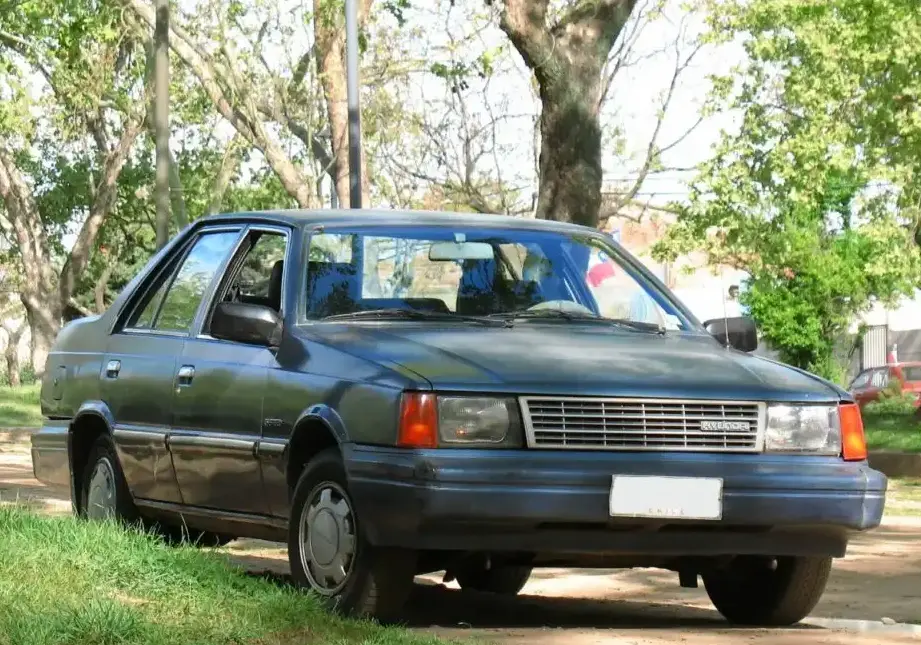
The Hyundai Stellar 2.0 (93 hp) Automatic, produced between 1983 and 1993, represents a pivotal moment in the history of the South Korean automotive industry. As Hyundai’s first independently designed and manufactured passenger car, the Stellar aimed to provide a domestically produced alternative to imported vehicles, primarily targeting the growing middle class in South Korea. This particular variant, featuring a 2.0-liter engine paired with a four-speed automatic transmission, occupied a mid-range position within the Stellar lineup, offering a balance of comfort and affordability. It was a key model in establishing Hyundai’s presence in the domestic market and laying the groundwork for future export ambitions.
Technical Specifications
| Brand | Hyundai |
| Model | Stellar |
| Generation | Stellar |
| Type (Engine) | 2.0 (93 Hp) Automatic |
| Start of production | 1983 |
| End of production | 1993 |
| Powertrain Architecture | Internal Combustion engine |
| Body type | Sedan |
| Seats | 5 |
| Doors | 4 |
| Fuel Type | Petrol (Gasoline) |
| Maximum speed | 175 km/h (108.74 mph) |
| Weight-to-power ratio | 13.2 kg/Hp, 75.6 Hp/tonne |
| Weight-to-torque ratio | 8.1 kg/Nm, 122.8 Nm/tonne |
| Power | 93 Hp @ 5500 rpm |
| Power per litre | 46.6 Hp/l |
| Torque | 151 Nm @ 3000 rpm (111.37 lb.-ft. @ 3000 rpm) |
| Engine layout | Front, Longitudinal |
| Engine displacement | 1997 cm3 (121.86 cu. in.) |
| Number of cylinders | 4 |
| Engine configuration | Inline |
| Cylinder Bore | 85 mm (3.35 in.) |
| Piston Stroke | 88 mm (3.46 in.) |
| Compression ratio | 8.5:1 |
| Number of valves per cylinder | 2 |
| Fuel injection system | Carburettor |
| Engine aspiration | Naturally aspirated engine |
| Kerb Weight | 1230 kg (2711.69 lbs.) |
| Fuel tank capacity | 54 l (14.27 US gal | 11.88 UK gal) |
| Length | 4415 mm (173.82 in.) |
| Width | 1715 mm (67.52 in.) |
| Height | 1370 mm (53.94 in.) |
| Wheelbase | 2580 mm (101.57 in.) |
| Front track | 1445 mm (56.89 in.) |
| Rear (Back) track | 1425 mm (56.1 in.) |
| Drivetrain Architecture | The Internal combustion engine (ICE) drives the rear wheels of the vehicle. |
| Drive wheel | Rear wheel drive |
| Number of gears and type of gearbox | 4 gears, automatic transmission |
| Front suspension | Coil spring |
| Rear suspension | Coil spring |
| Front brakes | Disc |
| Rear brakes | Drum |
| Assisting systems | ABS (Anti-lock braking system) |
| Steering type | Steering rack and pinion |
| Power steering | Hydraulic Steering |
| Tires size | 185/70 SR13 |
| Wheel rims size | 13 |
Powertrain & Engine Architecture
The heart of the Stellar 2.0 Automatic is a 1,997 cc (121.86 cu. in.) inline-four cylinder engine. This engine, designated with various internal codes depending on the production year, was a relatively simple design featuring a single overhead camshaft (SOHC) and two valves per cylinder. Fuel delivery was managed by a carburetor, a common technology for the time, though less efficient than fuel injection systems. The 8.5:1 compression ratio was a compromise between performance and fuel economy. The engine produced 93 horsepower at 5,500 rpm and 151 Nm (111.37 lb.-ft.) of torque at 3,000 rpm. The four-speed automatic transmission was sourced from Mitsubishi, and while it provided convenient shifting, it wasn’t known for its responsiveness or efficiency. The longitudinal engine layout and rear-wheel drive configuration were typical of sedans from the early 1980s.
Driving Characteristics
The Stellar 2.0 Automatic offered a comfortable, if not particularly exciting, driving experience. The automatic transmission smoothed out power delivery, making it well-suited for city driving. However, the 93 hp output and the weight of the vehicle (1,230 kg / 2,711.69 lbs) meant that acceleration was modest. Overtaking maneuvers required careful planning. Compared to the manual transmission versions of the Stellar 2.0, the automatic suffered a slight performance penalty. The gear ratios were optimized for fuel economy rather than outright speed. The rear-wheel drive setup provided decent handling balance, but the suspension was tuned for comfort, resulting in noticeable body roll during cornering.
Equipment & Trim Levels
The Stellar 2.0 Automatic typically came equipped with basic amenities. Standard features included cloth upholstery, a simple dashboard layout with analog gauges, and manual windows and locks. Air conditioning was often an optional extra, as were features like a radio and upgraded interior trim. The trim level of the 2.0 Automatic generally positioned it as a step up from the base models, offering a slightly more refined interior and a few additional convenience features. However, it lacked the luxury appointments found in higher-end vehicles of the era.
Chassis & Braking
The Stellar’s chassis utilized a body-on-frame construction, a common practice in the early 1980s. The suspension consisted of coil springs all around, providing a reasonably comfortable ride. The front brakes were discs, offering better stopping power than the drum brakes used on the rear wheels. An Anti-lock Braking System (ABS) was available as an option, a relatively advanced feature for a vehicle in this class at the time. The steering was a rack and pinion system with hydraulic power assistance, making it relatively easy to maneuver at low speeds. Tire size was 185/70 SR13, mounted on 13-inch steel wheels.
Market Reception & Comparison
The Hyundai Stellar 2.0 Automatic was generally well-received in the South Korean market. It offered a viable alternative to imported vehicles, which were often prohibitively expensive. Critics praised the Stellar for its affordability, practicality, and relatively comfortable ride. However, the carburetor-fed engine and automatic transmission were often criticized for their lack of refinement and fuel efficiency compared to more modern designs. Compared to other trims in the Stellar lineup, the 2.0 Automatic appealed to buyers who prioritized convenience and comfort over performance. The manual transmission versions offered better fuel economy and a more engaging driving experience, while the higher-spec models provided more luxurious features.
Legacy
The Hyundai Stellar 2.0 Automatic holds a significant place in the history of the South Korean automotive industry. It was the first mass-produced passenger car designed and built entirely by Hyundai, marking a turning point for the company. While the powertrain isn’t known for exceptional reliability or longevity by modern standards, many examples are still found in running condition today, a testament to the vehicle’s basic durability. In the used car market, the Stellar 2.0 Automatic is considered a classic, appealing to collectors and enthusiasts interested in a piece of automotive history. Its relatively simple mechanical design makes it relatively easy to maintain and repair, although finding parts can be challenging. The Stellar paved the way for Hyundai’s subsequent success and established the company as a major player in the global automotive market.
