
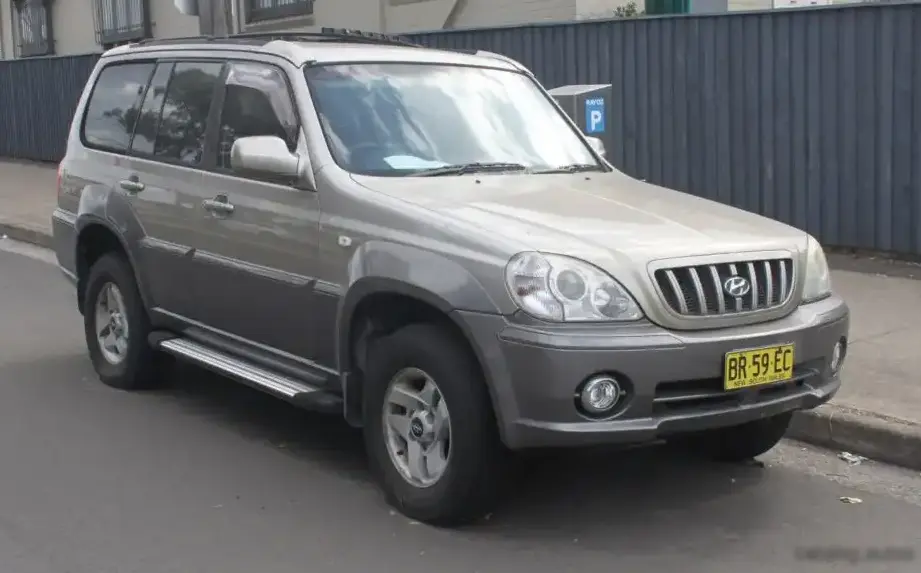
The Hyundai Terracan 2.5 TD, producing 100 horsepower, was a mid-size SUV manufactured by the South Korean automaker Hyundai from 2001 to 2006. Positioned as a body-on-frame SUV, the Terracan aimed to provide a robust and affordable option in a market segment largely dominated by Japanese and American manufacturers. It was primarily marketed towards buyers seeking a utilitarian vehicle capable of both on-road comfort and moderate off-road capability. The 2.5 TD variant, equipped with a five-speed manual transmission, represented an entry-level offering within the Terracan lineup, focusing on fuel efficiency and practicality rather than outright performance.
Technical Specifications
| Brand | Hyundai |
| Model | Terracan |
| Generation | Terracan |
| Type (Engine) | 2.5 TD (100 Hp) |
| Start of production | 2001 |
| End of production | 2006 |
| Powertrain Architecture | Internal Combustion engine |
| Body type | SUV |
| Seats | 5 |
| Doors | 5 |
| Fuel consumption (urban) | 13.1 l/100 km (18 US mpg, 21.6 UK mpg, 7.6 km/l) |
| Fuel consumption (extra urban) | 8.7 l/100 km (27 US mpg, 32.5 UK mpg, 11.5 km/l) |
| Fuel Type | Diesel |
| Acceleration 0 – 100 km/h | 19.1 sec |
| Acceleration 0 – 62 mph | 19.1 sec |
| Acceleration 0 – 60 mph | 18.1 sec |
| Maximum speed | 145 km/h (90.1 mph) |
| Weight-to-power ratio | 20 kg/Hp, 50.1 Hp/tonne |
| Weight-to-torque ratio | 8.3 kg/Nm, 120.3 Nm/tonne |
| Power | 100 Hp @ 3800 rpm |
| Power per litre | 40.4 Hp/l |
| Torque | 240 Nm @ 2000 rpm (177.01 lb.-ft. @ 2000 rpm) |
| Engine layout | Front, Longitudinal |
| Engine Model/Code | 4D56 |
| Engine displacement | 2477 cm3 (151.16 cu. in.) |
| Number of cylinders | 4 |
| Engine configuration | Inline |
| Cylinder Bore | 91.1 mm (3.59 in.) |
| Piston Stroke | 95 mm (3.74 in.) |
| Compression ratio | 21:1 |
| Number of valves per cylinder | 2 |
| Fuel injection system | Diesel Commonrail |
| Engine aspiration | Turbocharger, Intercooler |
| Valvetrain | OHC |
| Engine oil capacity | 5.1 l (5.39 US qt | 4.49 UK qt) |
| Coolant capacity | 8 l (8.45 US qt | 7.04 UK qt) |
| Kerb Weight | 1995 kg (4398.22 lbs.) |
| Max. weight | 2315 kg (5103.7 lbs.) |
| Max load | 320 kg (705.48 lbs.) |
| Trunk (boot) space – minimum | 1170 l (41.32 cu. ft.) |
| Trunk (boot) space – maximum | 1955 l (69.04 cu. ft.) |
| Fuel tank capacity | 75 l (19.81 US gal | 16.5 UK gal) |
| Length | 4710 mm (185.43 in.) |
| Width | 1860 mm (73.23 in.) |
| Height | 1790 mm (70.47 in.) |
| Wheelbase | 2750 mm (108.27 in.) |
| Front track | 1500 mm (59.06 in.) |
| Rear (Back) track | 1500 mm (59.06 in.) |
| Drive wheel | All wheel drive (4×4) |
| Number of gears and type of gearbox | 5 gears, manual transmission |
| Front suspension | Double wishbone |
| Rear suspension | Coil spring |
| Front brakes | Ventilated discs |
| Rear brakes | Disc |
| Assisting systems | ABS (Anti-lock braking system) |
| Power steering | Hydraulic Steering |
| Tires size | 235/75 R15 |
Powertrain & Engine Architecture
The heart of the Terracan 2.5 TD was the Hyundai 4D56 engine, a 2.5-liter inline-four cylinder diesel. This engine utilized a turbocharger with an intercooler to boost power output to 100 horsepower and 240 Nm (177 lb-ft) of torque. The 4D56 employed a diesel common rail fuel injection system, a technology that allowed for more precise fuel delivery and improved combustion efficiency compared to older mechanical injection systems. The engine featured an overhead camshaft (OHC) valvetrain with two valves per cylinder. The five-speed manual transmission was the standard gearbox for this variant, offering a relatively direct connection between the engine and the wheels. The engine was mounted longitudinally in the chassis, contributing to a more balanced weight distribution.
Driving Characteristics
The 2.5 TD manual Terracan was not known for its blistering acceleration. With a 0-60 mph time of around 18.1 seconds, it prioritized fuel economy and durability over outright speed. The turbocharger helped to mitigate some of the inherent limitations of the naturally aspirated diesel engine, providing a noticeable boost in power at lower engine speeds. The five-speed manual transmission allowed drivers to maintain optimal engine RPMs for both fuel efficiency and power delivery. Compared to potential higher-output versions (which were not widely available in many markets), the 2.5 TD offered a more relaxed driving experience, suitable for everyday commuting and moderate towing duties. The manual transmission provided more driver control than an automatic, but required more engagement.
Equipment & Trim Levels
The Terracan 2.5 TD typically came with a fairly basic level of equipment, reflecting its position as an entry-level model. Standard features generally included air conditioning, power steering, and an AM/FM radio. Interior upholstery was typically cloth, and the dashboard featured a functional, if somewhat utilitarian, design. Optional extras could include power windows, central locking, and an upgraded audio system. The focus was on providing essential features at an affordable price point. Safety features were relatively limited by modern standards, typically including ABS brakes and a driver’s airbag.
Chassis & Braking
The Terracan utilized a traditional body-on-frame construction, providing a robust and durable chassis. The front suspension consisted of a double wishbone setup, while the rear suspension employed coil springs. This configuration aimed to balance ride comfort with off-road capability. The braking system featured ventilated discs on the front wheels and solid discs on the rear. The hydraulic power steering provided relatively light and responsive steering feel. The 235/75 R15 tires were a compromise between on-road comfort and off-road traction.
Market Reception & Comparison
The Hyundai Terracan 2.5 TD received mixed reviews from automotive critics. While praised for its affordability and ruggedness, it was often criticized for its relatively slow acceleration and basic interior. Compared to competitors like the Mitsubishi Pajero and Toyota Land Cruiser, the Terracan offered a more budget-friendly alternative, but lacked the refinement and brand recognition of its Japanese rivals. Fuel economy was generally considered to be reasonable for a vehicle of its size and type. Reliability was generally good, although some owners reported issues with the turbocharger and fuel injection system over the long term.
Legacy
The Hyundai Terracan, particularly the 2.5 TD manual variant, has developed a reputation as a reliable and affordable workhorse in the used car market. While not a particularly sought-after vehicle among enthusiasts, it remains a popular choice for buyers seeking a capable and durable SUV at a low price. The 4D56 engine, when properly maintained, is known for its longevity. However, potential buyers should be aware of the possibility of turbocharger and fuel injection system issues, and should carefully inspect the vehicle before purchase. The Terracan represents an important step in Hyundai’s evolution as a global automaker, demonstrating the company’s ability to produce a competitive SUV for the international market.
