
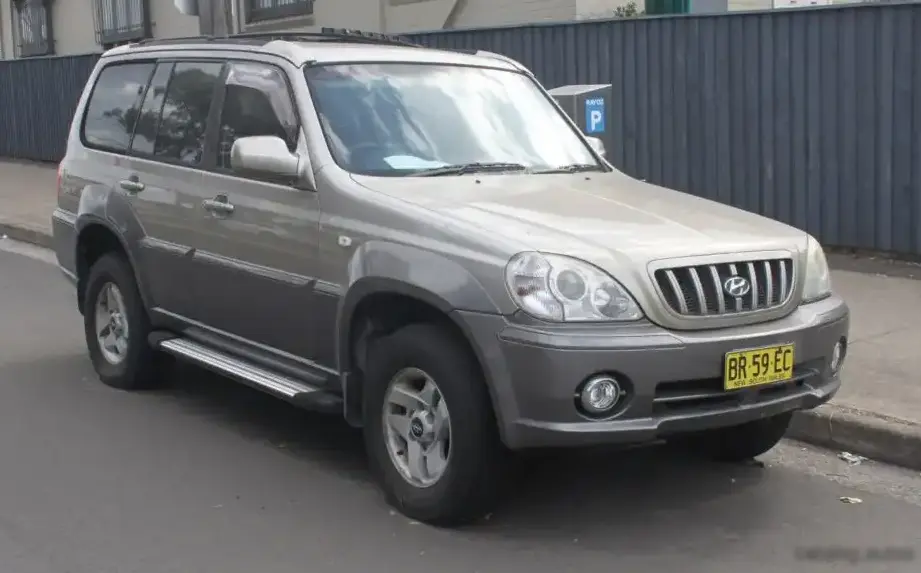
The Hyundai Terracan 2.5 TD Automatic, produced between 2001 and 2006, was Hyundai’s initial foray into the mid-size SUV market, primarily aimed at offering a robust and affordable all-terrain vehicle. Positioned as an entry-level to mid-range option within the Terracan lineup, it provided a more accessible price point compared to the later, more powerful engine variants. The Terracan, internally designated as the HP, was largely intended for markets outside of North America, finding significant traction in Europe, Australia, and parts of Asia where a durable, body-on-frame SUV was highly valued. This particular 2.5-liter turbodiesel automatic configuration represented a balance between fuel efficiency and capability, appealing to buyers seeking a practical and versatile vehicle.
Technical Specifications
| Brand | Hyundai |
| Model | Terracan |
| Generation | Terracan |
| Type (Engine) | 2.5 TD (100 Hp) Automatic |
| Start of production | 2001 |
| End of production | 2006 |
| Powertrain Architecture | Internal Combustion engine |
| Body type | SUV |
| Seats | 5 |
| Doors | 5 |
| Fuel consumption (urban) | 12.9 l/100 km (18.2 US mpg, 21.9 UK mpg, 7.8 km/l) |
| Fuel consumption (extra urban) | 9.1 l/100 km (25.8 US mpg, 31 UK mpg, 11 km/l) |
| Fuel Type | Diesel |
| Acceleration 0 – 100 km/h | 20.1 sec |
| Acceleration 0 – 62 mph | 20.1 sec |
| Acceleration 0 – 60 mph | 19.1 sec |
| Maximum speed | 145 km/h (90.1 mph) |
| Weight-to-power ratio | 20 kg/Hp, 50.1 Hp/tonne |
| Weight-to-torque ratio | 8.3 kg/Nm, 120.3 Nm/tonne |
| Power | 100 Hp @ 3800 rpm |
| Power per litre | 40.4 Hp/l |
| Torque | 240 Nm @ 2000 rpm (177.01 lb.-ft. @ 2000 rpm) |
| Engine layout | Front, Longitudinal |
| Engine Model/Code | 4D56 |
| Engine displacement | 2477 cm3 (151.16 cu. in.) |
| Number of cylinders | 4 |
| Engine configuration | Inline |
| Cylinder Bore | 91.1 mm (3.59 in.) |
| Piston Stroke | 95 mm (3.74 in.) |
| Compression ratio | 21:1 |
| Number of valves per cylinder | 2 |
| Fuel injection system | Diesel Commonrail |
| Engine aspiration | Turbocharger, Intercooler |
| Valvetrain | OHC |
| Engine oil capacity | 5.1 l (5.39 US qt | 4.49 UK qt) |
| Coolant capacity | 8 l (8.45 US qt | 7.04 UK qt) |
| Kerb Weight | 1995 kg (4398.22 lbs.) |
| Max. weight | 2315 kg (5103.7 lbs.) |
| Max load | 320 kg (705.48 lbs.) |
| Trunk (boot) space – minimum | 1170 l (41.32 cu. ft.) |
| Trunk (boot) space – maximum | 1955 l (69.04 cu. ft.) |
| Fuel tank capacity | 75 l (19.81 US gal | 16.5 UK gal) |
| Length | 4710 mm (185.43 in.) |
| Width | 1860 mm (73.23 in.) |
| Height | 1790 mm (70.47 in.) |
| Wheelbase | 2750 mm (108.27 in.) |
| Front track | 1500 mm (59.06 in.) |
| Rear (Back) track | 1500 mm (59.06 in.) |
| Drive wheel | All wheel drive (4×4) |
| Number of gears | 4 |
| Gearbox type | Automatic transmission |
| Front suspension | Double wishbone |
| Rear suspension | Coil spring |
| Front brakes | Ventilated discs |
| Rear brakes | Disc |
| Assisting systems | ABS (Anti-lock braking system) |
| Power steering | Hydraulic Steering |
| Tires size | 235/75 R15 |
| Wheel rims size | 15 |
Powertrain & Engine Architecture
The heart of the Terracan 2.5 TD Automatic is the 4D56 engine, a 2.5-liter inline-four cylinder diesel. This engine, developed by Hyundai in collaboration with Mitsubishi, utilizes a turbocharger with an intercooler to boost power output to 100 horsepower and 240 Nm (177 lb-ft) of torque. The engine employs a diesel common rail fuel injection system, which allows for precise fuel delivery and improved combustion efficiency. The overhead camshaft (OHC) valvetrain, with two valves per cylinder, contributes to a relatively simple and robust engine design. The automatic transmission is a conventional four-speed unit, chosen for its ease of use and suitability for off-road conditions. While not known for its speed, the transmission provides adequate gear ratios for both on-road cruising and low-speed maneuvering.
Driving Characteristics
The Terracan 2.5 TD Automatic’s driving experience is characterized by its focus on practicality rather than performance. Acceleration is leisurely, taking over 20 seconds to reach 62 mph (100 km/h). The automatic transmission, while smooth, doesn’t offer the responsiveness of a manual gearbox, and the relatively low horsepower output means that overtaking maneuvers require careful planning. However, the engine’s torque delivery is reasonably strong at lower RPMs, making it capable of handling moderate inclines and towing light loads. The all-wheel-drive system provides enhanced traction on slippery surfaces, making it a competent off-roader for recreational use. Compared to the later 2.9-liter turbodiesel or gasoline engine options, the 2.5 TD Automatic prioritizes fuel economy and affordability over outright power.
Equipment & Trim Levels
The Terracan 2.5 TD Automatic typically came equipped with a modest level of standard features. These generally included air conditioning, power windows, central locking, and an AM/FM radio. Interior upholstery was typically cloth, with a durable plastic dashboard and trim. Optional extras, depending on the market, could include alloy wheels, a sunroof, upgraded audio systems, and leather upholstery. The trim level was generally considered the base or mid-range offering, focusing on providing essential features at a competitive price point.
Chassis & Braking
The Terracan utilizes a traditional body-on-frame construction, providing a robust and durable chassis. The front suspension consists of a double wishbone setup, while the rear employs a coil spring arrangement. This suspension configuration offers a comfortable ride quality, although it can feel somewhat body-roll prone during cornering. The braking system features ventilated discs on the front wheels and solid discs on the rear. Anti-lock braking system (ABS) was standard, enhancing safety during emergency braking situations. Hydraulic power steering provides relatively light and easy steering control.
Market Reception & Comparison
The Terracan 2.5 TD Automatic received mixed reviews from automotive critics. While praised for its affordability, ruggedness, and all-wheel-drive capability, it was often criticized for its slow acceleration and relatively basic interior. Compared to competitors like the Mitsubishi Pajero or Toyota Land Cruiser, the Terracan offered a more budget-friendly alternative, but lacked the refinement and performance of those established models. Fuel economy was generally considered acceptable for a vehicle of its size and type, and reliability was reported to be good, although maintenance costs could be higher compared to some Japanese rivals.
Legacy
Today, the Hyundai Terracan 2.5 TD Automatic has developed a reputation as a reliable and affordable used SUV. The 4D56 engine, while not particularly powerful, is known for its durability and relatively simple maintenance requirements. Parts availability can be a challenge in some markets, but the engine’s robust design means that it can withstand considerable mileage with proper care. The Terracan remains a popular choice for those seeking a capable and affordable all-terrain vehicle, particularly in regions where a rugged and practical SUV is highly valued. Its legacy lies in being Hyundai’s first serious attempt at competing in the mid-size SUV segment, paving the way for future models like the Santa Fe.
